It’s Not Nice to Fool Mother Nature…

Back in the ’70s, there were a series of commercials for Chiffon margarine that featured “Mother Nature” and how she could be fooled by the margarine being butter. Her tagline was, “It’s not nice to fool Mother Nature.” Here’s one of the commercials:

Well, you might be able to fool Mother Nature with margarine, but you can’t fool Mother Nature with bread making. She’ll make you pay. Badly.

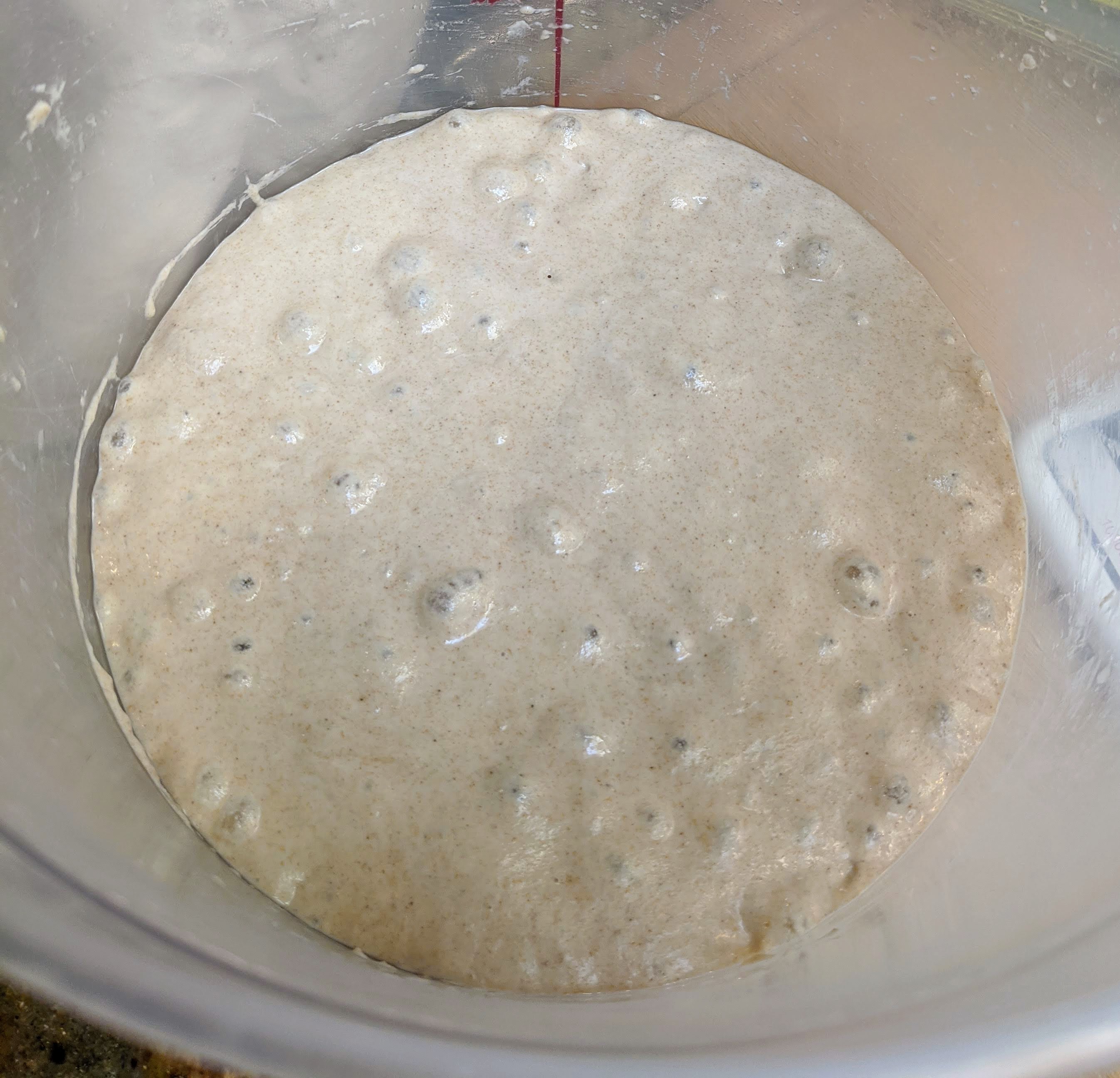
Last night, I was excited to start a levain for some high-hydration whole grain loaves I wanted to bake today. I made an overnight levain and as of 7 AM this morning, everything was great. I mixed the final dough, placed it in my trusty Cambro container, then went through four stretch and folds the first two hours, before I’d do the final bulk fermentation of an hour-and-a-half. At which time I thought it would be a good idea to go to Home Depot.

I returned home just before my timer went off, checked on my dough and saw that it had doubled in my container. Nothing seemed abnormal. So I set up my shaping board and got my bench scraper ready and went to get my dough…

Which I then literally poured out as a liquid mess onto my board. F^&k!

To be honest, I actually laughed when I saw it come out. I knew there was no way to salvage the dough. It stuck to everything. And frankly, I didn’t feel like making pancakes out of it, so I just tossed it out. Oh well.

So what’s the lesson with Mother Nature? It’s simply that there’s no escaping her laws, especially the law of doubling. The job of the microbes is not to feed but to reproduce. They feed on the sugars in the flour, then split. That’s their nature.

Our job is to catch them before they consume all the fuel. But here’s the kicker: Right before they completely consume all the flour, they’ve only consumed half. That’s Mother Nature in action and you see it in the world.

For instance, there’s a process called eutrofication that occurs in ponds and lakes where algae completely infests the body of water. Each day, the algae doubles, and the day before the body of water is completely eutrofied, it’s only at 50%!

The point is that with yeast and bacteria it’s the same principle. The point of no return comes fast. Very fast. Which is why you can’t rely on time because the yeast and microbes double at their own rate, so you have to physically check dough progress.

Had I not gone to Home Depot, I would’ve caught that the dough was rising really fast and shaped the loaves far earlier and all would be well. But I relied on experience that dictated that I had time. After all, I’ve made these rustic loaves dozens of times.

But looking back, I was using a different starter than what I’ve used in the past. This particular wild yeast has been super-active. But the thing is, I actually used less starter for my levain because I knew just how fast-acting this wild yeast is. Looks like I’m going to have to either use less to stick to my regular schedule, or adjust my process altogether and do things in shorter intervals.

We live and learn. Happy Baking!

Over-Proofed Dough… Argh!

I can’t seem to get the timing down for cold proofing shaped loaves. I do overnight bulk ferments (or even longer) a lot. But shaped loaves? I’ve only had success with them a few times.

It’s annoying! To say the least…

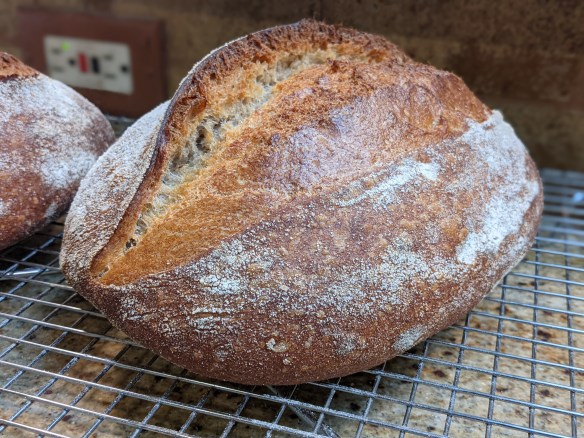
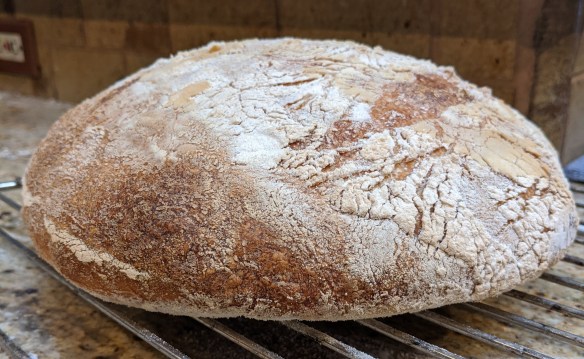
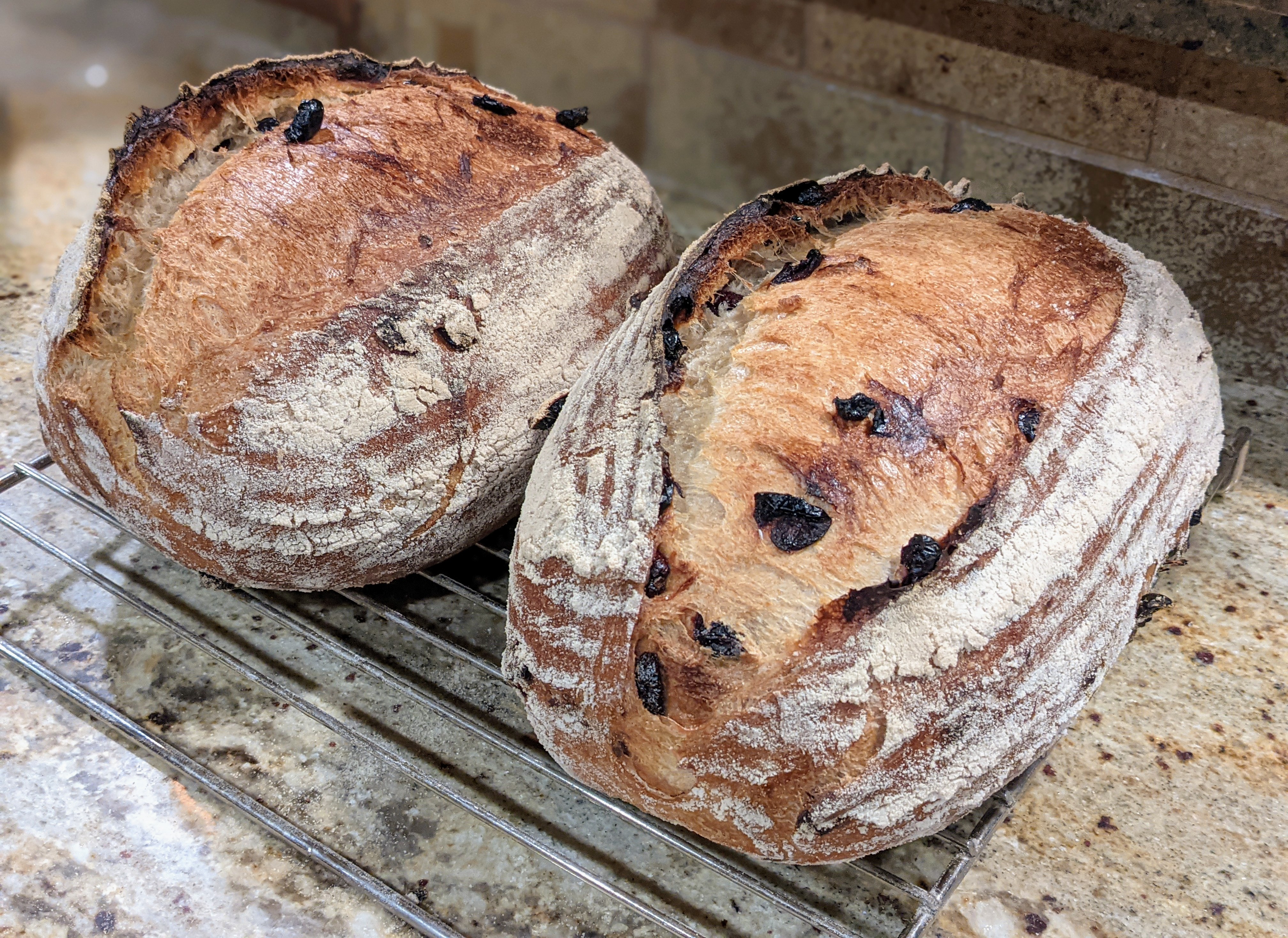
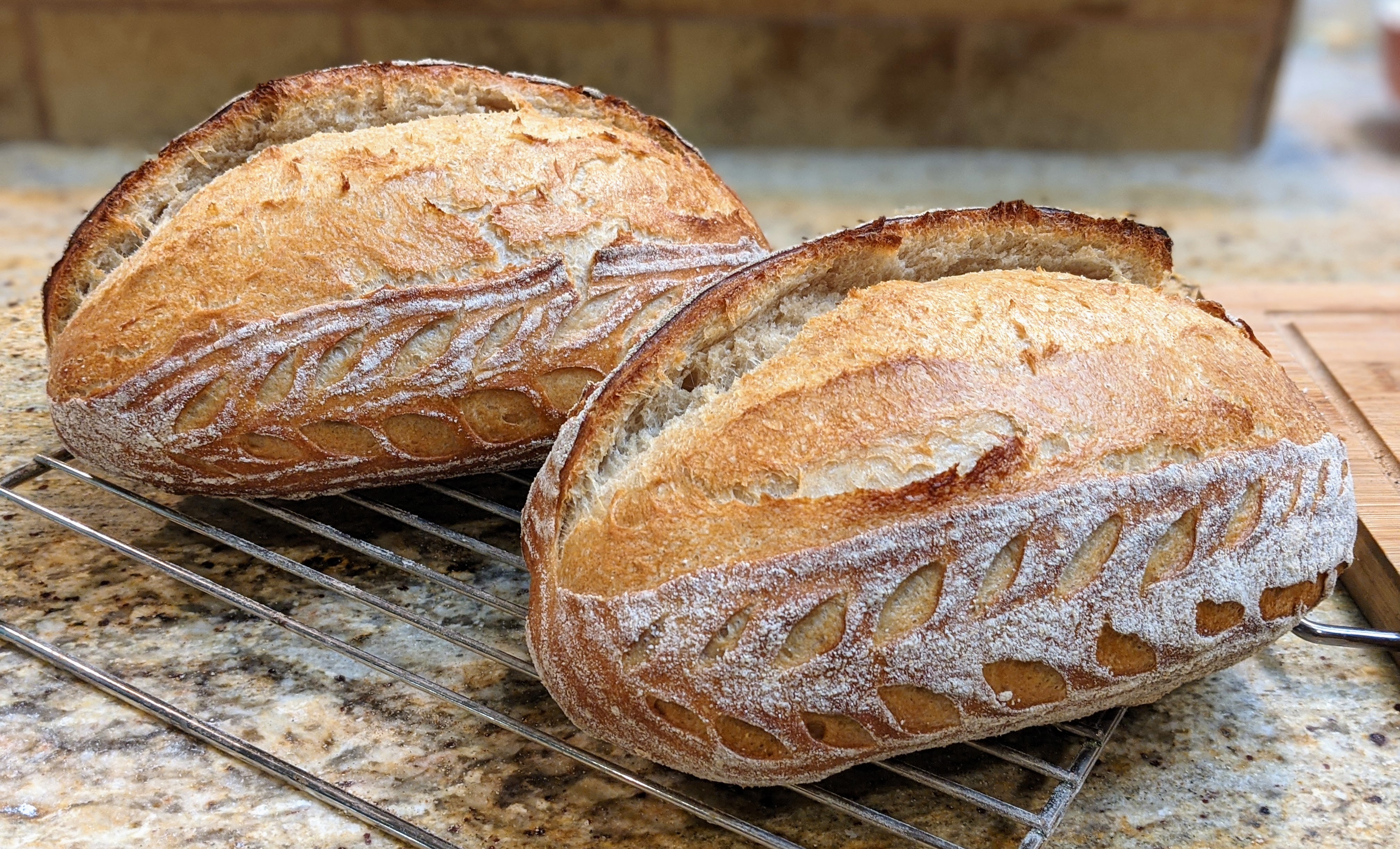
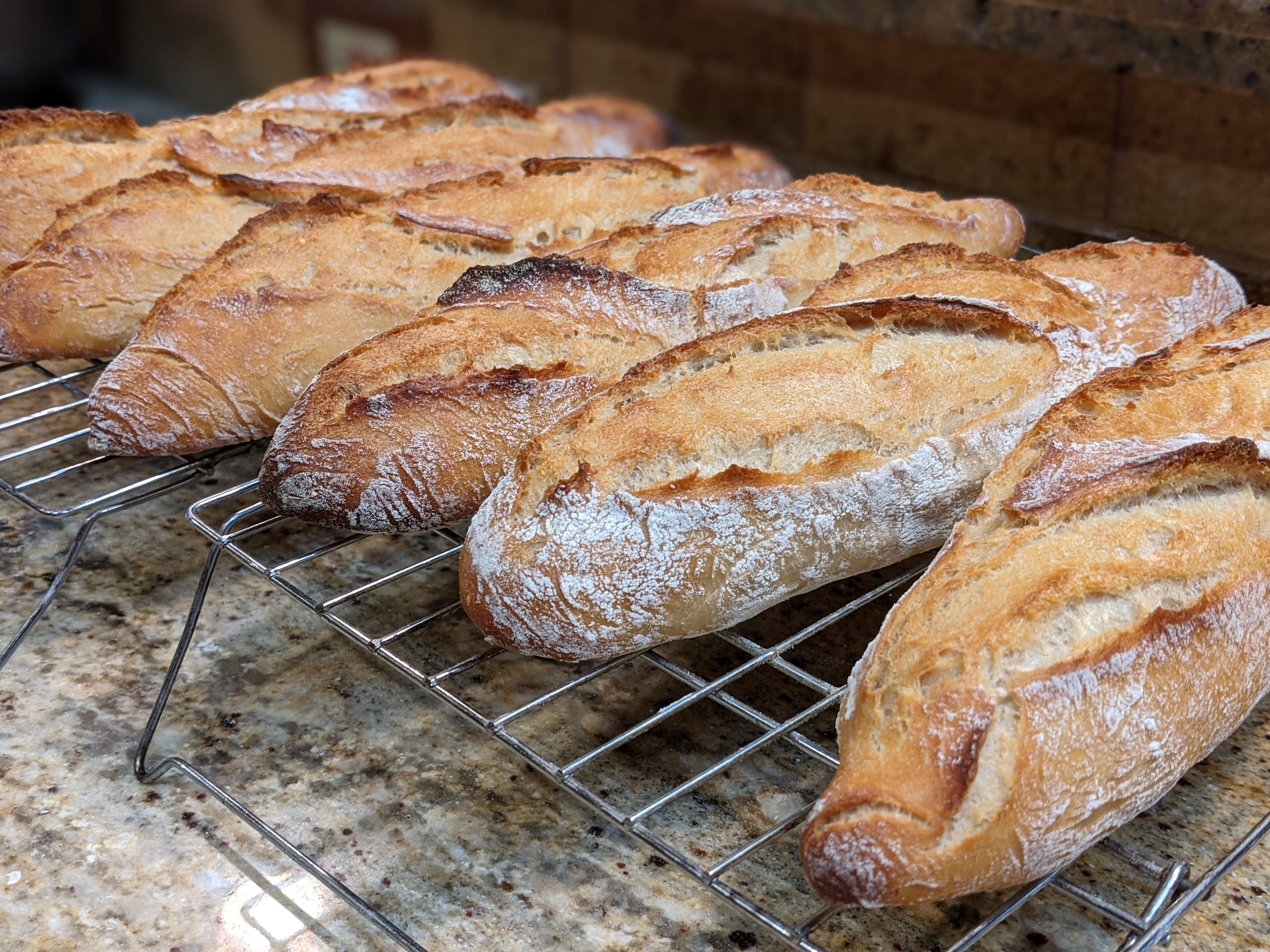
I baked the loaves above just last night after they spent just a few hours in my fridge. I wasn’t planning to bake them at the time. In fact, I was planning to leave them for 16 hours. I shaped them at 2pm, went to band rehearsal for Mass at 4pm, then when I checked them at 6pm, I saw that they had risen. Significantly.

And fallen.

So I turned on my oven and heated it up for an hour and in that time, the dough went from just beyond ready, to well over-proofed. I knew I was in trouble when I tried to remove the loaves from their bannetons and both stuck a little.

And it’s not that my retarding fridge is too warm. It’s set to 38° F and it works great for long bulk ferments. But for some reason, when I try to do long final fermentations, the yeast kind of goes haywire!

I suppose looking at it from another perspective, it’s a good problem to have. At least I know my starter is super-active. But that doesn’t mean it’s not a pain in the ass when I over-proof my bread.

Oh well… I’m going to keep on trying to find the right time.

Recipe: Pane di Como Antico

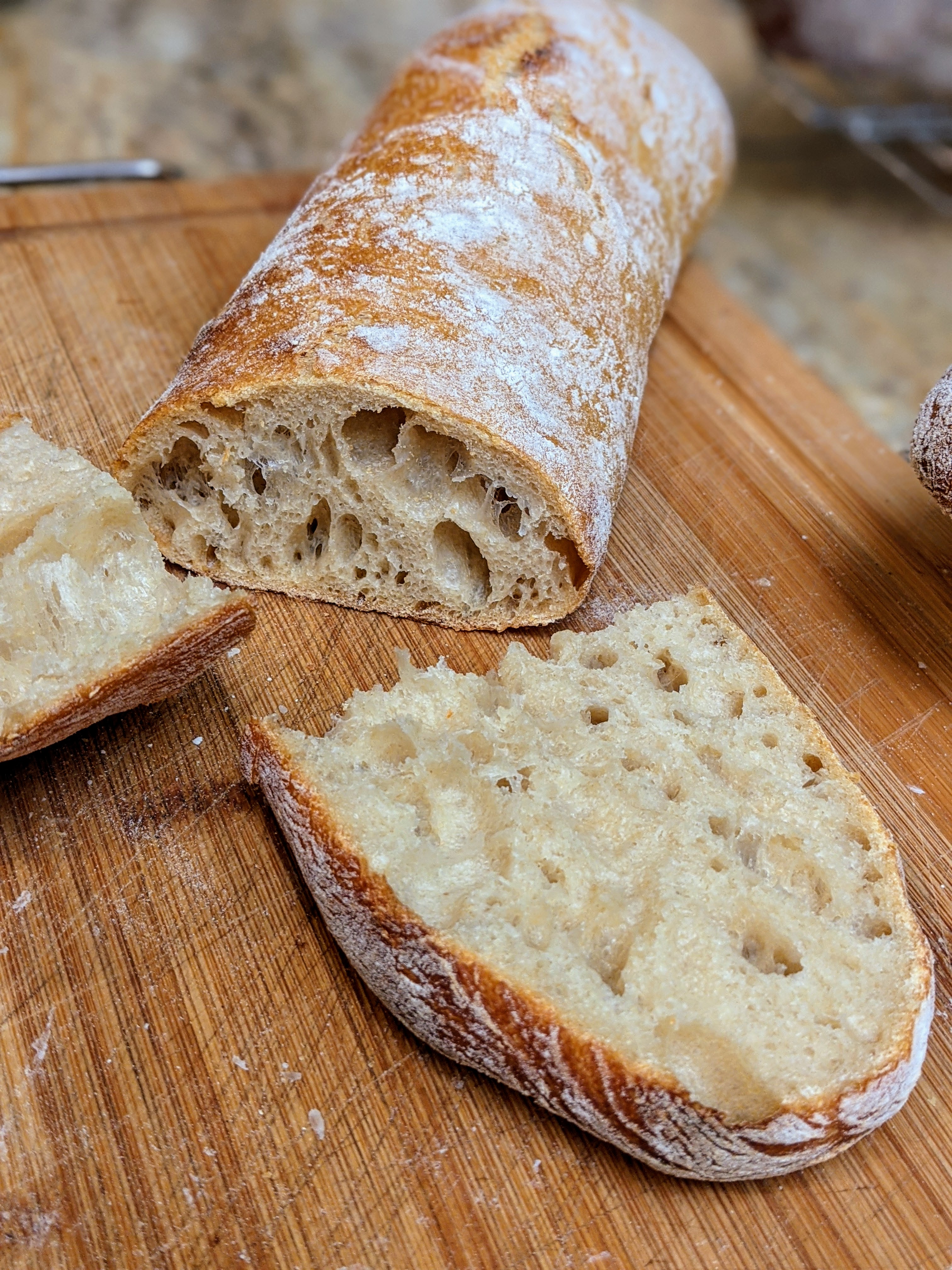
This bread’s name translates to “bread of Como of the past.” This is now known as pane francese in Italy or French bread, though this “French bread” is quite different in taste and texture from the actual French loaf which has a thinner crust and lighter crumb. But irrespective of all that, this is an ancient bread that is magnificent in both texture and taste and very easy to make.

I adapted this recipe from what I consider to be the definitive book on Italian Bread called “The Italian Baker” by the late Carol Fields. This is a GREAT book. Ms. Fields traveled throughout Italy to learn these recipes directly from local bakers in the regions she visited, so these are authentic.

As with most Italian loaves, this bread is started with a biga the day before, which is much like a poolish, using flour, water and a tiny amount of yeast, only stiffer. A poolish is 100% hydration where a biga can be anywhere from 60%-80% hydration. This recipe’s biga is 80% hydration. Let’s get started!

Overall Formula

Flour100.00%
Water75.00%
Salt1.60%
Yeast0.30%

Day 1 – Make the Biga

Unbleached AP Flour*100g
Water (75° – 80° F)80g
Yeast0.4g
*I highly recommend using either Bob’s Red Mill or King Arthur, or any unbleached AP flour that has a protein content greater than 11%. Most generic brands are 10%. Gluten development is very difficult with those flours. Also, organic is better.

I’m going to come clean and admit that I actually used my sourdough starter to make an 80% hydration levain. The Italians call this type of biga “Biga Naturale.” My levain was 100% whole wheat, so I didn’t use the whole wheat flour that’s listed in the final dough below.

Mix all the ingredients and let ferment for 12-16 hours at room temperature. As with any preferment, you want to make sure it’s nice and bubbly.

Day 2 – Final Dough

Biga180g
Unbleached AP Flour435g
Whole Wheat Flour65g
Water (80°-85° F)360g
Salt10g*
Yeast2g**
*You may see a recipe online that lists the salt as 16 grams. For this small amount of dough, 16 grams is WAY too much.

**If the weather is cold, adding a little yeast will help the process along.

The Process

According to Carol Fields, Italians predominantly use a mixer to mix up their dough. But you can mix by hand if you choose or if you don’t have a mixer. The process is pretty much the same.

  1. Set aside about 50 grams of the water and dissolve the salt in it.
  2. In a large mixing bowl, break up and dissolve the biga with the rest of the water, then add the flour in batches. If you use the yeast, add it to the water before the flour.
  3. Once you form a shaggy mass (and there are no dry ingredients), let it rest for 20 minutes to help hydrate the flour. This is kind of a hybrid autolyse.
  4. Add the saltwater to the mass, then thoroughly mix until you start forming a smooth dough that feels elastic. This is where a mixer really comes in handy.
  5. Dump the dough onto a board and knead for 8 minutes or until you feel the dough has built some strength.

    You don’t have to knead if you don’t want to. I instead mix until everything’s incorporated, transfer the dough to a container, then do two sets of folds in the first hour or so. This will create plenty of dough strength. This is more like baguettes.
  6. Transfer the dough to a lightly oiled container, then cover with plastic wrap and let it rise until almost doubled. The dough should have plenty of bubbles and should be blistering on top with a nice dome. 1 1/2 to 2 hours or until dough has expanded 50%-75% of its original size.
  7. Pour the dough onto a lightly floured board and divide it in half.
  8. Shape each half into a nice, taut ball (like you would a boule), sealing the seams, then set it aside seam side down.
  9. Sprinkle a little flour over each ball, then cover with a cloth for 20-30 minutes to bench rest. The dough should be relaxed.
  10. Preheat your oven to 485° F.
  11. After the balls have rested, shape into cylinders about a forearm’s length. I use a baguette shaping method to create some internal structure and to ensure the cylinder is even, though I don’t make pointy ends. The cylinders will be much thicker than baguettes, but they’ll have a structure you can feel.
  12. Lay each cylinder seam side down (or up if you prefer) onto a transfer board lined with parchment paper, or if you don’t have a baking stone, a parchment-lined baking sheet. The cylinders will spread and flatten a bit and that’s okay!
  13. With floured hands, dimple the cylinders all over to prevent over-springing. Don’t worry, they’ll puff up.
  14. Cover with a well-floured cloth or couche and let rise for 1 to 2 hours. You should see bubbling and blistering. Carol Fields says to wait until they’re doubled in size. But based on my experience with baguettes, what you want to look for is a puffiness to the loaves and a little resilience when you poke them. You don’t want to take final fermentation out too far, lest you lose oven spring.
  15. Bake with steam for 15 minutes (I use a broiler pan on the bottom rack and pour a cup of scalding water in it).
  16. After 15 minutes, remove your steaming tray/container and the parchment paper, turn the oven down to 425° F, then bake for another 12-15 minutes until the loaves are golden brown.
  17. Cool on racks for 30 minutes. They taste GREAT while they’re still a little warm!

I originally got “The Italian Baker” because I wanted to get a recipe for Pane Pugliese from a credible source. I made the Pane Pugliese from the book, and it turned out okay, but as I pored over the book, I saw this simple, straightforward recipe and knew I had to make it.

I think the romance of this recipe being ancient really got to me. In fact, my whole bread-making obsession has stemmed from the romanticism of making bread from recipes that are hundreds, maybe even thousands of years old. Granted, the flour of today is so much more refined than the flour of yesteryear, but to replicate bread from ages-old recipes and traditions… That’s just so FREAKIN’ cool to me!

This is what keeps me exploring. I don’t know if this will turn into anything other than a hobby, but I do know one thing: I love continuing tradition!

The “Secret” Ingredient in Baking Bread

In the home artisan bread baking community, there’s a predominant focus and emphasis put on recipes and processes. That’s natural. After all, you have to know what goes into bread and how to make it to bake it. And there are lots of people – including myself – who are relatively new to making artisan-style bread and recipes are important.

But now that I’ve gotten much more experienced, I’ve come to learn that making artisan bread isn’t just about successfully making a single loaf from time to time. And it’s certainly not just about being able to successfully follow a recipe’s instructions. To me at least, bread really doesn’t become artisan until you can bake the same kinds of bread with consistent results.

The very word artisan implies that craft and skill are involved; moreover, it implies a certain repetition to achieve consistent results from loaf to loaf. And the results, in turn, reflect the achievement of a certain aesthetic. For example, if you think about an artisan batard, the general aesthetic is that it is an oval-shaped loaf that has an ear on top, with a crumb that is fairly open.

To achieve that aesthetic, you can’t just simply follow a recipe and expect it to come out the same every time. Granted, you could get lucky. I certainly have gotten lucky myself, especially when I was first starting out baking seriously. I’d see a recipe online or in a book. I’d follow it step-by-step, and it would come out gorgeous (well, at least I thought so).

That success would urge me on and inspire me to bake again. But more often than not, my next bake of the same bread would go seriously awry, and well, not knowing what went wrong or what caused it was as if I was a balloon and someone came up and pricked me with a pin! Talk about being completely deflated!

But I’m not the kind to give up. So I began to educate myself and do a deep-dive into the process of handmade artisan bread. With that, I decided to focus on mastering four types of loaves: Boules, Batards, Baguettes, and Ciabattas. Each would have their own flour formulation so I could affect different flavor profiles in each. And through the regimen I’ve developed this past year, I’ve gained the confidence to know that whatever kind of loaf I choose to bake, it’ll come out the same.

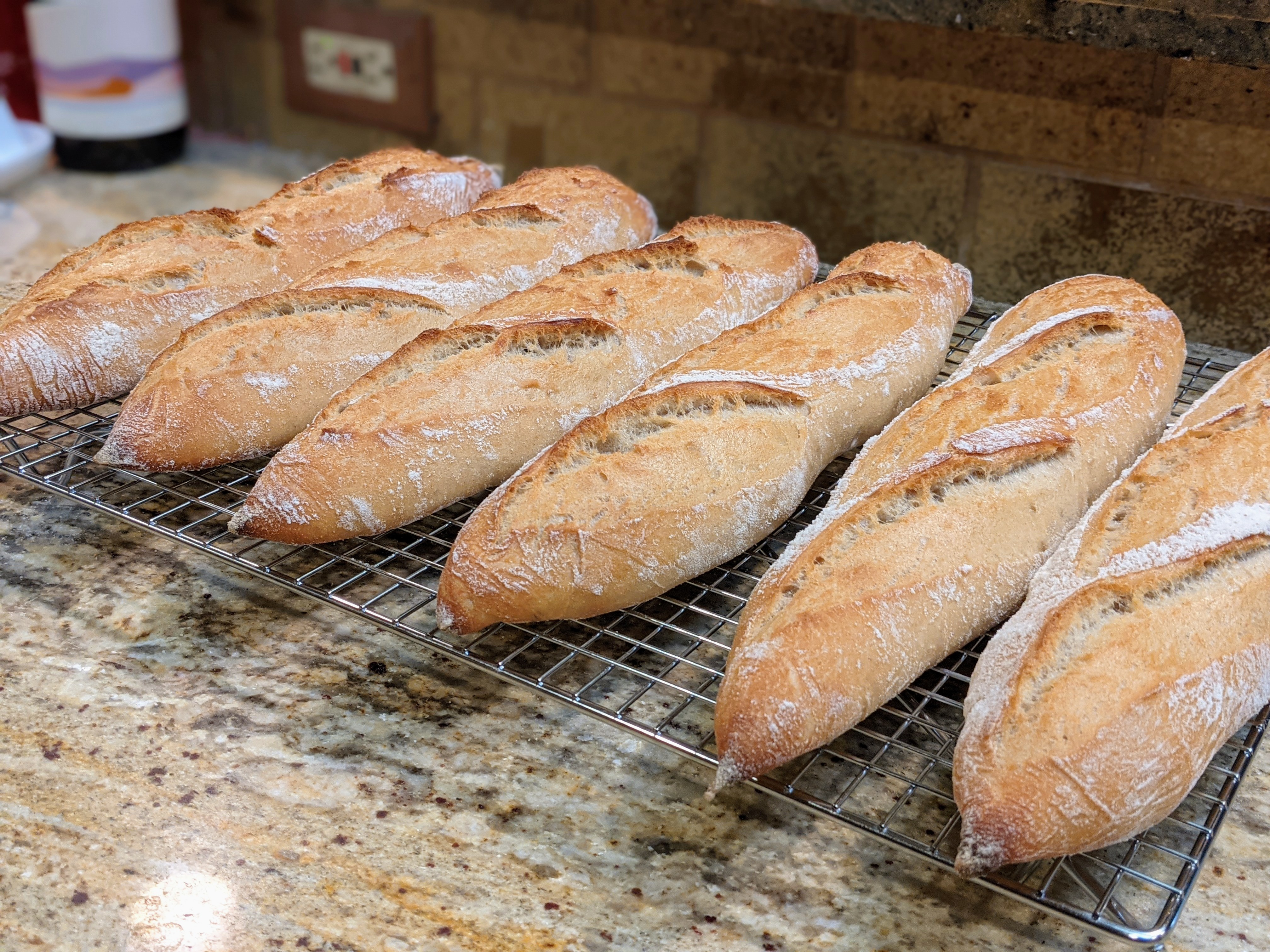
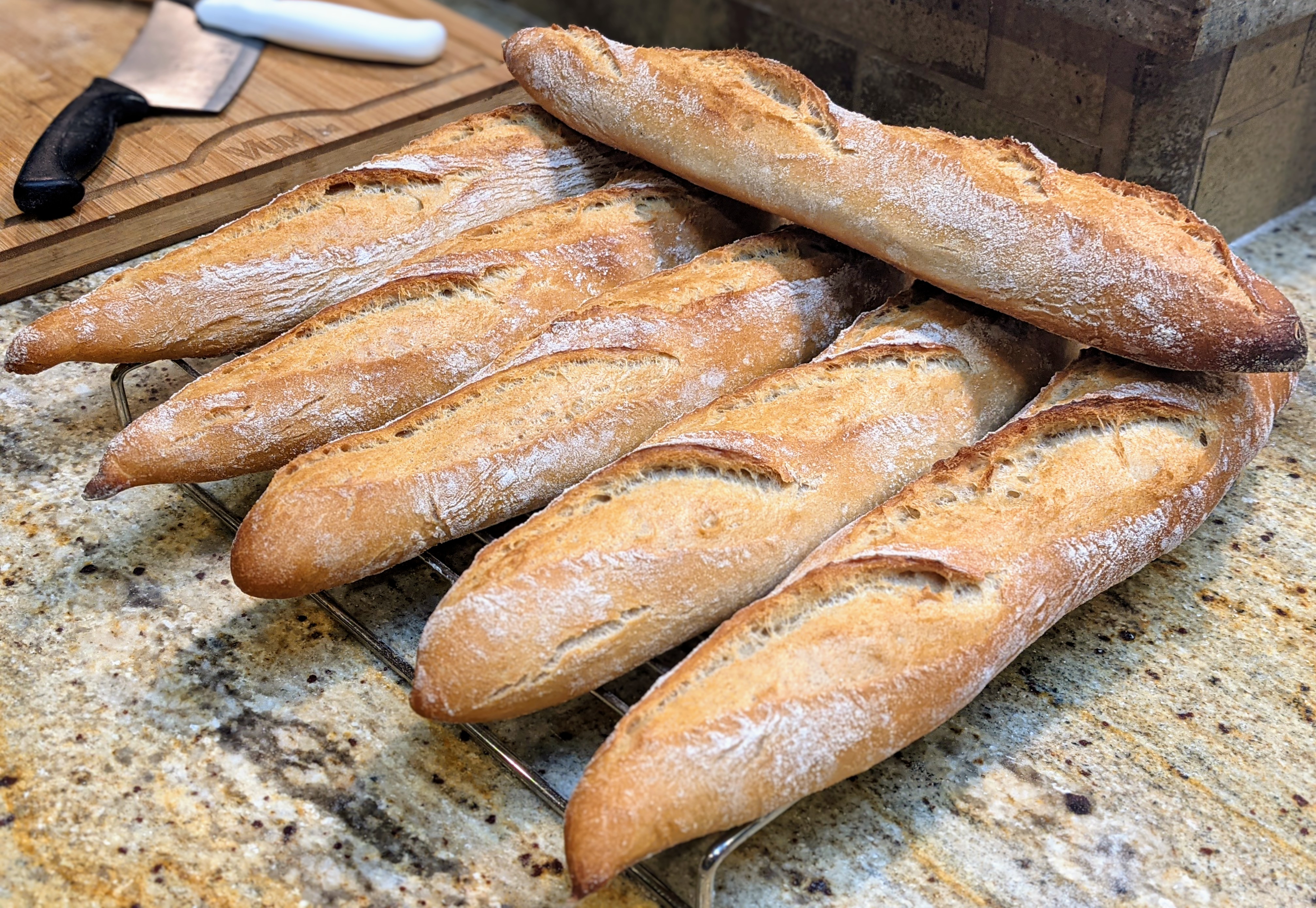
But as I was baking the other day and admiring the gorgeous baguettes that had just come out of the oven, I started thinking about how I was able to make baguettes – or any loaf – the same from bake to bake. Was it my process? Was it my recipe? My shaping technique? It was “yes” to all those questions.

And for that particular batch of baguettes, I actually had a fairly challenging time with the dough. My starter was particularly active that day and things were happening way too fast for my comfort level. And since I only had two opportunities to build dough strength, I didn’t want to have the dough fully proved before I could build some strength into it. So I made sure to do a lot more stretch and folds in each session to ensure that the dough would be strong. I knew that would knock down and degas the dough, but with the yeasts being super-active, I knew I’d get plenty of rise.

Then it dawned on me that what made this particular bake and other bakes successful was something related to my process but not necessarily part of it. It was mindfulness.


mind·ful·ness/ˈmīn(d)f(ə)lnəs

  1. the quality or state of being conscious or aware of something.”their mindfulness of the wider cinematic tradition”
  2. a mental state achieved by focusing one’s awareness on the present moment, while calmly acknowledging and accepting one’s feelings, thoughts, and bodily sensations, used as a therapeutic technique.

The one thing I came to realize is that I have to be constantly aware of what’s going on in my process at all times; in other words, being mindful of the various nuances and gotchas that could occur during a baking process. And as with anything in life, if you’re not aware of what’s going on with what you’re doing and what’s going on around you, it’s going to affect your success, and oftentimes, in negative ways.

Mindfulness allows us to respond – not react – to changing conditions; seemingly being able to anticipate exactly what to do when certain conditions arise. Reaction to an event or circumstance is almost always chaotic because when the event occurs, we have to evaluate what has happened then figure out what to do, and once we finally figure it out, it’s often too late.

Contrast that to responding to a situation where we’ve already considered the various permutations of things that could occur based on our awareness of current conditions. The action we ultimately take seems much more organic. We just make it happen. There is definitely a life lesson in this that goes way beyond baking bread. I could probably write a whole self-help book on the subject. But I’ll just keep it bread.

Mindfulness also ensures we’re precise in what we do. Especially with baking bread, making precise measurements is absolutely critical. When a recipe calls for 2 grams of yeast you need to be precise about those two grams. The reason is that the process’ timings are based on that amount. If you use too much, the process will be much faster as the flour gets metabolized faster; using less, the converse occurs.

Even with shaping, you have to be precise and deliberate. With shaping, you’re not just getting the dough to conform to a particular geometric shape. You’re building the internal gluten network AND developing the outer skin of the loaf. In other words, you can’t just roll up a piece of dough and expect it to magically become a baguette or batard. You have to be mindful of what the shaping technique is trying to accomplish and you follow the technique precisely, otherwise, your loaves will come out looking different.

Those are just two examples of the criticality of being mindful. I could go on forever, but I think I made the point. And to me, mindfulness is really the secret ingredient to baking bread.

Recipe: Sourdough Ciabattas

Besides baguettes, ciabattas are my other favorite loaves to make. Once I learned Master Chef Markus Farbinger’s recipe, I was hooked! Ciabattas are SO easy to make. Whether you use the standard recipe that I linked to above, or use a sourdough starter, it can be a same-day bake! Though if you go the sourdough route, I suggest doing an overnight bulk ferment, which I’ll explain below.

With this particular recipe, I’m going for a much lighter crumb and am using bread and AP flour. I know that I have eschewed using white flours, but the enzymes in the sourdough starter help break down the flour to make it more digestible, so while the flour may not be as nutritious as whole wheat and high-extraction flour, we’ll still get plenty of nutrition from the bread. That said, let’s get started!

Ingredients

Levain

Starter200 grams
Unbleached Flour150 grams
Water (90°-95° F)150 grams
For flour, I use a high-extraction flour from Azure Standard called Ultra Unifine Bread Flour.

Final Dough

Levain500 grams
Unbleached Bread Flour250 grams
Unbleached AP Flour500 grams
Water*550-600 grams
Salt20 grams
Instant Yeast** (optional)2 grams
*With water, you have to gauge it. 550 grams will get you to 80% hydration. But depending on your flour, if the dough is a little stiff, you’ll want to add more water. The initially mixed dough sh9uld be the consistency of a stiff batter.

**Using a bit of instant yeast is purely optional, but I’ve found that it is very helpful on cold days. I wouldn’t use it on hot days where I can rely on the ambient temperature of my kitchen to keep the microbes super-active.

Instead of using separate containers for the levain and the final dough, I just use a 6-quart Cambro tub. When my levain’s ready, I just add all the ingredients to the tub. It’s much more convenient. I’m going to provide some times as guides during the process. By no means are they hard and fast, especially with varying kitchen temps where the bulk and final fermentations can be shorter or longer depending on the ambient temperature of your kitchen.

Make the Levain

  1. Feed your starter so you can produce 200 grams of starter. When the starter’s ready, transfer 200 grams to a large mixing bowl or a large plastic tub. Note that the starter doesn’t have to be active and at its peak. My daily grape starter is maintained at 400 grams total, so I just use 200 grams from my mother culture, then feed her. Works like a charm!
  2. (4:00 pm) To the 200 grams of starter, add 150 grams of unbleached flour (here’s where I use my high-extraction flour, but you can use any unbleached flour that you want) and 150 grams of water. Mix thoroughly until smooth.
  3. (4:15 pm) Place the levain container in a warm place to ferment. It has been cold as of late, so I put my levain container in my oven with the door cracked to get a little heat from the oven light.
  4. (8:30 pm) If you have a fairly active starter, your levain should be actively bubbling by now. If it’s not, I suggest waiting until it’s really active.

Mix the Final Dough

  1. (8:40 pm) There’s no autolyse with a ciabatta, so just add all the final dough ingredients to the levain and mix thoroughly until you’ve incorporated all the dry ingredients and create a shaggy mass (about 5 minutes). Note: If you’re going to do a same-day bake, I suggest turning on your oven to 250° C or ~485° F now.
    1. It’s a bit messy, but I prefer to mix the dough by hand, alternating squeezing the dough through my open fingers, then using a stretch and fold motion to turn the dough. I’ll do this until I feel comfortable that the salt and yeast have been totally incorporated.
  2. Clean off your mixing hand and let the shaggy mass rest for 20 minutes.
  3. (9:05 pm) Using a wet hand, do a series of stretch and folds until you feel the tension in the dough building. When it kind of fights you, then let the dough rest for another 20 minutes.
  4. (9:25 pm) Dump the dough onto your well-floured work surface – it should be really well-floured – making sure you clean and scrape all the excess dough left in the container, then wipe the container with a paper towel.. Using quick motions, pull the dough into a rough rectangle, then do letter folds, front to back, and side to side at least three rounds. Make sure that when you fold, you also pull flap, then fold over. Once you feel that the dough strength has been built up (it will fight you a bit), roll the dough onto its seams, then using your bench scraper, form the dough into a ball.
  5. (9:30 pm) Spray the container with a light coat of olive oil (I use one of those PAM olive oil spritzers) then gently pick up the dough ball (you can form it up a bit more to make it easier), then drop it into the container.
  6. So here we have two alternatives:
    1. Let the dough rest for 5-10 minutes, then put the container in your fridge for an overnight bulk ferment.
    2. Let the dough rest for 20 minutes, and you’ll be ready for shaping.

Dividing and “Shaping”

Again, depending on how you do the bulk ferment there are two routes to take. The steps are similar, but different enough to warrant discussing them in separate sections.

Same-Day Bake

  1. After 20 minutes, again liberally sprinkle flour on your work surface, then slide the dough ball out of the mixing bowl.
  2. Using quick motions, gently tug the ball into a rough rectangle, then divide the dough into equal pieces. If I’m making loaves, I cut the rectangle in half.
  3. Technically, you’re not supposed shape the ciabatta dough. You pull it into a basic form. But I like to make my loaves into little rectangular pillows, so I gently letter fold the divided dough pieces, being extremely careful not to degas them.
  4. Once you’ve formed the loaves, gathering them from the long ends and cupping under the dough, transfer them to a well-floured couche, seam side up.
  5. Sprinkle the loaves with a bit of flour, then cover them and let proof for 10 minutes.
  6. After 10 minutes, check the loaves for springiness using the finger dent test. You want to have some spring. If there’s a bit too much; that is, the dough immediately springs back, let it rest another 10 minutes.

Overnight Ferment

If you did the overnight ferment, check your dough in your fridge. It should have at least doubled in size. If it hasn’t, you’ll have to wait. My retarder is set to 39° F and it takes 10-12 hours for my dough to double. So if you’re dough’s ready, turn on your oven now and set it to 250° C or about 485° F. Do not proceed until your oven is up to temp, then divide. If you’re using a baking stone, wait at least an hour before proceeding.

  1. Gently slide the fully fermented dough out of the bowl or container on a very well-floured surface. It should easily slide out since you oiled it down.
  2. As above, gently tug the ball into a rough rectangle then divide the dough into equal-sized pieces. Personally, the anal-retentive part of me, can’t resist scaling the pieces so they’re all roughly the same weight.
  3. (optional) As I mentioned above, you don’t have to shape the loaves, but I always do a simple letter fold, then place the loaves on seam side up on a well-floured couche.
  4. Sprinkle the loaves with flour, cover them, then let them rest for 20 minutes.
  5. At this point, I transfer the loaves, seam side down to my transfer board, covered with parchment paper. If you’re not going to use a baking stone, you can use a parchment-covered metal baking sheet.
  6. Sprinkle the tops with flour, cover them, then let the loaves rest for 20 minutes.

Bake

  1. Bake the loaves for 20 minutes (250° C/485 F) with steam (I now use a broiler pan on the bottom rack of my oven and pour a cup of scalding water into it).
  2. Remove your steaming tray after 20 min. Turn down the oven to 200° C/400° F) and continue baking for another 15 minutes, though check for doneness at 10 minutes.
  3. If you want a real crunchy crust, turn the oven off, then leave the loaves in the oven with a slightly cracked door for 10-15 minutes to cure the crusts.

As with my other recipes, I realize that I’ve been a bit long-winded. But I want to make sure I cover as much nuance as possible.

Yeah, Yeah, Yeah… Fails Make Us Better… BS… Coffee Helps Avoid Them!

It is said the only way to learn is to fail. Bullshit. Especially if you know what you did. So this morning, I was all set to bake a batard I had sitting in my fridge since last night for a cold ferment. I got out of bed, performed my morning ablutions, then went into the kitchen to preheat my oven.

Coffee was ready, so I poured myself a cup, then set about to make myself some breakfast. After preparing my simple meal of a toasted sourdough sandwich with some charcuterie meats and cheese, I sat down in front of the TV to watch the talking heads have their post-election discussions.

My oven signaled that it had come up to temp, and without a second thought – and mind you, I hadn’t finished my first cup of coffee at that point – I got up, went to my dough retarder fridge in the garage, pulled the loaf, stuck it on my board, scored it, then popped it into the oven. Then I got some hot water and poured it into the broiler pan I use for steaming.

About ten minutes into the bake, and coincidentally having finished my first cup of coffee, it dawned on me that I probably didn’t give my baking stone enough time to come to temp. So I got my ass up off the couch and checked the loaf.

Expletives immediately issued from my mouth seemingly of their own volition as my eyes beheld the fly saucer shape in front of me. It was like looking at the silhouette of the Jupiter 2 from Lost in Space but in bread form! My potty-mouth soon turned to laughter as I mentally kicked myself for this rookie maneuver.

Is there a lesson in any of this? Obviously, I need to be more mindful. That’s a given. But to be honest, I doubt I would’ve made this mistake had I been a bit more alert.

Coffee helps…

Cure Your Bread!

I’ve actually been meaning to write about this for a while but keep on forgetting because it was just part of my process. But a few months ago, I got a little frustrated with my loaves’ crusts. They looked great, but they just weren’t very crusty; that is, they were softer and more pliant than I wanted. So I did a little research on various techniques and discovered a neat trick that I use for all my loaves now, and that is what can be called, curing my loaves when they’re done.

I use an oven mitt to crack the door.

All that entails is simply shutting off the oven when the timer goes off, then cracking the oven door and letting the loaves sit in the oven for about 20 minutes. The oven is still quite warm but no longer cooking, per se, but it’s hot enough to dry out the crust which, in turn, makes it crunchier.

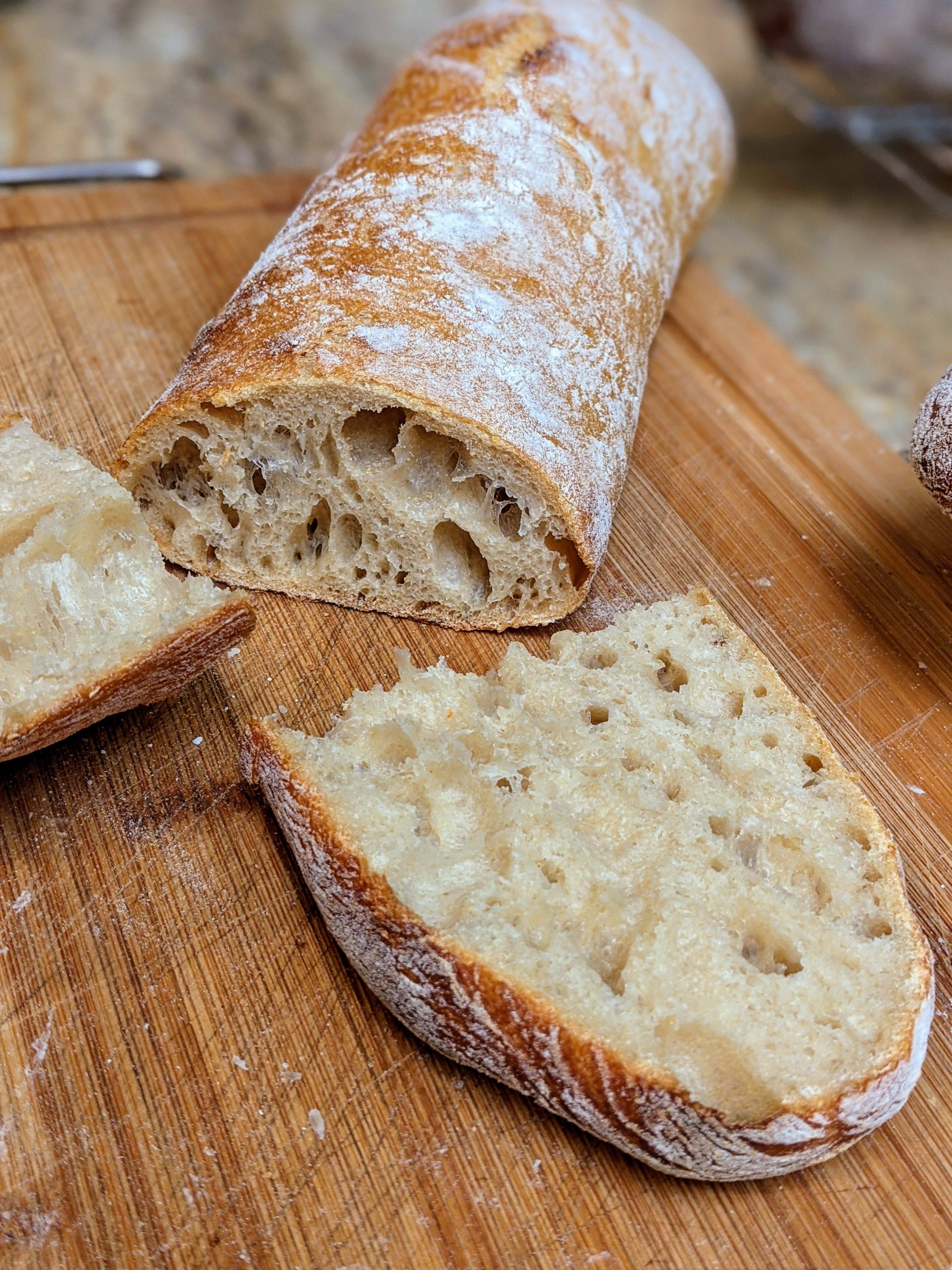
Once I started doing this – especially with my baguettes – my crusts have been nice and crunchy! Check this out!

Those crusts are gorgeous and absolutely crunchy!

Experimentation Sometimes Sucks!

These past several bakes I’ve been experimenting with different AP flours as I use a three-flour blend of whole wheat, high-extraction, and AP flour depending on the types of bread that I’m baking. I’m pretty much set in the whole wheat and high-extraction flour area, but I’ve been trying out different AP flours for one simple reason: cost savings. Flour expenditures add up and I need to be as economical as I can considering how fast I go through it.

Now you might be thinking, Just get some King Arthur AP flour. But here’s the rub: It’s almost $7.00 per 5-lb. bag! I go through 10 pounds of AP flour a week. No doubt, it’s a high-quality flour, but the cost adds up. Bob’s Red Mill AP flour is great as well and it’s only $5.00 per 5-lb. bag. BUT, Gold Medal and grocery store “house” brands (let’s call them generic flours) are less than $4.00 per 5-lb bag, making them excellent alternatives, at least cost-wise.

On the surface, the cost-savings is great, but from a practical standpoint, there is a cost, and that is that the generic flours are very low in protein. Whereas Bob’s Red Mill and King Arthur AP flours are just below 12% in protein, generic flours are around 10%. That might not seem like much of a difference. But it’s huge.

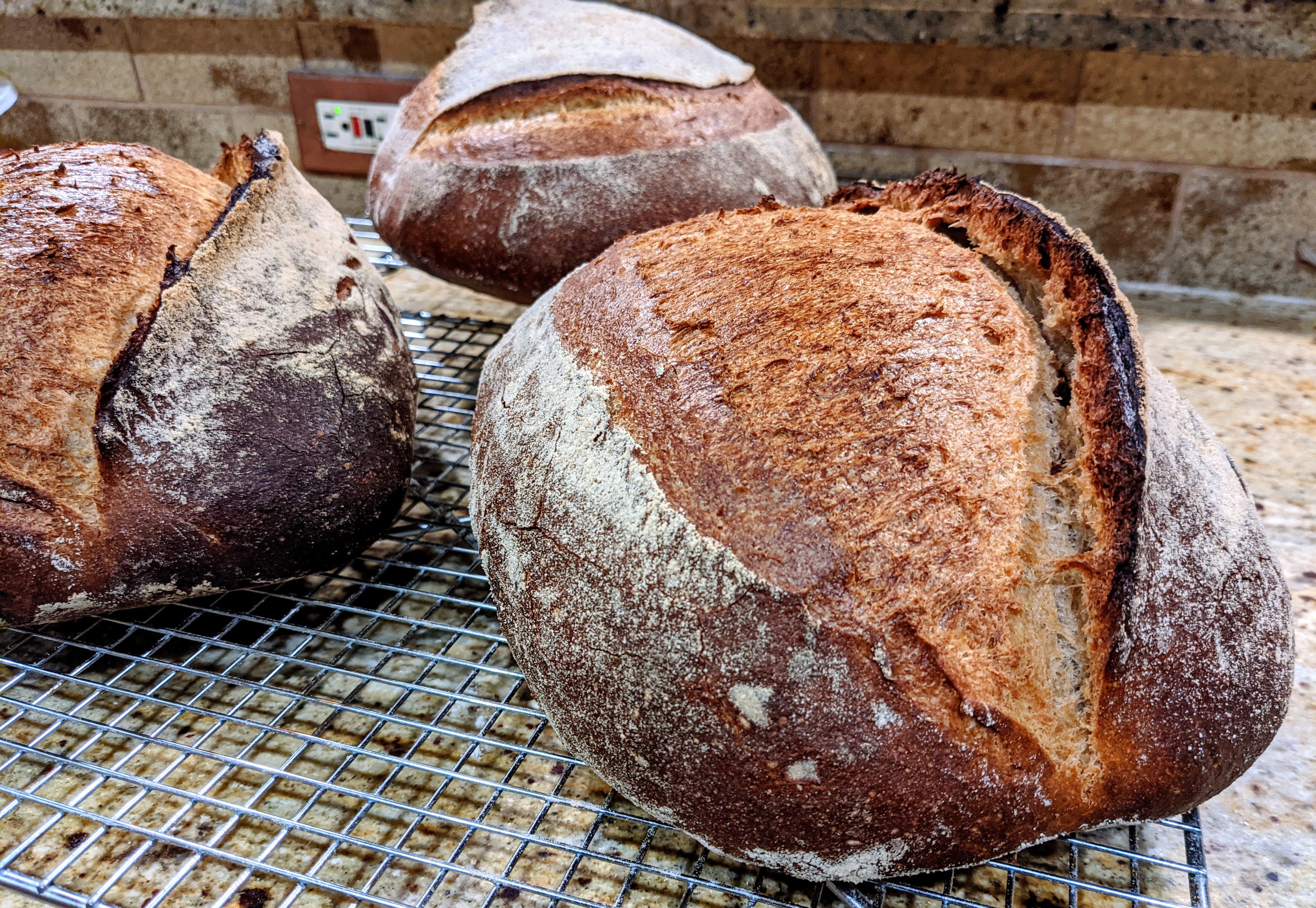
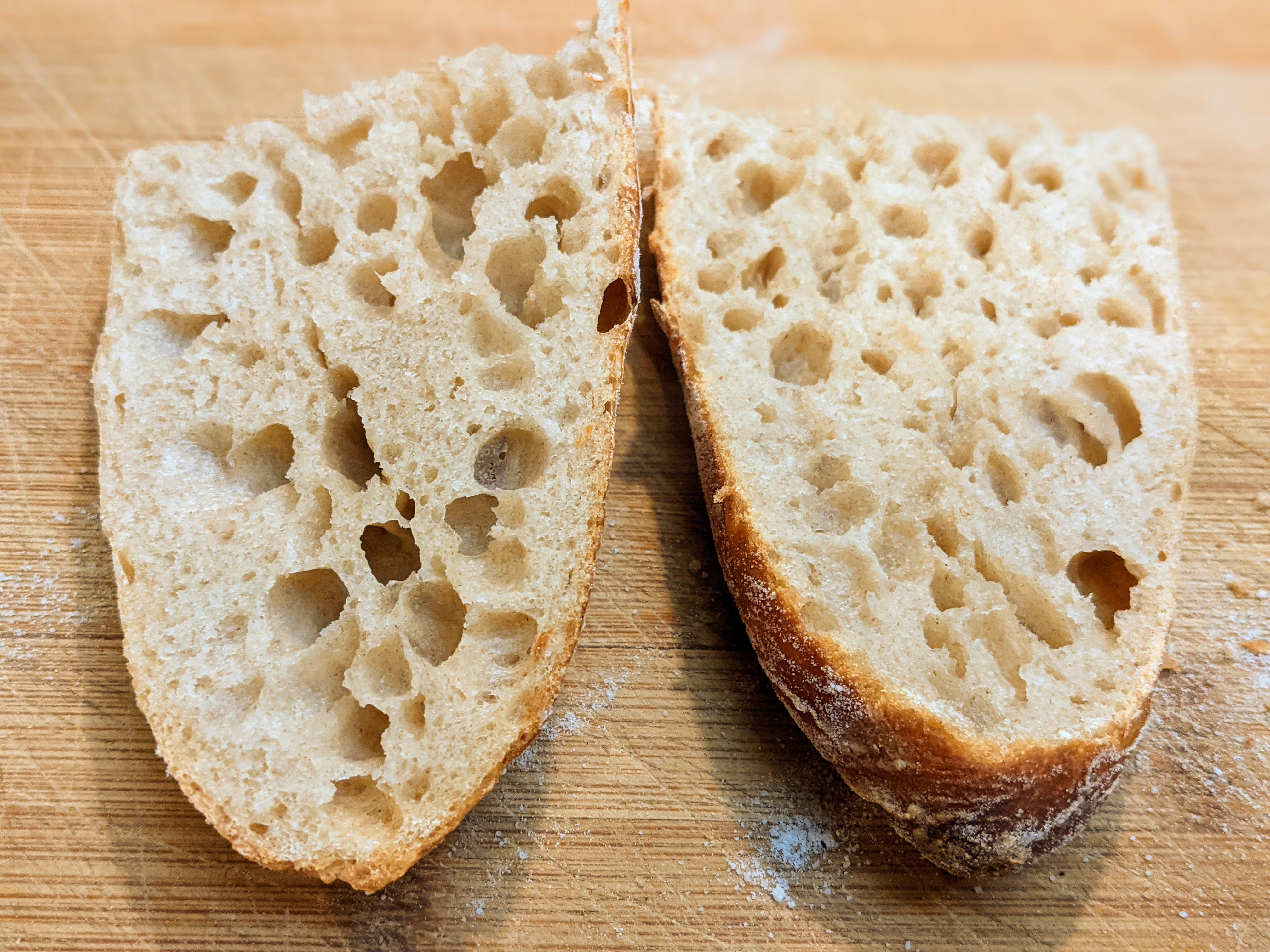
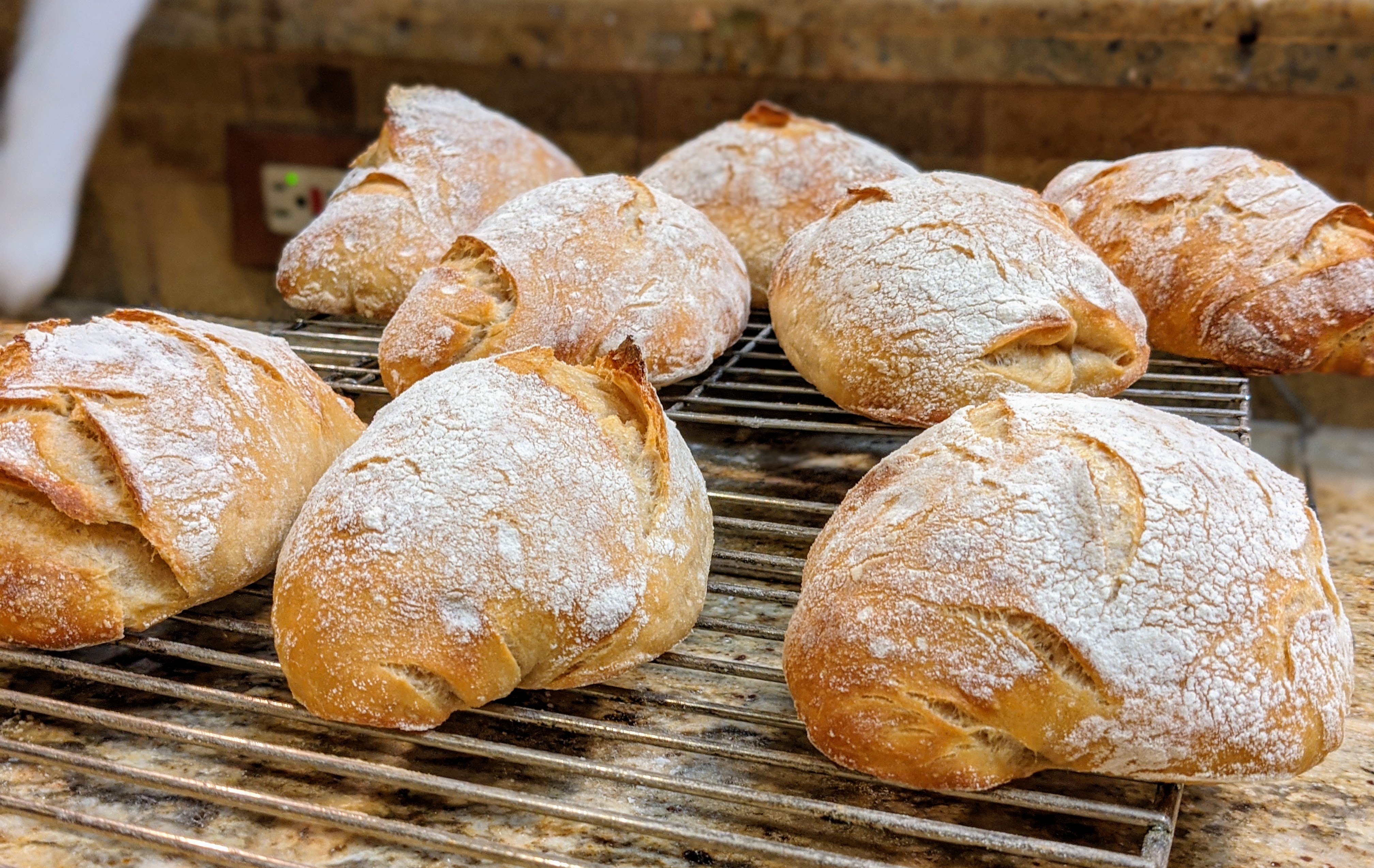
The picture I included at the top of this post is of high-hydration sourdough loaves that I baked over the last couple of days (~85% hydration). They were all made with half Gold Medal Unbleached AP flour, 20% whole wheat flour, and 30% high-extraction flour. The crumb in each of the loaves is nice, but the oven spring was horrible! And developing the gluten in these loaves was incredibly difficult.

Granted, the high-hydration dough doesn’t want to hold up once shaped. But with proper gluten formation, it will not lose its shape readily, and with the whole wheat and high-extraction flour, I thought I’d have plenty of protein to give me some structure. But with these loaves, no matter how much I worked the dough, I just couldn’t get them to hold together. I even did an overnight cold ferment to help set the dough, but even that didn’t work.

As a result, the loaves are a little flat. Without a doubt, they’re delicious. But I can’t say that I’m not disappointed with the end result. I’m actually extremely disappointed. It takes a long time to make bread, so it sucks when things don’t turn out as expected. Technically they were all supposed to be batards, but they ended up being more like ciabattas. I swear that I spent lots of time with the loaves, developing an outer skin, but to no avail.

Now, one way of approaching this is to add some vital wheat gluten. I actually did that with the uncut set of loaves in the picture. Maybe I didn’t spend enough time developing the gluten, but all those loaves went through six sets of stretches and folds over the course of three hours. But for the life of me, I couldn’t get the dough to “fight” me in any of the sets. I’d feel a bit of tension, but not really appreciable tension. Even my regular ciabatta dough develops great tension!

So it kind of boils down to this: Generic, grocery store AP flour is great for things like cakes and cookies. But for bread, there’s a base threshold. I just can’t go below it. Luckily though, my favorite mill, Azure Standard, carries an AP flour that I can’t wait to get delivered. It’s unbleached, unbromated, and organic. I ordered 20 lbs. and I can’t wait until it arrives!

In closing, despite my disappointment, the bread didn’t go to waste. We made sandwiches from the cut loaf, and I gave the other loaves away. Like I said, they were delicious, so I didn’t have any worries in the taste department. But when you’re after an aesthetic, you expect the aesthetic, and falling short can be frustrating to say the least.

I’m Making Nancy Silverton’s Grape Starter!

I’ve resisted making a sourdough starter for a long time. It wasn’t that I was completely averse to it. It was just that I didn’t want to divert my focus from the other steps in bread production. To me, a levain is just a leavening agent, a tool. But it’s a tool that needs time to develop; honestly, time that I just didn’t want to spend, having developed and maintained a culture in the past.

But I got to the point where I’ve gained enough confidence in my process, so I started to create starters (yes, plural). I have one that I feed every day that focuses on the yeast that I use for baguettes and ciabatta. And I have one in the fridge that I use to really bring out the sour notes in my bread, and just this past weekend, I started creating a grape starter, inspired by acclaimed chef and restauranteur, Nancy Silverton.

I’ve been intrigued by this sourdough starter ever since I read about it in some random blog post. To be honest, I had known about Nancy Silverton for a long time, but I had no idea she had made her starter from grapes! When I read that, I started doing research and vowed that once I had the time, I’d make this starter. Well that time came a few days ago.

Nancy’s recipe calls for unwashed organic grapes. This is important because they’re covered with natural yeast. That said, even washed, organic grapes will still have microbes on them, but if you look at fresh-off-the-vine grapes, they’re covered with a dusting of natural yeast.

Luckily for me, my best friend works at Eden Rift Vineyards in Hollister, CA. So I took a day trip down to Hollister this past Saturday and after drinking some VERY GOOD wine, he clipped a cluster of grenache grapes from one of the vines. Talk about fresh! If you look at the picture of the cluster above, you’ll see the dusting of yeast all over the grapes.

For recipe guidance, I referenced two different articles from Food.com and The Quest for Sourdough. If you reference the Food.com article, the “real” instructions are actually in the first comment in the comments section. I used the “The Quest…” article as simply a reference for the weights as I didn’t have the same weights listed in the Food.com article.

So now I’m on Day 3. What I’ve noticed with this particular starter is that the fermentation bubbles are actually much smaller than with my other starters. I forgot to take a picture of the starter before I mixed it, but I was amazed at the difference between how those wild yeasts act vs. the wild yeasts from my regular starters (which I suspect has a lot of commercial s. cervisiae).

The smell is fruity of course and quite alcoholic. With that grape juice, wine is also being made – those fine bubbles that I mentioned above are reminiscent of champagne bubbles – very cool. Taste-wise, the sourness is actually much milder than I expected, though I imagine it’ll get more intense once the two-week process to grow this starter is complete.

I’m SO looking forward to using this starter!

I’m Not Going to Name My Damn Starter…

…or my peel, or my freakin’ fermentation container for that matter. If you want to do that, go ahead. It’s all good. And no, I wouldn’t dream of ridiculing anyone who does this. I’m just not that sentimental when it comes to baking and cooking.

Shit! If I was going to name anything, I should probably name my cast iron skillet that I’ve been seasoning for almost 30 years. But a starter? I’m not so sure.

However, when I was feeding the starter in the picture the other day, I harkened back to Anthony Bourdain’s book, “Kitchen Confidential,” where in one segment, his bread guy called him and said, “Feed the bitch! Feed the bitch!” referring to his starter. When my wife walked into the kitchen while I was in the middle of remembering this passage, she asked me, “Watcha doin’?” I laughed and replied, “I’m feeding the bitch!” That got a weird look and I didn’t explain myself…

So maybe I’ll be a copycat and call it The Bitch… Nah… I’m just not attached enough to it to personify it. It’s just another tool. To me, it’s a consumable, like seasonings. Granted, I have to build up and maintain a starter, but even still, it’s something I consume in the process of baking.

That said, though I may not name my starter cultures, I do intend to classify them based on what I want out of them. Yes, I’m going to build up a few different starters. This particular starter is probably going to be my “daily” starter that I use for everyday baking. It has some classic banana esters that are pretty damn cool-smelling! I’m also going to be building up a couple of different grape starters based on Nancy Silverton’s grape starter recipe that will mostly be held in cold storage. I’m getting the grapes from the Eden Rift vineyard in the Cienega Valley in Hollister, CA tomorrow. I’m really looking forward to getting those starters built up!

But no, I ain’t gonna name them!