Engaging the Five Senses

It was supposed to be a batard… 🙂

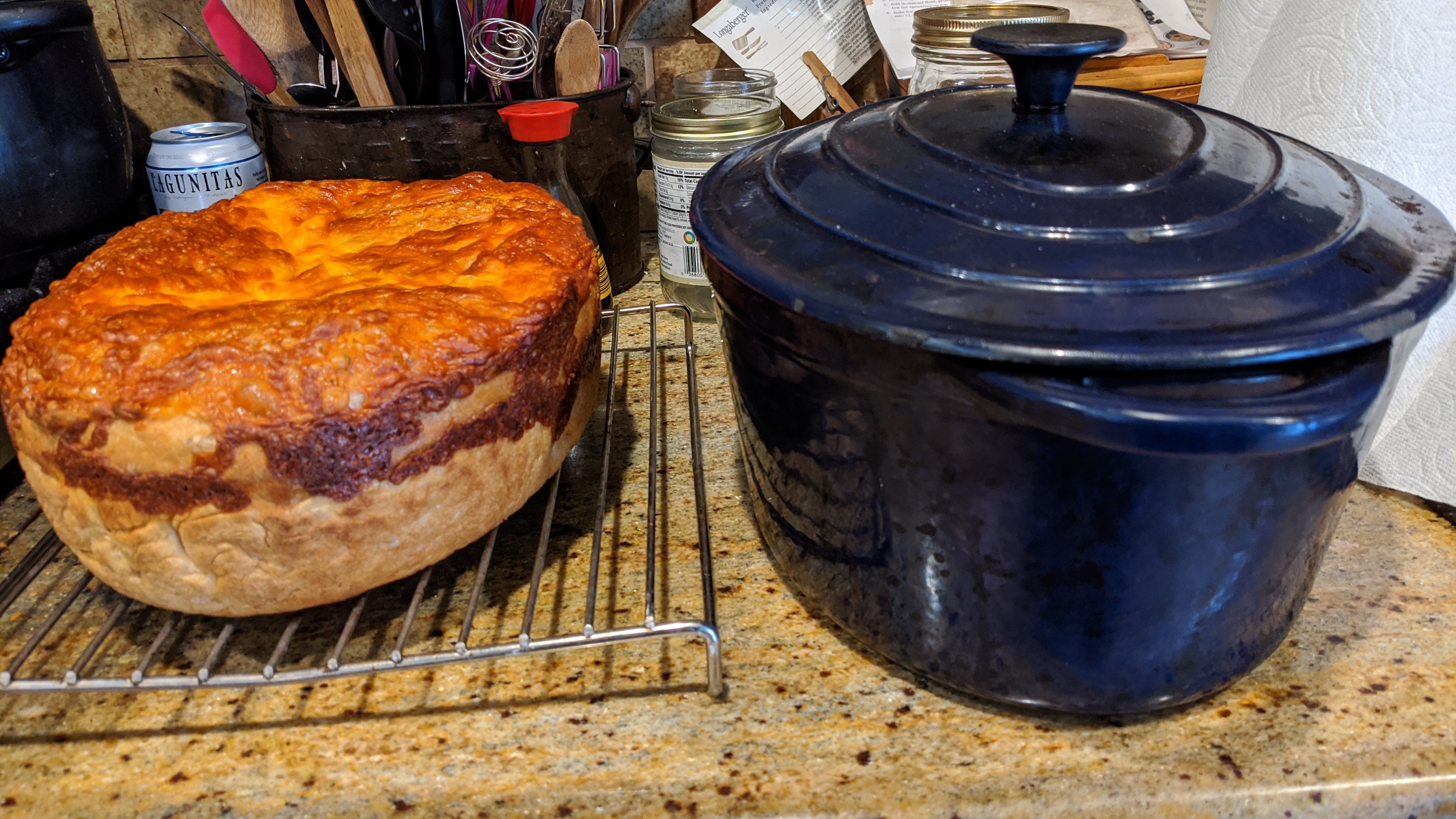
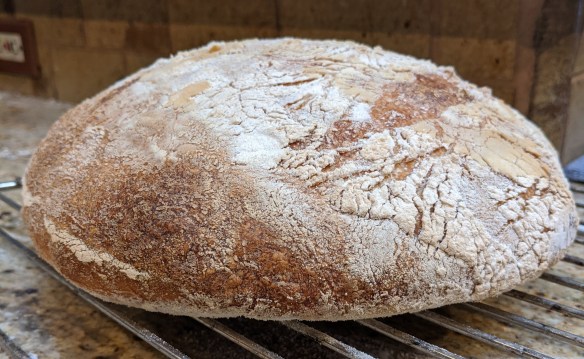
I’ve been baking bread for over 40 years, but I haven’t really taken it seriously until this past year. My only goal up to that point was to create something edible. Take, for instance, the loaf pictured above. It was absolutely delicious. But I remembered thinking it didn’t look right. It completely conformed to the shape of my Dutch oven. It was supposed to be a batard! But it exploded in my pot probably due to it being under-fermented.

My wife, ever supportive of my new passion, told me that it didn’t matter as long as the bread tasted good. But I showed her pictures from Ken Forkish’s “Flour Water Salt Yeast” and said that I wanted to make bread that looked like the bread in the pictures and further explaining that as an artist (I’m a part-time professional musician), aesthetics are important to me.

After that conversation, I put my foot down and decided to not only make bread that tasted good, but it had to look good as well.

But since then, I’ve evolved my sense of aesthetics. Now, I feel as if a successful bake is one in which the bread appeals to all five senses.

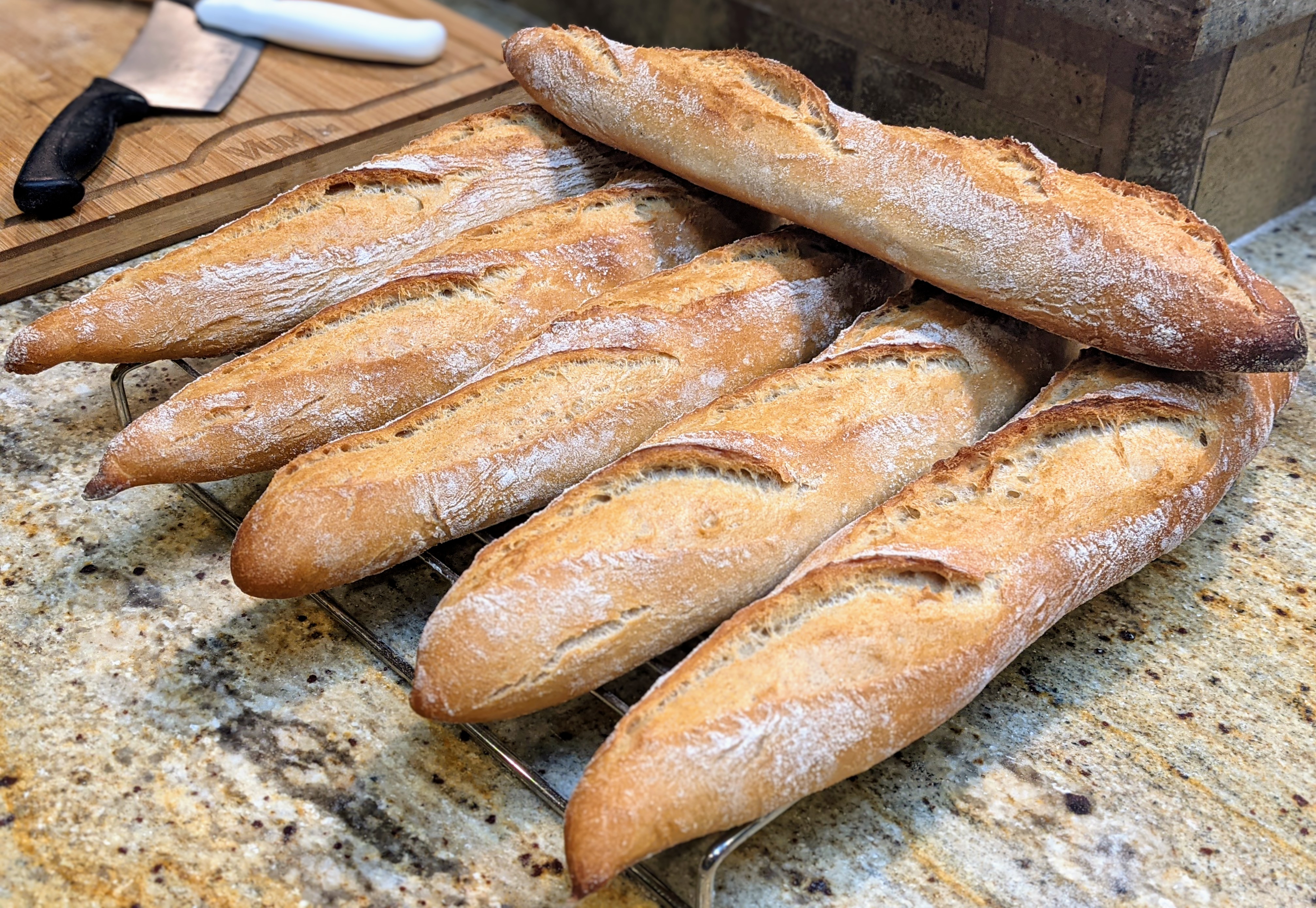
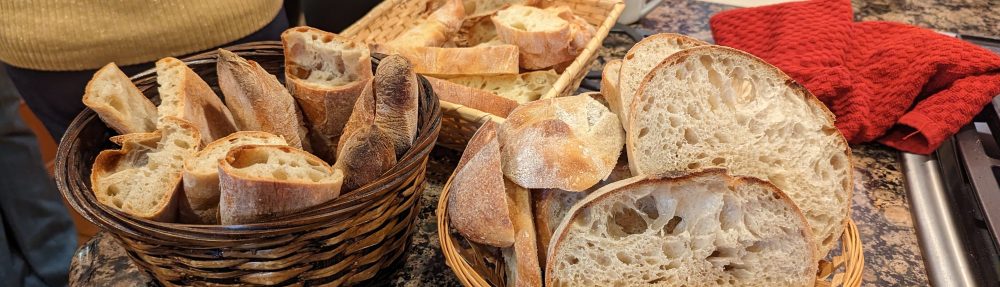
Sight – I’ve broken down the visual sense into two categories: 1) Similarity to the archetype of the loaf I’m creating and; 2) General visual appeal, or how appetizing the loaf looks. For the first item for example, do the baguettes I made look like what I expect baguettes to look like. The second one is easy. Does it look good?
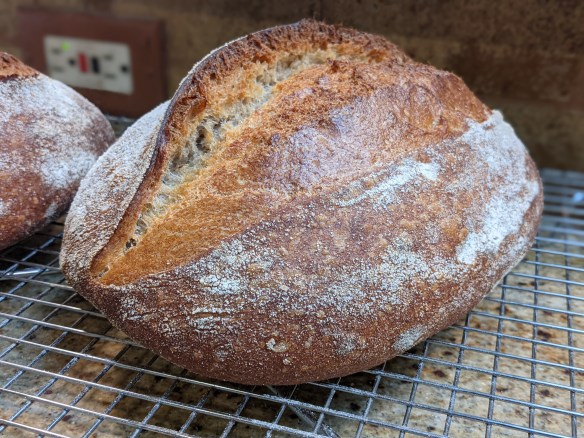
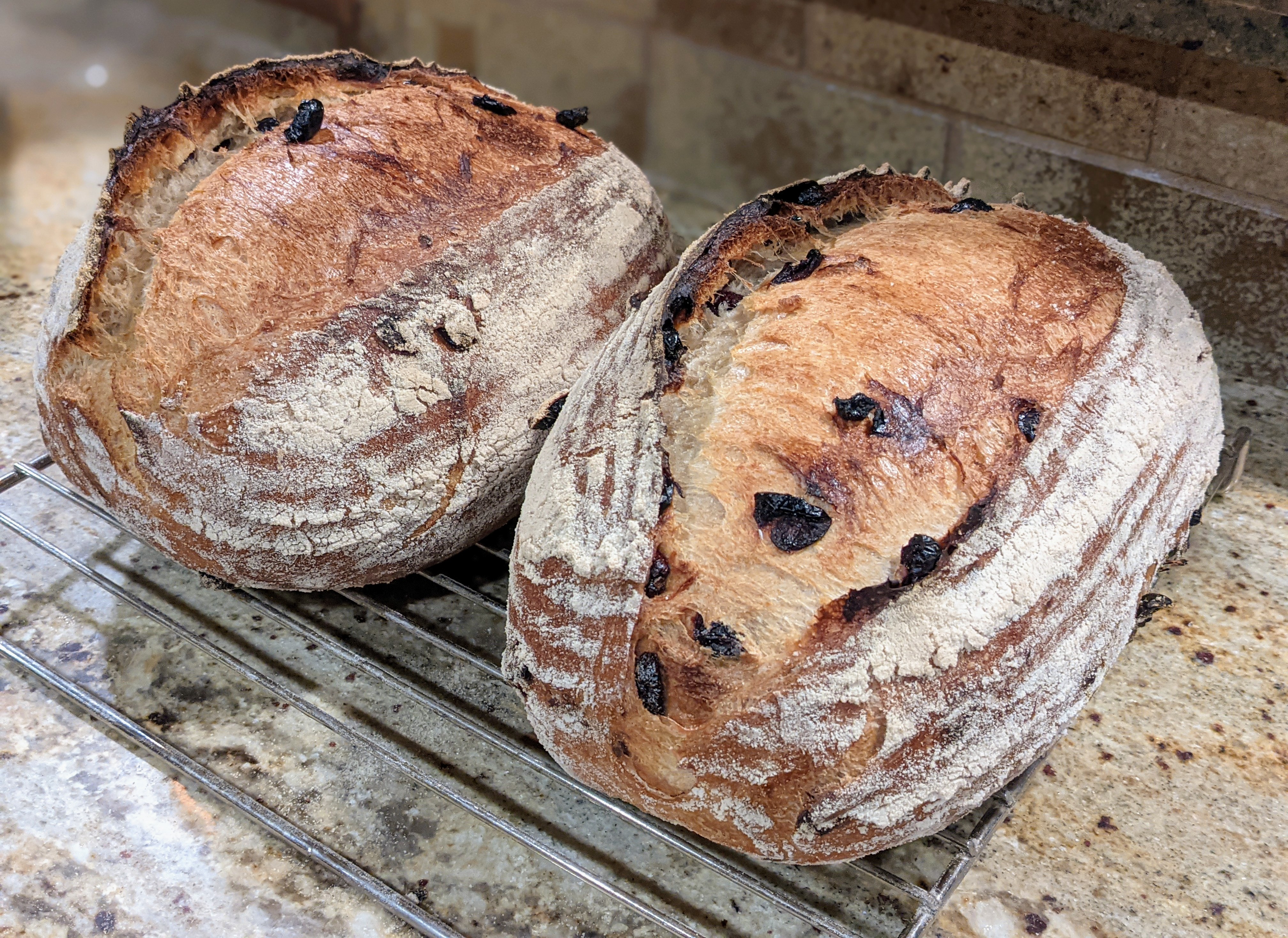
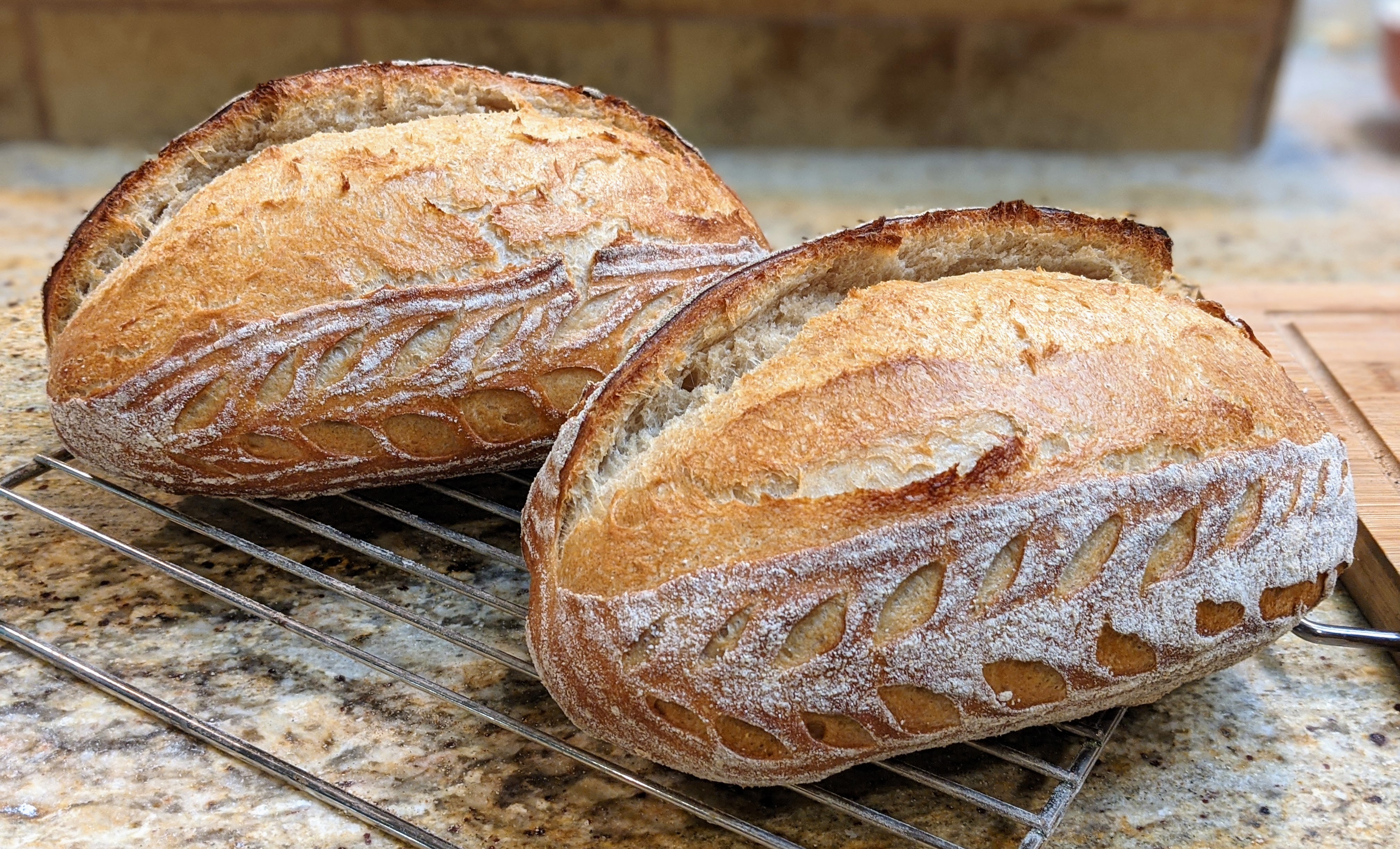
For example, look at the loaves above. Both are sourdough batards. If I placed the two side-by-side for consumption, I’m willing to bet that the loaf on the left would be cut into first for the simple reason that it just looks better than the loaf on the right that has collapsed (it was over-proofed).

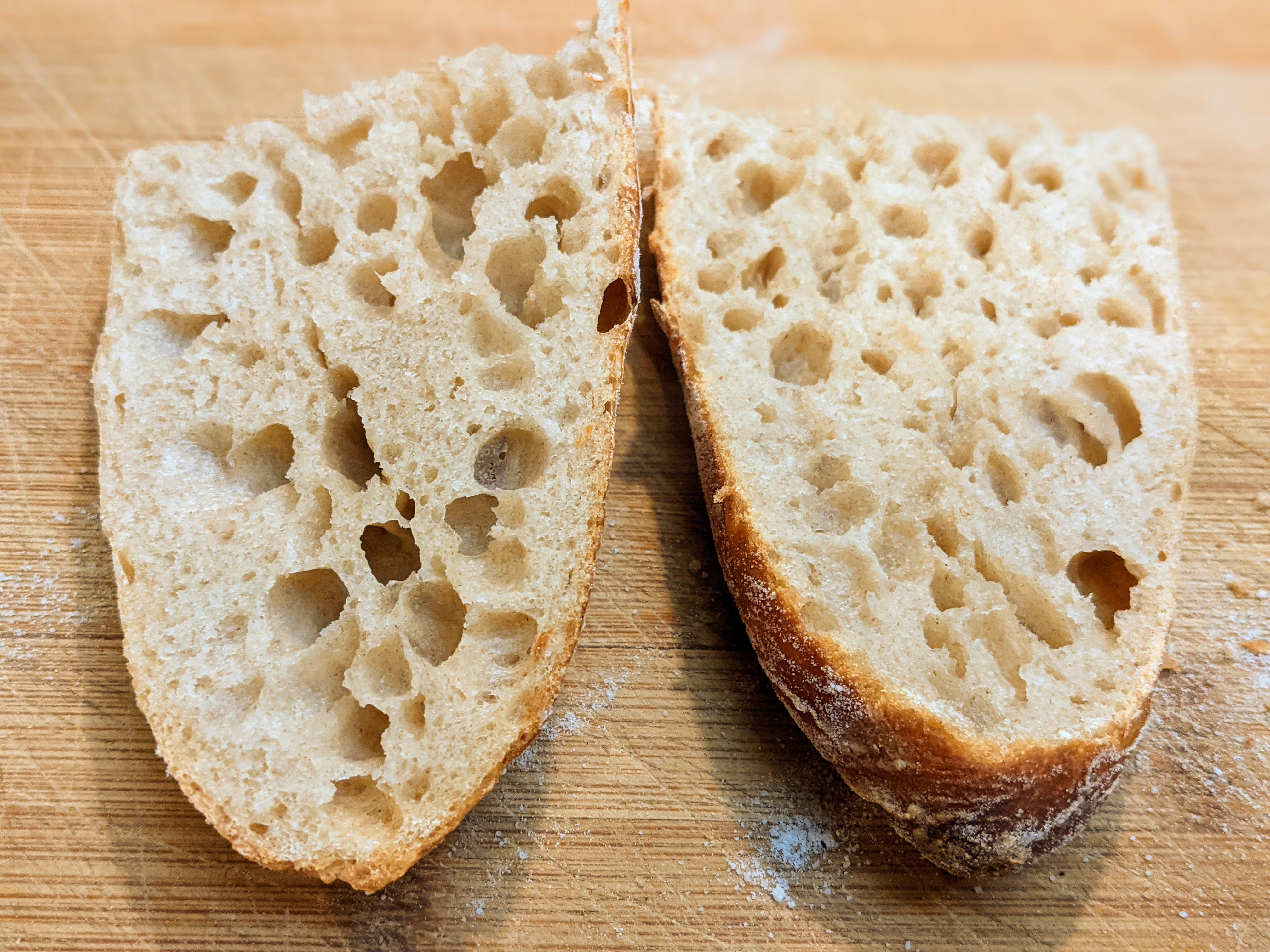
Visual appeal is important to me at this stage in the game. A “hug” should look like a hug. A ciabatta should look like ciabatta and have a beautiful, open crumb.
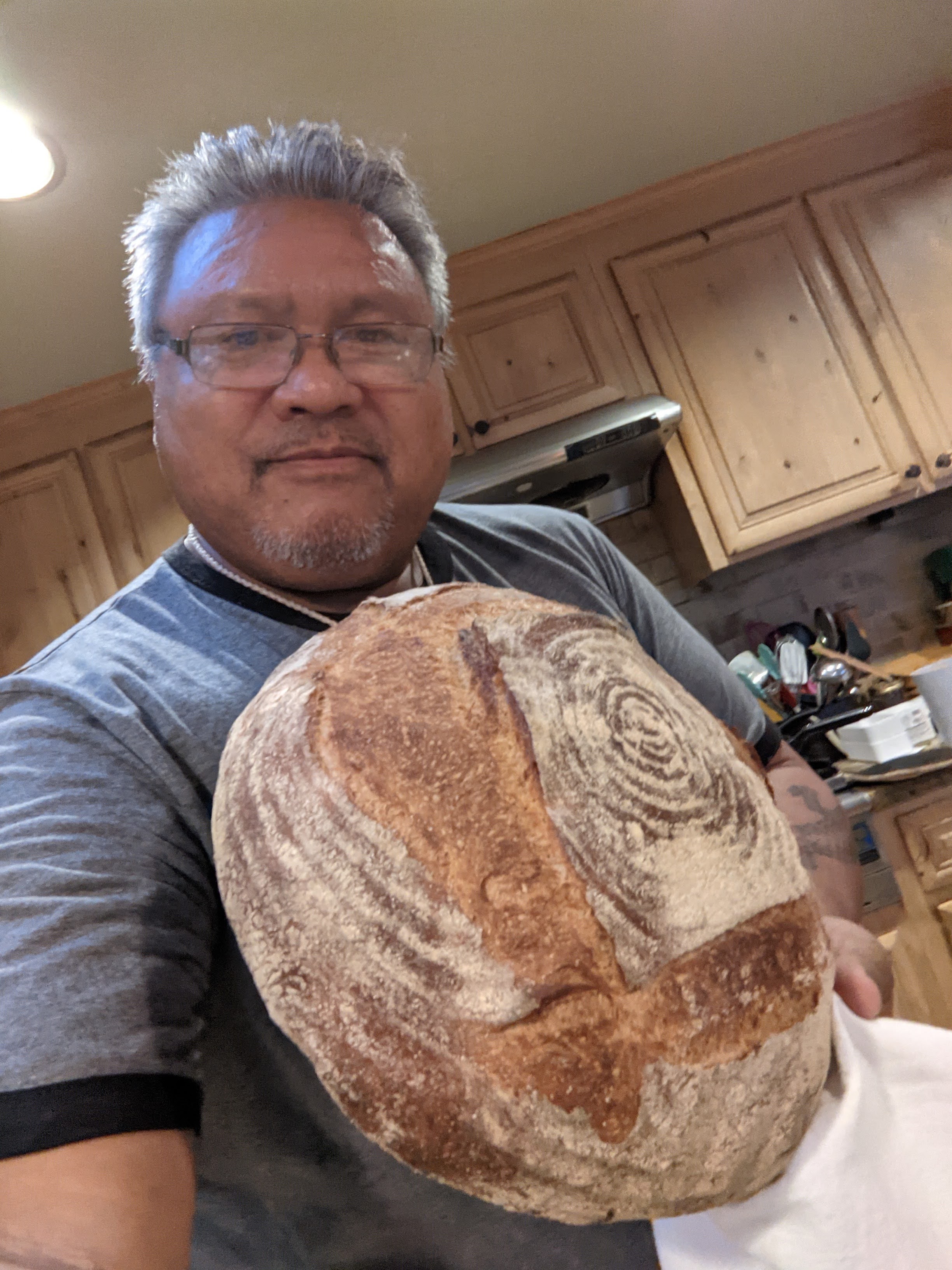
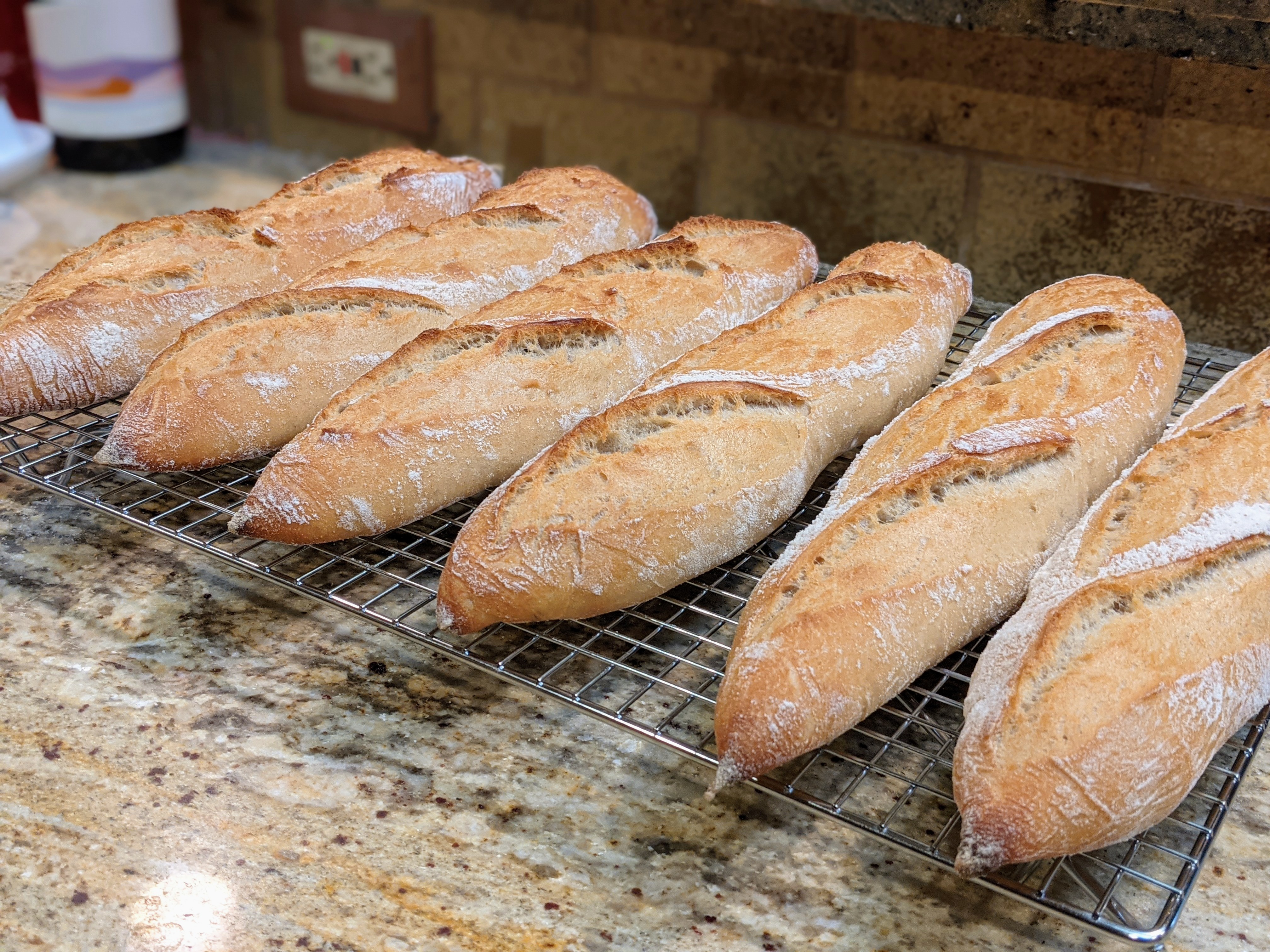
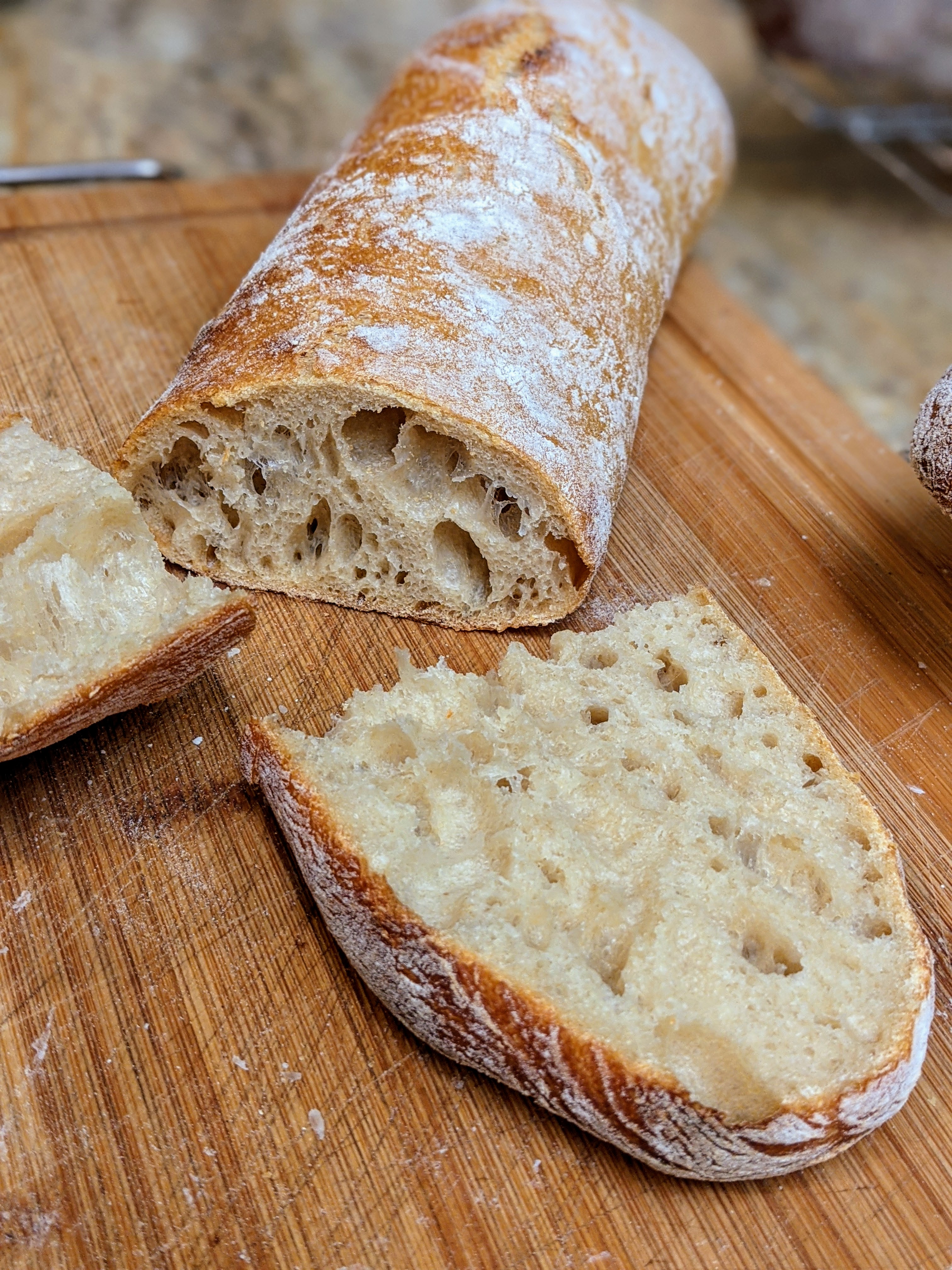
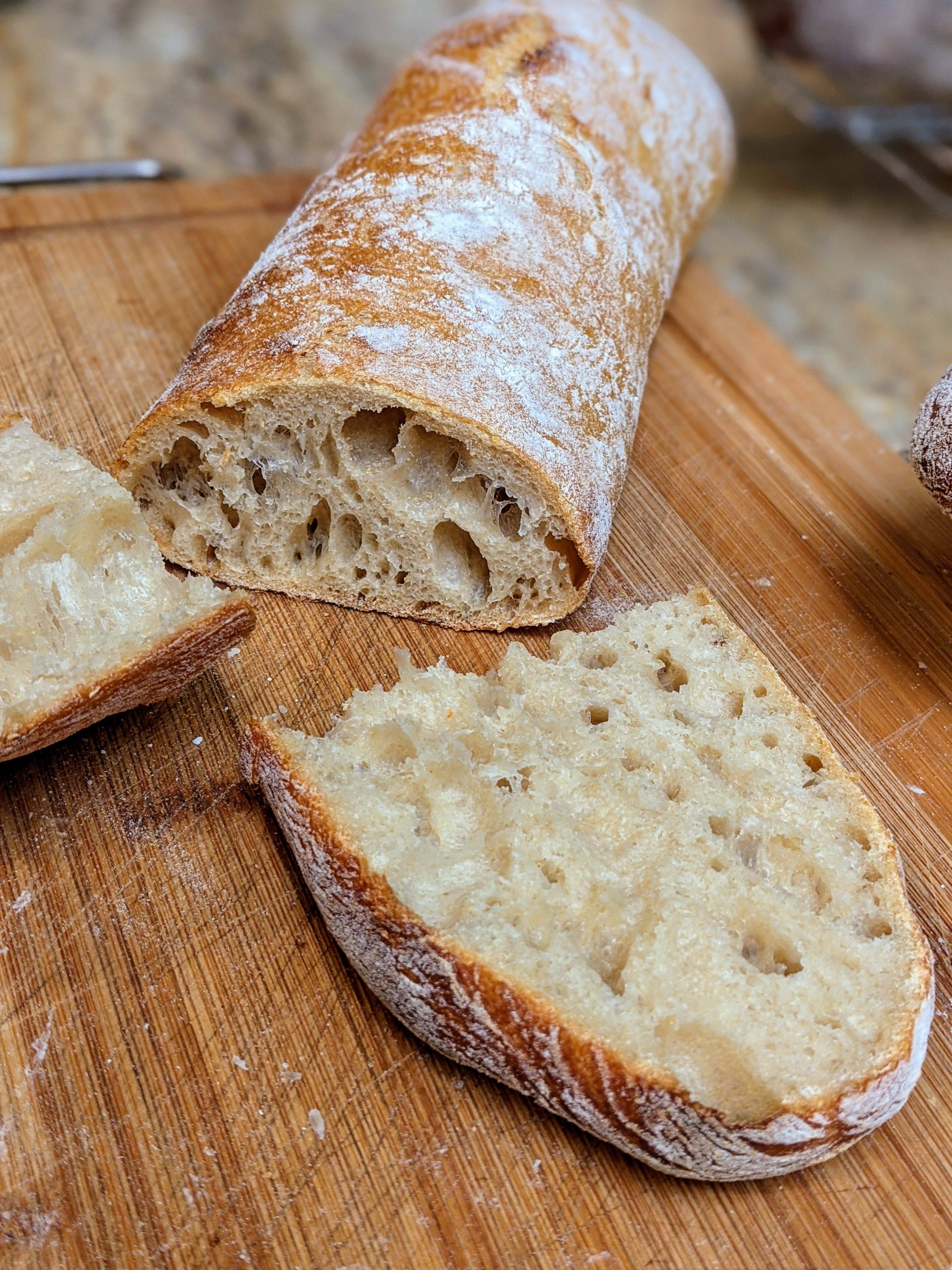
Touch – What does the loaf feel like? Again, does the loaf feel like it should? For hearth bread, even for large loaves, when I pick one up, I want them to feel lighter than what my eyes tell me. Take the batard on the left above. That loaf weighed over two pounds. It was a big loaf. But when I picked it up, it felt light and airy. The crumb reflected that:

Not only that, the texture of the crumb was spongy and soft – and I was even using a predominance of whole wheat and high-extraction flour!

Aroma – Pretty much any homemade bread smells great coming out of the oven. But I found so much complexity in aroma by using a blend of different flour. To me, there’s nothing like the aroma of whole grains when they’ve been subjected to high temperature.

Taste – Though they’re not listed in any particular order, I purposely didn’t list taste first because it’s kind of a given. And frankly, similarly to wine, taste goes along with aroma. As with aroma, what I strive for with my bread is a complexity in flavors. And since there’s technically on three ingredients in naturally leavened bread, achieving complexity is a system of trade-offs.

For instance, because I use a healthy percentage of whole wheat and high-extraction flour (typically 10% whole wheat, 50% high-extraction) in my flour blend, my loaves generally don’t have a super-open crumb. I also tend to bake my loaves more aggressively to ensure good caramelization of the sugars on the crust (though I do my best not to take things out to black).
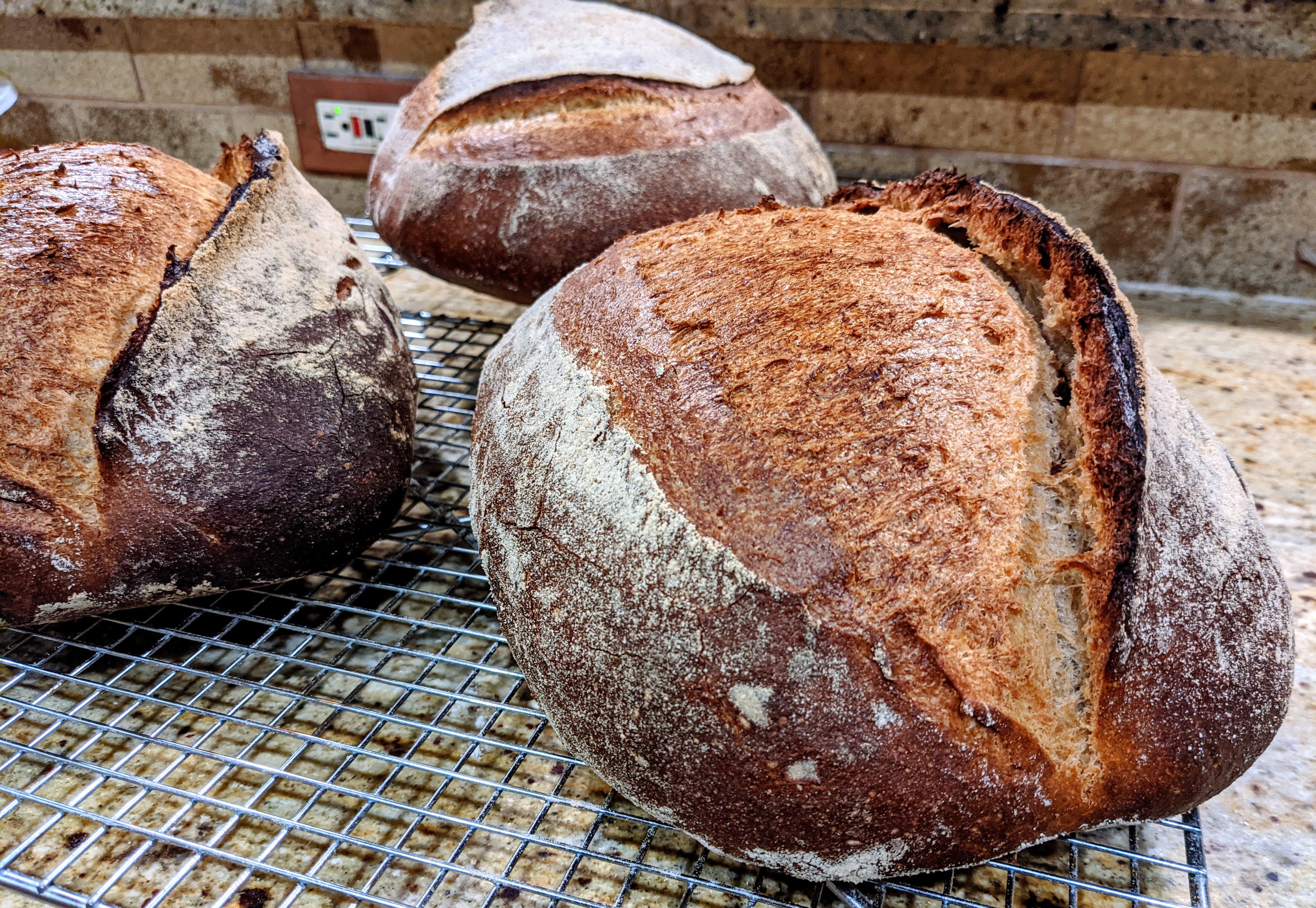
A more “aggressive” bake

Sound – This one isn’t as apparent as the others. But when I pick up a loaf and give it a light squeeze, I want to hear the bread sing as the crust gently crackles beneath my fingers. I also listen to my loaves as they cool and expect an occasional crackle as the loaf contracts and the crust cracks. It’s a sign that the crust is crispy, but also has some give in it.

There’s really nothing like that sound!

Want Great Oven Spring? Don’t Proof Your Dough All the Way!

When I first started getting into artisan bread baking, like many, I sought out lots of help online in forums and from various blog posts. I’m so thankful for all the information that’s readily available, but I found that especially with final proofing (aka final fermentation), there’s a lot of misunderstanding or lack of clarity as to when your loaves are ready to bake.

Before I go on, obviously there are several factors that contribute to great oven spring including kneading or folding, shaping, and hydration. But I feel one area that’s oven overlooked is final proofing. If you get this wrong, the other factors won’t matter.

Admittedly, there’s a bit of instinct that you have to develop over time with knowing the right time to bake. And there are useful tests you can do like the finger dent test. But I thought I’d offer up a bit of a cerebral, perhaps intellectual discussion to provide a background.

Let me just start out by saying that you never want to fully proof your dough when you’re doing your final proof; that is, you never want to take your dough to the point at which the yeast has nothing to feed. The reason for this is that once you pop your loaf into the oven, there’s a huge increase in yeast and enzyme activity up to about 140° F. During this period of accelerated activity, the starches swell and gas production from that fermentation is super-accelerated, contributing to oven spring.

Now of course, hydration plays a huge role in this as well as a highly hydrated dough allows for better extensibility. But it’s that initial kick of the yeast and bacteria at the outset of baking that gets you your spring.

But that’s assuming there’s food for the yeast and bacteria…

If you take your dough out to 100% fermentation, there’s no more food left on which the microbes can feed. This is why over-proofed loaves barely spring up at all because it’s only the steam that’s working to extend the dough – not to mention that the gluten also breaks down and you lose all dough strength.

As Master Baker Jeffery Hamelman puts it in his wonderful book, “Bread: A Baker’s Book of Techniques and Recipes,” ϯ

As a rule, bread should not be 100 percent risen at the time of the bake. Just as we will fall onto our noses if we lean over 100 percent, so too will the loaves tend to collapse if they receive a full 100 percent proofing before the bake. It is difficult to quantify with unvarying certainty the perfect degree of rise, since there are so many variables involved; however, 85 to 90 percent rising is a fair approximation to begin with. With careful and consistent observation of each bread, the baker’s eyes and hands will soon learn the parameters that work best.

So now that we have a background on why we shouldn’t go to full fermentation, let’s put this within the context of the finger dent test. With the finger dent test, the conventional wisdom is that it is one of the most effective way of determining how ready – or not – your dough is to bake. I use it all the time. Essentially the way it works is this: You push the tip of your finger about a centimeter into the dough. If the dent pops back immediately and goes away within several seconds, your dough isn’t ready. If it springs back partially ϯϯ and the dent slowly goes away but not entirely, then it’s likely ready. If the dent stays put, you’ve over-fermented your dough.

Do you sense the “but” in this?

This is a great test and I use it for practically every loaf of bread I make. But because it’s inexact, it takes practice to get right, and is also highly dependent on the flour you use. Different flour and flour blends make the springiness factor a challenge. A strong flour will almost invariably be more bouncy than a weaker flour – at almost all stages of fermentation. A weaker flour, like AP will have a lot of give naturally and may fool you into thinking your proofing is done.

Unfortunately, the only way I know – and according to a few professional bakers I’ve both read about and spoken with – of determining a dough’s doneness is learning through trial and error. As Chef Markus Farbinger puts it, it takes time and practice to develop an instinct about your dough.

Essentially, there’s just no empirical way to teach this. Eventually, you’ll come to know the ultimate endpoint of the dough you make. But frankly, that’s half the fun! And who doesn’t need an excuse to bake?

Another thing to consider is that different loaves respond differently to the amount of proofing. Even though Chef Hamelman recommends 85 to 90 percent as a guide, that’s really only a rough approximation. With baguettes, I’ve learned to only take them to the lower end of that range, perhaps even short of 85%. There have been too many times I’ve ended up with flat baguettes because I’ve taken them too far in proofing. And it’s easy to do because baguettes don’t have that much internal structure built into their dough.

On the other hand, with boules and batards, I tend to take them a bit further. I’m personally not after numerous huge holes, but an even distribution of moderately-sized holes, so I’ll tend to take them to about 90% proofing. I realize that I’m playing with fire because that requires some careful monitoring before it’s too late. But because I use fairly high-protein flour I can afford to do this because their structures are strong.

As I mentioned above, this is one contributing factor to great oven spring. But because it is the last step before a loaf gets put in the oven, it is critical to get this right.


ϯ Hamelman, Jeffrey, Bread: A Baker’s Book of Techniques and Recipes (2nd Edition), John Wiley & Sons, Inc., 2013.

ϯϯ The important thing to note here is that the dent should spring back a bit but not totally go away. If the dent stays in place and doesn’t move at all, then your dough’s overfermented.

You Have to Be Adaptable

Last night, I created an overnight levain before going to bed as an experiment. It contained 400 grams of culture, 400 grams of high-extraction bread flour, and 400 grams of water. By morning, it was ready. So… to get the flour to a nice, round kilo, I added 400 grams of AP flour, and 150 grams of water to get the hydration to 75%.

My thought was to make a batch of sourdough baguettes. But this time, I’d try out the process of making baguettes traditional, which involved a loose mix, followed by stretch and folds every 20 minutes for an hour, then bulk fermenting for a couple of hours (though I’d check after an hour).

What I should’ve done was check after 30 minutes because at the 1-hour mark, the dough completely overproofed! It was a sticky mess with absolutely no strength. Pulling on the dough would tear it! And worse yet, it was highly acidic!

BUT!

Rather than chucking the dough, I thought to myself, why not add a bunch of flour and water and use that dough as a pre-ferment? So I took my mixer out, then gradually added flour and water until I got a dough texture that was consistent with an approximately 75% hydration dough.

But my yield completely changed by doing this! Normally, my dough yield is about 1.7 – 1.8 kilo of dough, which allows me to create 6 X 290-295 gram baguettes. Adding flour and water literally doubled my normal yield!

So my next thought was that when bulk fermentation was finished, I’d divide the dough such that I could make 6 X 250 gram baguettes, then divide the rest of the dough into two medium boules or batards.

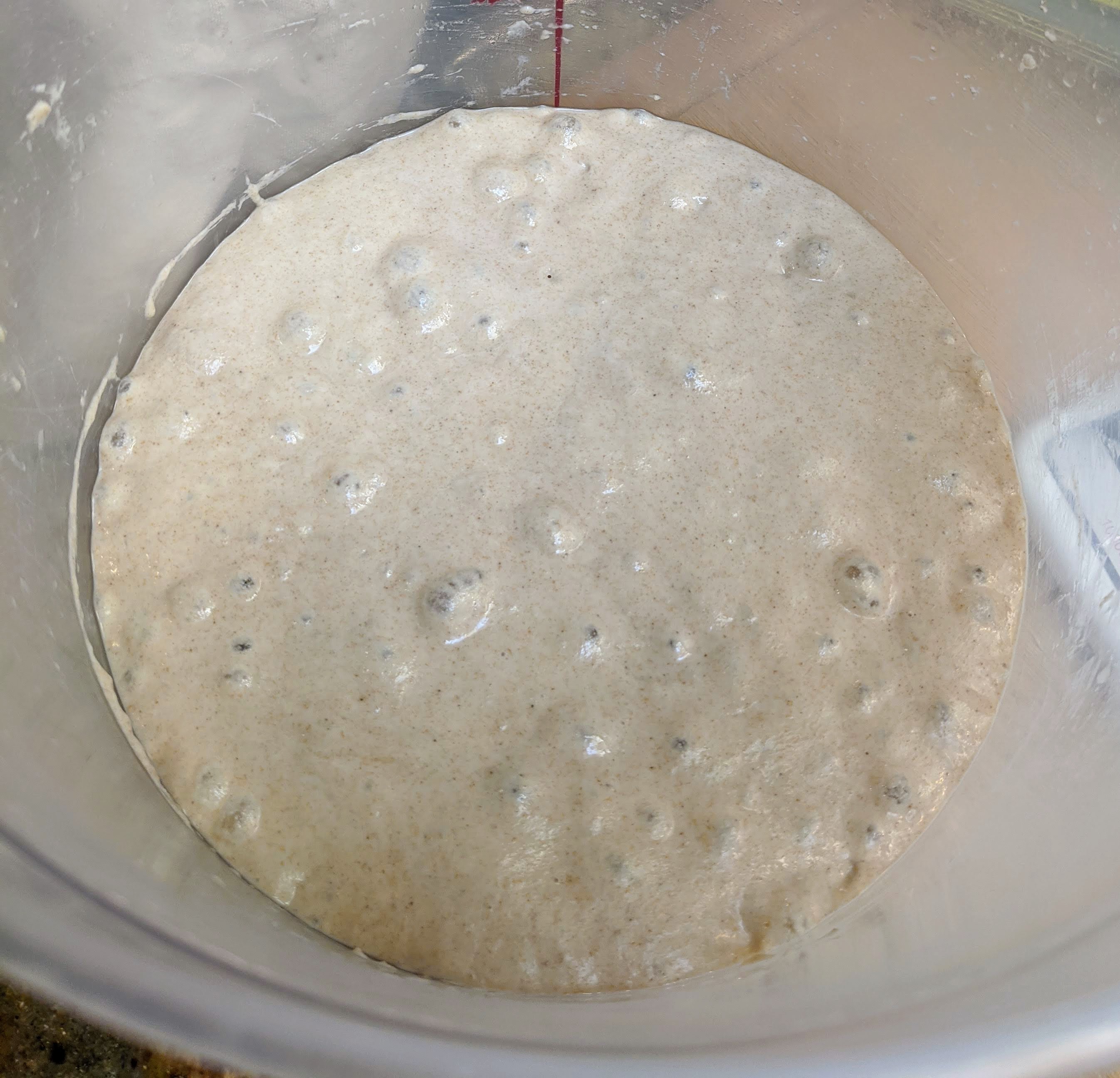
It was a great idea on paper, but when bulk fermentation was finished (as shown in the picture above), although it looked normal, the dough was SO acidic that it was overly extensible and super-sticky even though I could feel there was plenty of strength in the dough. Shaping that kind of sticky dough into baguettes was completely out of the question.

Furthermore, I knew instinctively that though I could shape the dough into three or four batards or boules, the dough wouldn’t stand up to the sheer size of the loaves and though they’d expand, they’d expand outward instead of up. So in the end, I decided to create 6 small, free-form batards.

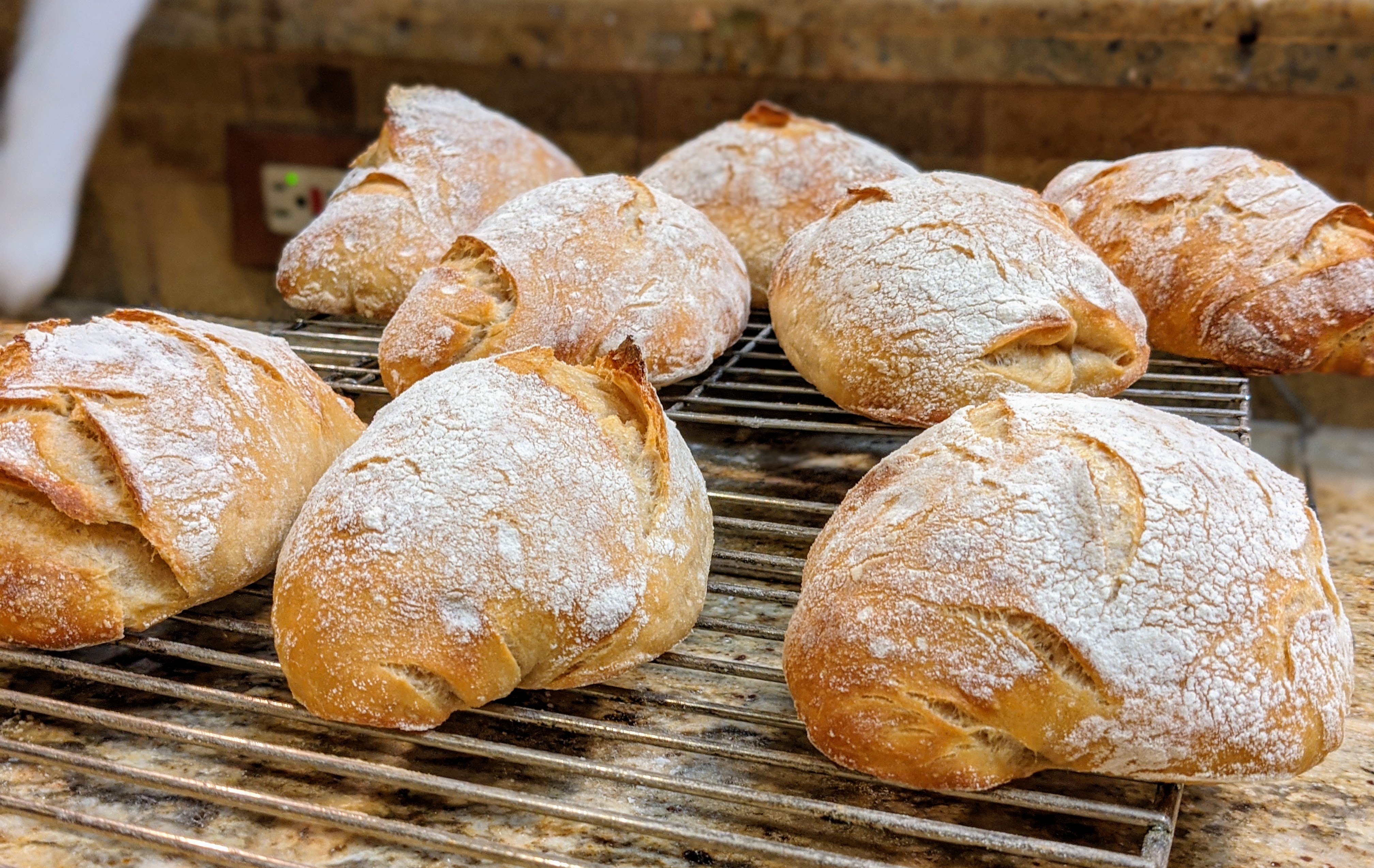
My thought was that they’d be big enough to create some decent slices for finger sandwiches or what-not, but small enough that they wouldn’t collapse under their own weight. Thankfully, it was the right decision. The loaves popped up beautifully in the oven!

As you can see in the picture above, I got great oven spring with all of them. And I was actually surprised to see the moderate crumb considering the dough consisted predominantly of high-extraction flour that has lots of bran in it. I owe that to the acidity of the dough which, as I mentioned, adds extensibility.

This whole exercise provided a couple of HUGE lessons for me!

First of all, there’s always a way to salvage an over-proofed dough, and secondly – and most importantly – you have to be adaptable and flexible enough in your thinking to respond to different conditions. If I went ahead and tried to create baguettes, they’d tear in the shaping process, and with baguettes, it’s all about the skin because there’s little internal structure, so you have to rely on shaping.

Granted, this is probably something I wouldn’t have figured out early on in my journey. I would’ve chucked the dough. So this experience presents yet another important lesson: Never stop studying and practicing! I’ve spent so much time studying not only techniques, but the science behind dough fermentation.

Just last night, I read about how acid content affects the dough and makes it more extensible as well as eventually breaking down the gluten structure! Thank freakin’ gawd that I learned that! That information allowed me to respond to the high acid content in my dough! So for those of you who read this who are on their own journey, you can never learn enough.

Finally, I’ve learned to approach bread making much like Bruce Lee approached martial arts in that the technique you use is dictated by the situation. Especially early in my process of learning artisanal bread making, I was fairly canonical in my approach and followed recipes and techniques I’d learn fairly religiously. But I was always wondering why my bread wouldn’t turn out the way I was expecting. It wasn’t until I allowed myself to tweak on the fly and respond to different situations that I started seeing much better results.

So yeah… You have to be adaptable!

The Law of Necessity

If you’re like me, you spend a bit of time going through recipes and lurking or participating in online forums. You will often see pictures or read about different kinds of equipment people will use to bake their bread. In turn, you will be compelled to get that gear.

Don’t. At least not immediately.

As with written recipes where the timings are highly dependent on the kitchen environment, in many cases, the equipment people use is congruent with their other gear or their own personal processes.

For instance, I recently read about someone who invested in a KitchenAid 8-quart commercial mixer. They were complaining that their hook wasn’t working very well on the little 500-grams of flour recipe that they were using. When queried about their baking volume, they admitted that they only baked one loaf at a time every week or so. I’m not sure about anyone else who read that post, but it got a bit of chuckle from me. Talk about overkill!

But it’s not an isolated incident. I’ve read or heard about similar accounts of people getting all sorts of items that they report they never use or are too much for their needs. People spending thousands on stuff! It’s crazy!

In the guitar world, this seemingly nonsensical (and expensive) urge to get gear is called Gear Acquisition Syndrome or GAS. It’s a compulsive response to seeing and hearing gear. It’s not just a one-time thing. I suffered from GAS for years, accumulating tens of thousands of dollars worth of guitars and amps and accessories. And the worst thing about it is that most of it just collected dust until I sold most of my gear off. But as a working, active musician, I kept a lot stuff.

When I really started getting into baking, I saw how I could fall into the same trap with baking accessories. So based on my previous experience with guitar gear, I made a conscious decision to only get stuff that I absolutely needed to get the job done.

I’ve read or heard about similar accounts of people getting all sorts of items that they report they never use or are too much for their needs. People spending thousands on stuff!

It’s not that I’ve completely foregone getting baking accessories. But I do a lot more evaluation on what an accessory will get me before I make a decision. And I really ask myself if I absolutely need it.

For instance, though my volume in baking has definitely picked up, and though I really could use a higher-capacity mixer, I’m holding off for now. One of the reasons for this is because I’m limited by my oven capacity. I can only bake two boules or batards at a time, and only 6 baguettes. Technically, I could get another baking stone and double my capacity, but that wouldn’t be fair to the other members of the family who might need an oven.

And speaking of a baking stone, right before I bought mine, I was baking entirely in a Dutch oven. But I wanted to make long loaves. And my family kept on asking me if I could make baguettes and ciabattas and French bread. So it was easy to justify getting the stone.

This all boils down to what I call the Law of Necessity which basically states: If I don’t NEED it, I don’t want it.

The qualifier of course is – at least for now…

Levain, Poolish, Biga, Pâte Fermentée… They’re Just Preferments, Dammit! :)

Whether you use a Levain, a Poolish, a Biga, or even a Pâte Fermentée to rise your dough, let’s be clear about one thing:

They do the same thing and make your dough expand!

That’s their basic function, no more, no less. Now you could argue that they provide certain characteristics such as extensibility and a sour tang. But their most basic characteristic is to make dough rise.

I realize that the whole preferment thing can be intimidating for many people. But using a preferment is literally thousands of years old. But it seems that it wasn’t until this pandemic lockdown that people jumped on the artisan bread making bandwagon by the millions (that includes me, by the way) and this seeming mystique was built around sourdough and preferments. Which is probably one of the reasons I started this blog other than to chronicle my journey.

To me, there is no mystery behind making bread and absolutely no mystery behind preferments. To be clear, a preferment is simply a portion of your dough that has a high density of yeast and flavor-producing bacteria. It helps the larger portion of your dough rise faster.

Technically, you could leave a mixture of flour and water out and eventually the wild yeasts and bacteria will infect the mixture and ferment your dough. But that takes a long time – several days. But with a preferment, or even commercial yeast for that matter, you shortcut the natural fermentation process and effectively speed it up because you’re adding a high concentration of microbes to the dough to give it a head start.

Think of a preferment as simply a concentrate, similar to frozen concentrated orange juice. You add the concentrate to a host of some sort and it changes it. In this case, our yeast and microbe concentrate expands the dough to make it rise, and when heat is applied, produces bread. It’s really that simple. There’s no mystery.

If it’s that simple, then why use a preferment and not just go the easy route with instant or active dry yeast? Simply because a preferment has added functional and nutritional benefits that you don’t get with plain yeast. Functionally, the lower pH (more acidic) of a preferment aids in the extensibility and elasticity of the dough. Nutritionally, using a preferment produces amino acids and other healthful by-products that make the bread more easily digestible and also act as a natural preservative to aid in the bread’s shelf-life.

Is one preferment better than another? This is where it really boils down to personal preference and what you’re after as a baker and somewhat, the type of bread you’re making. But you see, there are no hard and fast rules. There may be conventions – for instance, using a poolish to make baguettes – but lots of folks, including myself, regularly break from convention. Even with brioche which, by convention uses commercial yeast can be made with a sourdough starter.

With bread, you can’t – and shouldn’t – be canonical. And beware of anyone who says such and such bread must be made with a specific type of ingredient and especially those who invalidate another’s choice of rising agent.

It’s Not Nice to Fool Mother Nature…

Back in the ’70s, there were a series of commercials for Chiffon margarine that featured “Mother Nature” and how she could be fooled by the margarine being butter. Her tagline was, “It’s not nice to fool Mother Nature.” Here’s one of the commercials:

Well, you might be able to fool Mother Nature with margarine, but you can’t fool Mother Nature with bread making. She’ll make you pay. Badly.

Last night, I was excited to start a levain for some high-hydration whole grain loaves I wanted to bake today. I made an overnight levain and as of 7 AM this morning, everything was great. I mixed the final dough, placed it in my trusty Cambro container, then went through four stretch and folds the first two hours, before I’d do the final bulk fermentation of an hour-and-a-half. At which time I thought it would be a good idea to go to Home Depot.

I returned home just before my timer went off, checked on my dough and saw that it had doubled in my container. Nothing seemed abnormal. So I set up my shaping board and got my bench scraper ready and went to get my dough…

Which I then literally poured out as a liquid mess onto my board. F^&k!

To be honest, I actually laughed when I saw it come out. I knew there was no way to salvage the dough. It stuck to everything. And frankly, I didn’t feel like making pancakes out of it, so I just tossed it out. Oh well.

So what’s the lesson with Mother Nature? It’s simply that there’s no escaping her laws, especially the law of doubling. The job of the microbes is not to feed but to reproduce. They feed on the sugars in the flour, then split. That’s their nature.

Our job is to catch them before they consume all the fuel. But here’s the kicker: Right before they completely consume all the flour, they’ve only consumed half. That’s Mother Nature in action and you see it in the world.

For instance, there’s a process called eutrofication that occurs in ponds and lakes where algae completely infests the body of water. Each day, the algae doubles, and the day before the body of water is completely eutrofied, it’s only at 50%!

The point is that with yeast and bacteria it’s the same principle. The point of no return comes fast. Very fast. Which is why you can’t rely on time because the yeast and microbes double at their own rate, so you have to physically check dough progress.

Had I not gone to Home Depot, I would’ve caught that the dough was rising really fast and shaped the loaves far earlier and all would be well. But I relied on experience that dictated that I had time. After all, I’ve made these rustic loaves dozens of times.

But looking back, I was using a different starter than what I’ve used in the past. This particular wild yeast has been super-active. But the thing is, I actually used less starter for my levain because I knew just how fast-acting this wild yeast is. Looks like I’m going to have to either use less to stick to my regular schedule, or adjust my process altogether and do things in shorter intervals.

We live and learn. Happy Baking!

Over-Proofed Dough… Argh!

I can’t seem to get the timing down for cold proofing shaped loaves. I do overnight bulk ferments (or even longer) a lot. But shaped loaves? I’ve only had success with them a few times.

It’s annoying! To say the least…

I baked the loaves above just last night after they spent just a few hours in my fridge. I wasn’t planning to bake them at the time. In fact, I was planning to leave them for 16 hours. I shaped them at 2pm, went to band rehearsal for Mass at 4pm, then when I checked them at 6pm, I saw that they had risen. Significantly.

And fallen.

So I turned on my oven and heated it up for an hour and in that time, the dough went from just beyond ready, to well over-proofed. I knew I was in trouble when I tried to remove the loaves from their bannetons and both stuck a little.

And it’s not that my retarding fridge is too warm. It’s set to 38° F and it works great for long bulk ferments. But for some reason, when I try to do long final fermentations, the yeast kind of goes haywire!

I suppose looking at it from another perspective, it’s a good problem to have. At least I know my starter is super-active. But that doesn’t mean it’s not a pain in the ass when I over-proof my bread.

Oh well… I’m going to keep on trying to find the right time.

Recipe: Pane di Como Antico

This bread’s name translates to “bread of Como of the past.” This is now known as pane francese in Italy or French bread, though this “French bread” is quite different in taste and texture from the actual French loaf which has a thinner crust and lighter crumb. But irrespective of all that, this is an ancient bread that is magnificent in both texture and taste and very easy to make.

I adapted this recipe from what I consider to be the definitive book on Italian Bread called “The Italian Baker” by the late Carol Fields. This is a GREAT book. Ms. Fields traveled throughout Italy to learn these recipes directly from local bakers in the regions she visited, so these are authentic.

As with most Italian loaves, this bread is started with a biga the day before, which is much like a poolish, using flour, water and a tiny amount of yeast, only stiffer. A poolish is 100% hydration where a biga can be anywhere from 60%-80% hydration. This recipe’s biga is 80% hydration. Let’s get started!

Overall Formula

Flour100.00%
Water75.00%
Salt1.60%
Yeast0.30%

Day 1 – Make the Biga

Unbleached AP Flour*100g
Water (75° – 80° F)80g
Yeast0.4g
*I highly recommend using either Bob’s Red Mill or King Arthur, or any unbleached AP flour that has a protein content greater than 11%. Most generic brands are 10%. Gluten development is very difficult with those flours. Also, organic is better.

I’m going to come clean and admit that I actually used my sourdough starter to make an 80% hydration levain. The Italians call this type of biga “Biga Naturale.” My levain was 100% whole wheat, so I didn’t use the whole wheat flour that’s listed in the final dough below.

Mix all the ingredients and let ferment for 12-16 hours at room temperature. As with any preferment, you want to make sure it’s nice and bubbly.

Day 2 – Final Dough

Biga180g
Unbleached AP Flour435g
Whole Wheat Flour65g
Water (80°-85° F)360g
Salt10g*
Yeast2g**
*You may see a recipe online that lists the salt as 16 grams. For this small amount of dough, 16 grams is WAY too much.

**If the weather is cold, adding a little yeast will help the process along.

The Process

According to Carol Fields, Italians predominantly use a mixer to mix up their dough. But you can mix by hand if you choose or if you don’t have a mixer. The process is pretty much the same.

  1. Set aside about 50 grams of the water and dissolve the salt in it.
  2. In a large mixing bowl, break up and dissolve the biga with the rest of the water, then add the flour in batches. If you use the yeast, add it to the water before the flour.
  3. Once you form a shaggy mass (and there are no dry ingredients), let it rest for 20 minutes to help hydrate the flour. This is kind of a hybrid autolyse.
  4. Add the saltwater to the mass, then thoroughly mix until you start forming a smooth dough that feels elastic. This is where a mixer really comes in handy.
  5. Dump the dough onto a board and knead for 8 minutes or until you feel the dough has built some strength.

    You don’t have to knead if you don’t want to. I instead mix until everything’s incorporated, transfer the dough to a container, then do two sets of folds in the first hour or so. This will create plenty of dough strength. This is more like baguettes.
  6. Transfer the dough to a lightly oiled container, then cover with plastic wrap and let it rise until almost doubled. The dough should have plenty of bubbles and should be blistering on top with a nice dome. 1 1/2 to 2 hours or until dough has expanded 50%-75% of its original size.
  7. Pour the dough onto a lightly floured board and divide it in half.
  8. Shape each half into a nice, taut ball (like you would a boule), sealing the seams, then set it aside seam side down.
  9. Sprinkle a little flour over each ball, then cover with a cloth for 20-30 minutes to bench rest. The dough should be relaxed.
  10. Preheat your oven to 485° F.
  11. After the balls have rested, shape into cylinders about a forearm’s length. I use a baguette shaping method to create some internal structure and to ensure the cylinder is even, though I don’t make pointy ends. The cylinders will be much thicker than baguettes, but they’ll have a structure you can feel.
  12. Lay each cylinder seam side down (or up if you prefer) onto a transfer board lined with parchment paper, or if you don’t have a baking stone, a parchment-lined baking sheet. The cylinders will spread and flatten a bit and that’s okay!
  13. With floured hands, dimple the cylinders all over to prevent over-springing. Don’t worry, they’ll puff up.
  14. Cover with a well-floured cloth or couche and let rise for 1 to 2 hours. You should see bubbling and blistering. Carol Fields says to wait until they’re doubled in size. But based on my experience with baguettes, what you want to look for is a puffiness to the loaves and a little resilience when you poke them. You don’t want to take final fermentation out too far, lest you lose oven spring.
  15. Bake with steam for 15 minutes (I use a broiler pan on the bottom rack and pour a cup of scalding water in it).
  16. After 15 minutes, remove your steaming tray/container and the parchment paper, turn the oven down to 425° F, then bake for another 12-15 minutes until the loaves are golden brown.
  17. Cool on racks for 30 minutes. They taste GREAT while they’re still a little warm!

I originally got “The Italian Baker” because I wanted to get a recipe for Pane Pugliese from a credible source. I made the Pane Pugliese from the book, and it turned out okay, but as I pored over the book, I saw this simple, straightforward recipe and knew I had to make it.

I think the romance of this recipe being ancient really got to me. In fact, my whole bread-making obsession has stemmed from the romanticism of making bread from recipes that are hundreds, maybe even thousands of years old. Granted, the flour of today is so much more refined than the flour of yesteryear, but to replicate bread from ages-old recipes and traditions… That’s just so FREAKIN’ cool to me!

This is what keeps me exploring. I don’t know if this will turn into anything other than a hobby, but I do know one thing: I love continuing tradition!

The “Secret” Ingredient in Baking Bread

In the home artisan bread baking community, there’s a predominant focus and emphasis put on recipes and processes. That’s natural. After all, you have to know what goes into bread and how to make it to bake it. And there are lots of people – including myself – who are relatively new to making artisan-style bread and recipes are important.

But now that I’ve gotten much more experienced, I’ve come to learn that making artisan bread isn’t just about successfully making a single loaf from time to time. And it’s certainly not just about being able to successfully follow a recipe’s instructions. To me at least, bread really doesn’t become artisan until you can bake the same kinds of bread with consistent results.

The very word artisan implies that craft and skill are involved; moreover, it implies a certain repetition to achieve consistent results from loaf to loaf. And the results, in turn, reflect the achievement of a certain aesthetic. For example, if you think about an artisan batard, the general aesthetic is that it is an oval-shaped loaf that has an ear on top, with a crumb that is fairly open.

To achieve that aesthetic, you can’t just simply follow a recipe and expect it to come out the same every time. Granted, you could get lucky. I certainly have gotten lucky myself, especially when I was first starting out baking seriously. I’d see a recipe online or in a book. I’d follow it step-by-step, and it would come out gorgeous (well, at least I thought so).

That success would urge me on and inspire me to bake again. But more often than not, my next bake of the same bread would go seriously awry, and well, not knowing what went wrong or what caused it was as if I was a balloon and someone came up and pricked me with a pin! Talk about being completely deflated!

But I’m not the kind to give up. So I began to educate myself and do a deep-dive into the process of handmade artisan bread. With that, I decided to focus on mastering four types of loaves: Boules, Batards, Baguettes, and Ciabattas. Each would have their own flour formulation so I could affect different flavor profiles in each. And through the regimen I’ve developed this past year, I’ve gained the confidence to know that whatever kind of loaf I choose to bake, it’ll come out the same.

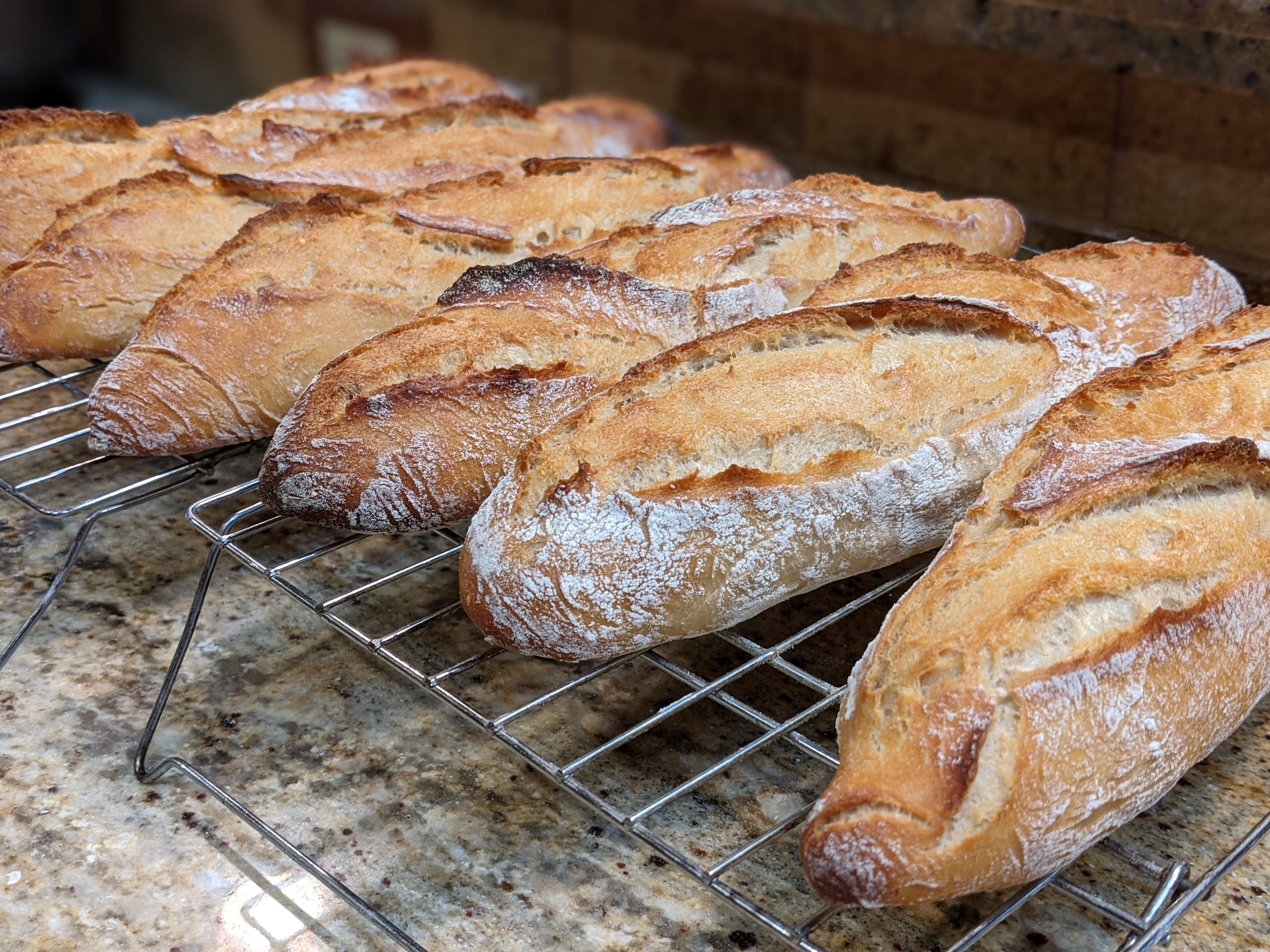
But as I was baking the other day and admiring the gorgeous baguettes that had just come out of the oven, I started thinking about how I was able to make baguettes – or any loaf – the same from bake to bake. Was it my process? Was it my recipe? My shaping technique? It was “yes” to all those questions.

And for that particular batch of baguettes, I actually had a fairly challenging time with the dough. My starter was particularly active that day and things were happening way too fast for my comfort level. And since I only had two opportunities to build dough strength, I didn’t want to have the dough fully proved before I could build some strength into it. So I made sure to do a lot more stretch and folds in each session to ensure that the dough would be strong. I knew that would knock down and degas the dough, but with the yeasts being super-active, I knew I’d get plenty of rise.

Then it dawned on me that what made this particular bake and other bakes successful was something related to my process but not necessarily part of it. It was mindfulness.


mind·ful·ness/ˈmīn(d)f(ə)lnəs

  1. the quality or state of being conscious or aware of something.”their mindfulness of the wider cinematic tradition”
  2. a mental state achieved by focusing one’s awareness on the present moment, while calmly acknowledging and accepting one’s feelings, thoughts, and bodily sensations, used as a therapeutic technique.

The one thing I came to realize is that I have to be constantly aware of what’s going on in my process at all times; in other words, being mindful of the various nuances and gotchas that could occur during a baking process. And as with anything in life, if you’re not aware of what’s going on with what you’re doing and what’s going on around you, it’s going to affect your success, and oftentimes, in negative ways.

Mindfulness allows us to respond – not react – to changing conditions; seemingly being able to anticipate exactly what to do when certain conditions arise. Reaction to an event or circumstance is almost always chaotic because when the event occurs, we have to evaluate what has happened then figure out what to do, and once we finally figure it out, it’s often too late.

Contrast that to responding to a situation where we’ve already considered the various permutations of things that could occur based on our awareness of current conditions. The action we ultimately take seems much more organic. We just make it happen. There is definitely a life lesson in this that goes way beyond baking bread. I could probably write a whole self-help book on the subject. But I’ll just keep it bread.

Mindfulness also ensures we’re precise in what we do. Especially with baking bread, making precise measurements is absolutely critical. When a recipe calls for 2 grams of yeast you need to be precise about those two grams. The reason is that the process’ timings are based on that amount. If you use too much, the process will be much faster as the flour gets metabolized faster; using less, the converse occurs.

Even with shaping, you have to be precise and deliberate. With shaping, you’re not just getting the dough to conform to a particular geometric shape. You’re building the internal gluten network AND developing the outer skin of the loaf. In other words, you can’t just roll up a piece of dough and expect it to magically become a baguette or batard. You have to be mindful of what the shaping technique is trying to accomplish and you follow the technique precisely, otherwise, your loaves will come out looking different.

Those are just two examples of the criticality of being mindful. I could go on forever, but I think I made the point. And to me, mindfulness is really the secret ingredient to baking bread.

Recipe: Sourdough Ciabattas

Besides baguettes, ciabattas are my other favorite loaves to make. Once I learned Master Chef Markus Farbinger’s recipe, I was hooked! Ciabattas are SO easy to make. Whether you use the standard recipe that I linked to above, or use a sourdough starter, it can be a same-day bake! Though if you go the sourdough route, I suggest doing an overnight bulk ferment, which I’ll explain below.

With this particular recipe, I’m going for a much lighter crumb and am using bread and AP flour. I know that I have eschewed using white flours, but the enzymes in the sourdough starter help break down the flour to make it more digestible, so while the flour may not be as nutritious as whole wheat and high-extraction flour, we’ll still get plenty of nutrition from the bread. That said, let’s get started!

Ingredients

Levain

Starter200 grams
Unbleached Flour150 grams
Water (90°-95° F)150 grams
For flour, I use a high-extraction flour from Azure Standard called Ultra Unifine Bread Flour.

Final Dough

Levain500 grams
Unbleached Bread Flour250 grams
Unbleached AP Flour500 grams
Water*550-600 grams
Salt20 grams
Instant Yeast** (optional)2 grams
*With water, you have to gauge it. 550 grams will get you to 80% hydration. But depending on your flour, if the dough is a little stiff, you’ll want to add more water. The initially mixed dough sh9uld be the consistency of a stiff batter.

**Using a bit of instant yeast is purely optional, but I’ve found that it is very helpful on cold days. I wouldn’t use it on hot days where I can rely on the ambient temperature of my kitchen to keep the microbes super-active.

Instead of using separate containers for the levain and the final dough, I just use a 6-quart Cambro tub. When my levain’s ready, I just add all the ingredients to the tub. It’s much more convenient. I’m going to provide some times as guides during the process. By no means are they hard and fast, especially with varying kitchen temps where the bulk and final fermentations can be shorter or longer depending on the ambient temperature of your kitchen.

Make the Levain

  1. Feed your starter so you can produce 200 grams of starter. When the starter’s ready, transfer 200 grams to a large mixing bowl or a large plastic tub. Note that the starter doesn’t have to be active and at its peak. My daily grape starter is maintained at 400 grams total, so I just use 200 grams from my mother culture, then feed her. Works like a charm!
  2. (4:00 pm) To the 200 grams of starter, add 150 grams of unbleached flour (here’s where I use my high-extraction flour, but you can use any unbleached flour that you want) and 150 grams of water. Mix thoroughly until smooth.
  3. (4:15 pm) Place the levain container in a warm place to ferment. It has been cold as of late, so I put my levain container in my oven with the door cracked to get a little heat from the oven light.
  4. (8:30 pm) If you have a fairly active starter, your levain should be actively bubbling by now. If it’s not, I suggest waiting until it’s really active.

Mix the Final Dough

  1. (8:40 pm) There’s no autolyse with a ciabatta, so just add all the final dough ingredients to the levain and mix thoroughly until you’ve incorporated all the dry ingredients and create a shaggy mass (about 5 minutes). Note: If you’re going to do a same-day bake, I suggest turning on your oven to 250° C or ~485° F now.
    1. It’s a bit messy, but I prefer to mix the dough by hand, alternating squeezing the dough through my open fingers, then using a stretch and fold motion to turn the dough. I’ll do this until I feel comfortable that the salt and yeast have been totally incorporated.
  2. Clean off your mixing hand and let the shaggy mass rest for 20 minutes.
  3. (9:05 pm) Using a wet hand, do a series of stretch and folds until you feel the tension in the dough building. When it kind of fights you, then let the dough rest for another 20 minutes.
  4. (9:25 pm) Dump the dough onto your well-floured work surface – it should be really well-floured – making sure you clean and scrape all the excess dough left in the container, then wipe the container with a paper towel.. Using quick motions, pull the dough into a rough rectangle, then do letter folds, front to back, and side to side at least three rounds. Make sure that when you fold, you also pull flap, then fold over. Once you feel that the dough strength has been built up (it will fight you a bit), roll the dough onto its seams, then using your bench scraper, form the dough into a ball.
  5. (9:30 pm) Spray the container with a light coat of olive oil (I use one of those PAM olive oil spritzers) then gently pick up the dough ball (you can form it up a bit more to make it easier), then drop it into the container.
  6. So here we have two alternatives:
    1. Let the dough rest for 5-10 minutes, then put the container in your fridge for an overnight bulk ferment.
    2. Let the dough rest for 20 minutes, and you’ll be ready for shaping.

Dividing and “Shaping”

Again, depending on how you do the bulk ferment there are two routes to take. The steps are similar, but different enough to warrant discussing them in separate sections.

Same-Day Bake

  1. After 20 minutes, again liberally sprinkle flour on your work surface, then slide the dough ball out of the mixing bowl.
  2. Using quick motions, gently tug the ball into a rough rectangle, then divide the dough into equal pieces. If I’m making loaves, I cut the rectangle in half.
  3. Technically, you’re not supposed shape the ciabatta dough. You pull it into a basic form. But I like to make my loaves into little rectangular pillows, so I gently letter fold the divided dough pieces, being extremely careful not to degas them.
  4. Once you’ve formed the loaves, gathering them from the long ends and cupping under the dough, transfer them to a well-floured couche, seam side up.
  5. Sprinkle the loaves with a bit of flour, then cover them and let proof for 10 minutes.
  6. After 10 minutes, check the loaves for springiness using the finger dent test. You want to have some spring. If there’s a bit too much; that is, the dough immediately springs back, let it rest another 10 minutes.

Overnight Ferment

If you did the overnight ferment, check your dough in your fridge. It should have at least doubled in size. If it hasn’t, you’ll have to wait. My retarder is set to 39° F and it takes 10-12 hours for my dough to double. So if you’re dough’s ready, turn on your oven now and set it to 250° C or about 485° F. Do not proceed until your oven is up to temp, then divide. If you’re using a baking stone, wait at least an hour before proceeding.

  1. Gently slide the fully fermented dough out of the bowl or container on a very well-floured surface. It should easily slide out since you oiled it down.
  2. As above, gently tug the ball into a rough rectangle then divide the dough into equal-sized pieces. Personally, the anal-retentive part of me, can’t resist scaling the pieces so they’re all roughly the same weight.
  3. (optional) As I mentioned above, you don’t have to shape the loaves, but I always do a simple letter fold, then place the loaves on seam side up on a well-floured couche.
  4. Sprinkle the loaves with flour, cover them, then let them rest for 20 minutes.
  5. At this point, I transfer the loaves, seam side down to my transfer board, covered with parchment paper. If you’re not going to use a baking stone, you can use a parchment-covered metal baking sheet.
  6. Sprinkle the tops with flour, cover them, then let the loaves rest for 20 minutes.

Bake

  1. Bake the loaves for 20 minutes (250° C/485 F) with steam (I now use a broiler pan on the bottom rack of my oven and pour a cup of scalding water into it).
  2. Remove your steaming tray after 20 min. Turn down the oven to 200° C/400° F) and continue baking for another 15 minutes, though check for doneness at 10 minutes.
  3. If you want a real crunchy crust, turn the oven off, then leave the loaves in the oven with a slightly cracked door for 10-15 minutes to cure the crusts.

As with my other recipes, I realize that I’ve been a bit long-winded. But I want to make sure I cover as much nuance as possible.