Sticking with Tradition

I recently read an article on Medium discussing how Boichik Bagels in Berkeley was voted the Best Bagel in America by the New York Times. I don’t know that I’d agree as my local bagel shop that I’ve been going to for almost forty years has great bagels. But I’m not here to debate that. What struck me in the article though was the following:

…When the New York Times last considered West Coast bagels in 2015, their conclusion was that West Coasters couldn’t make a good one because they tried too hard to innovate. Rather than putting in years of practice to hone and perfect old-world techniques — and to obsess over tiny details like the alkalinity of their water — they tried to create new twists on the traditional bagel, adding in sourdough starter, cooking up gluten-free varieties, and the like.

With bagels, Mitchell Davis of the Beard Foundation told the Times in 2015, “the effect of artisanship does not always produce a better result.” A great bagel is fundamentally traditional, steeped in long-developed cultural trends and a peoples’ collective memory. It’s not something that benefits from “updating” or from the artisanship and personalization which West Coast chefs often bring to their trade.

Reading those two paragraphs above struck me like ton of bricks!

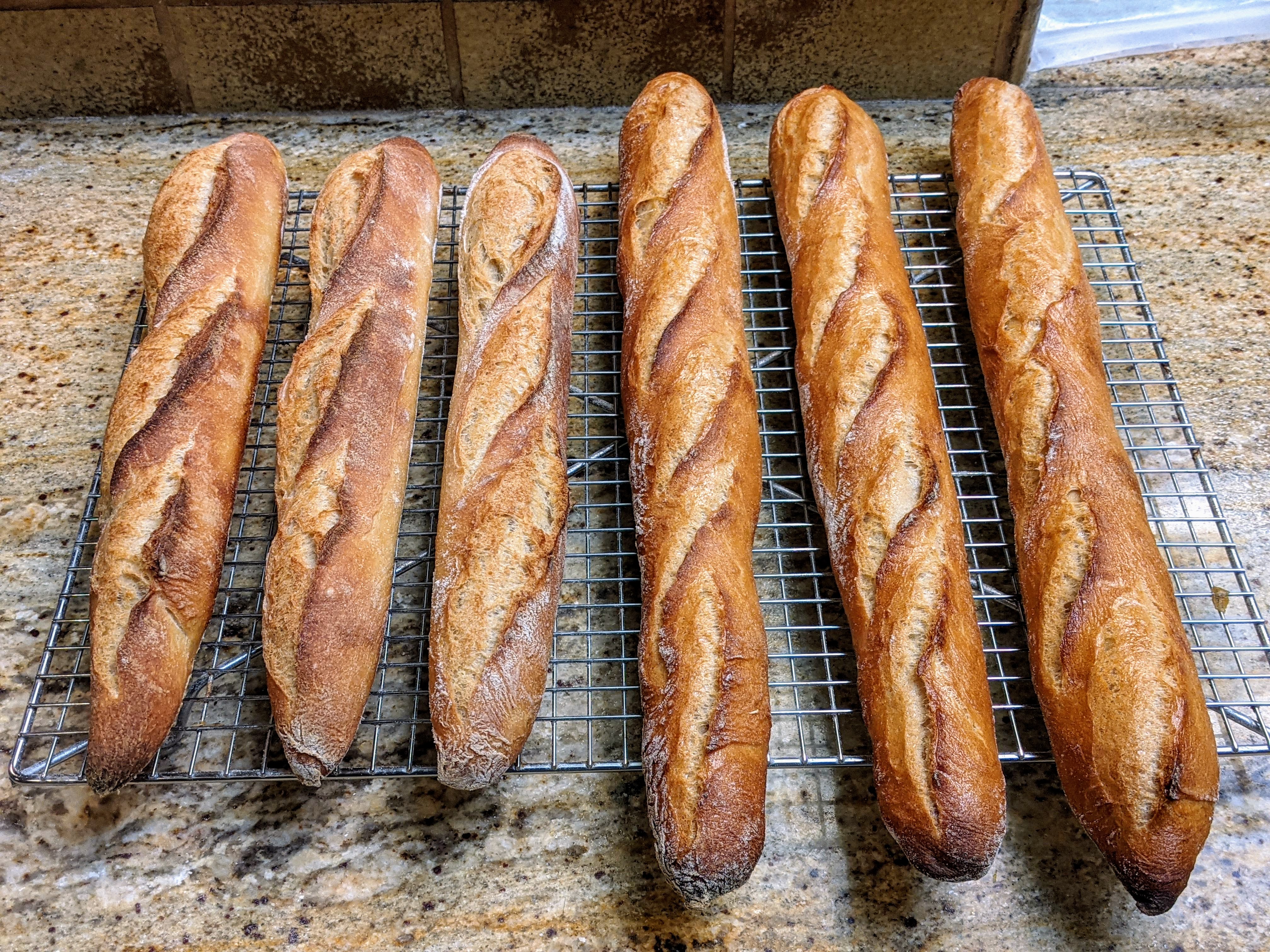
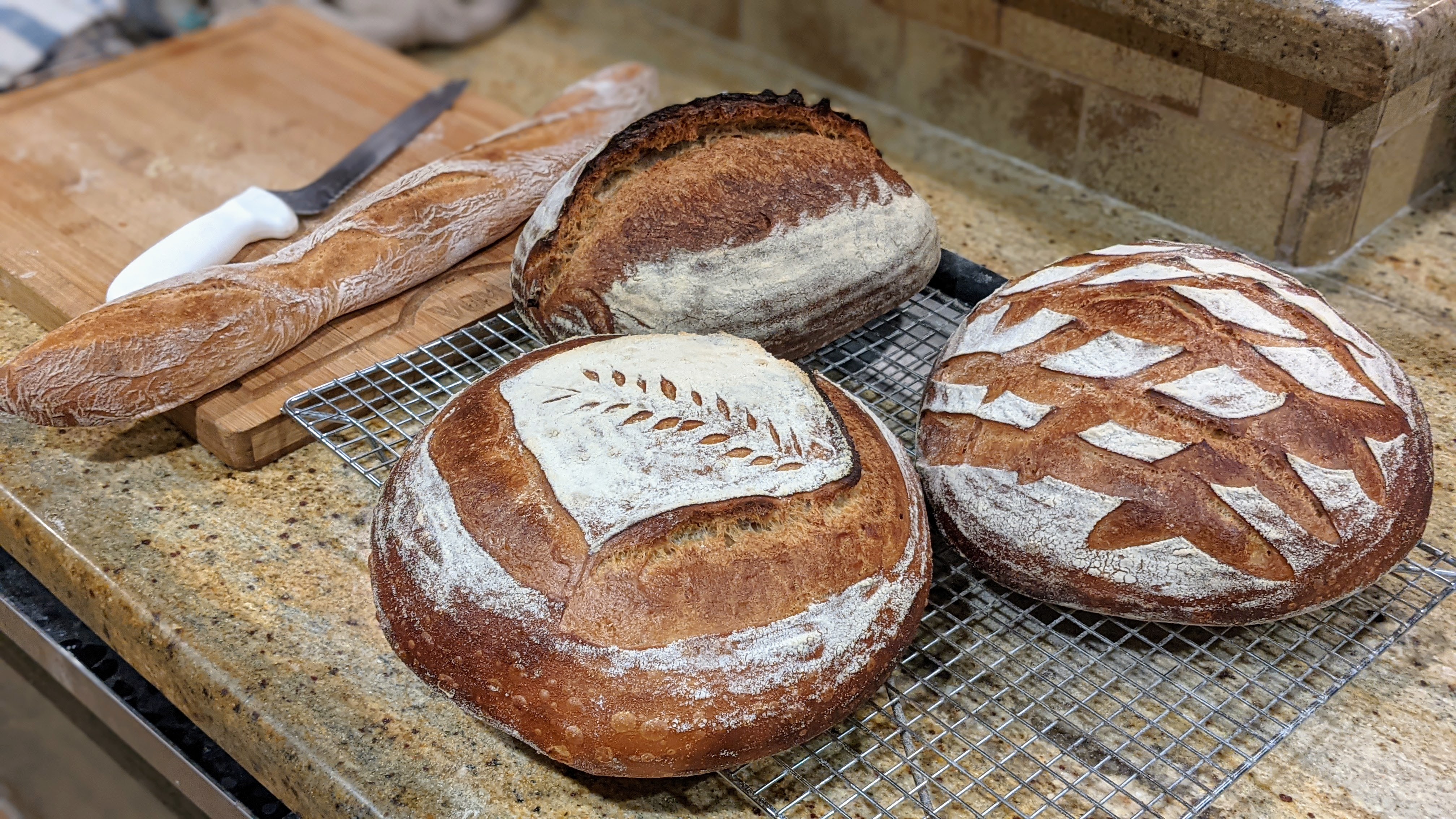
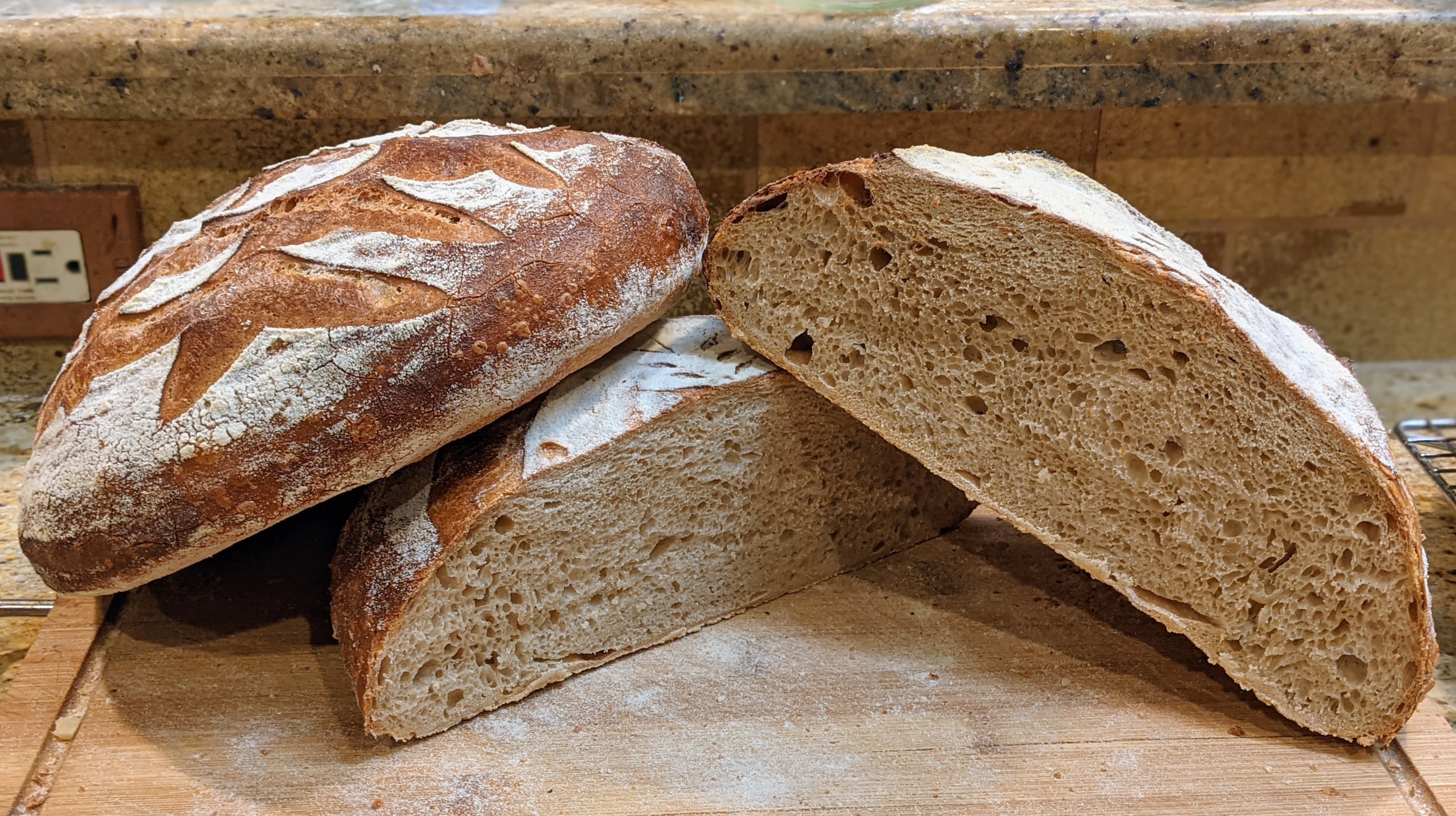
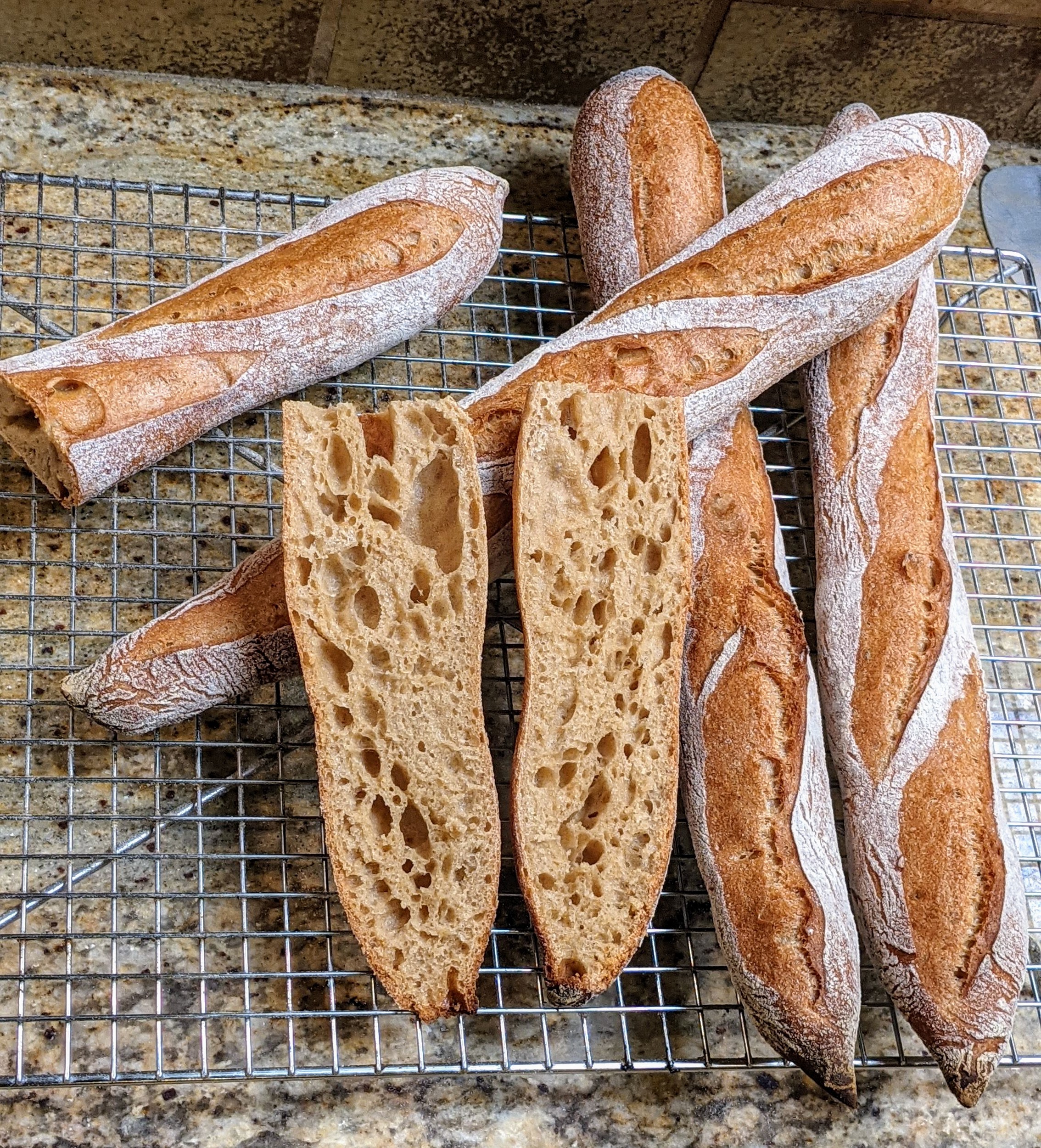
Though my return to baking started out with just wanting to make a decent loaf of bread, my journey since then has led me to doing my best to replicate old world techniques in the modern age. It harkened me back to a recent conversation where a close friend suggested that I make sourdough baguettes.

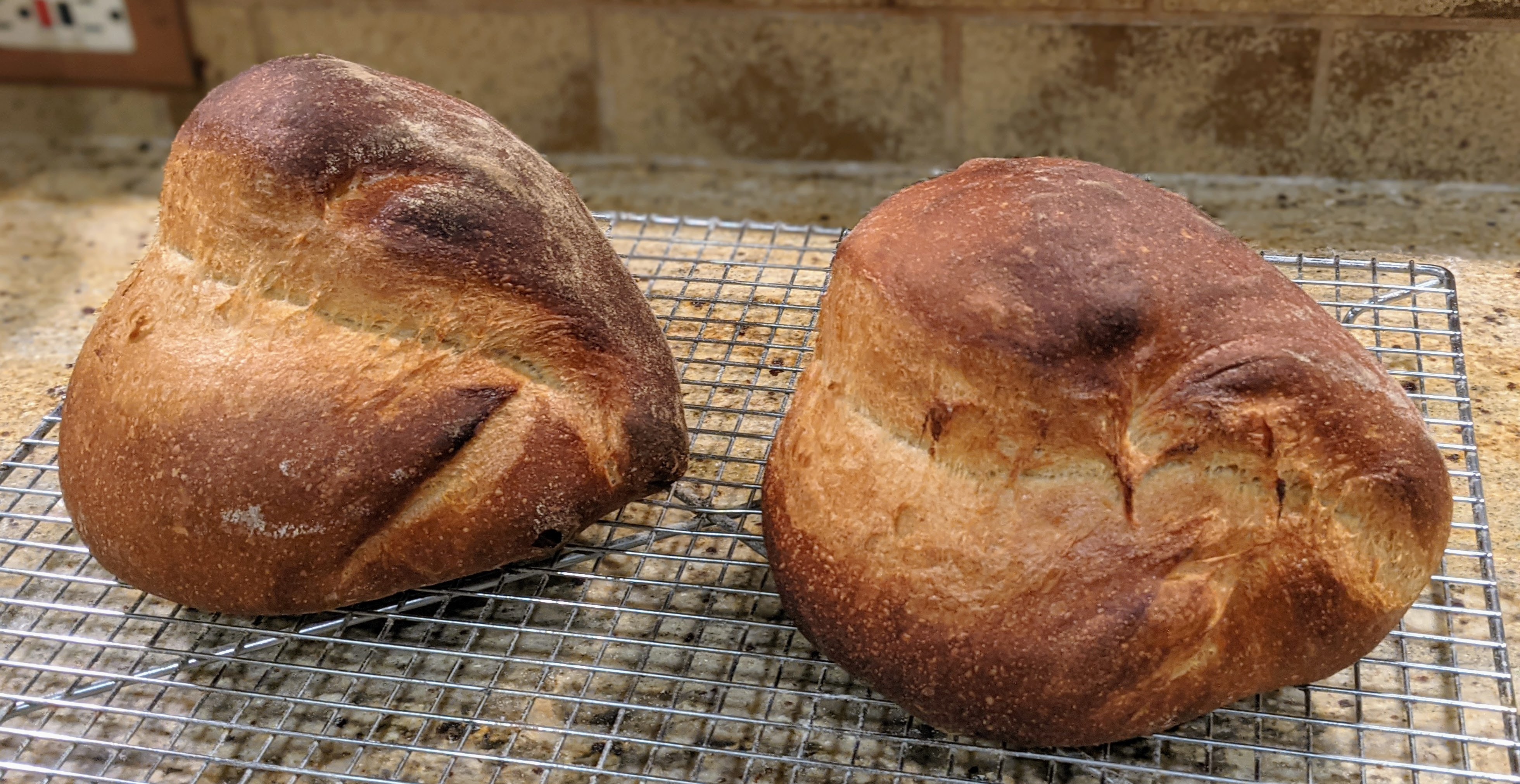
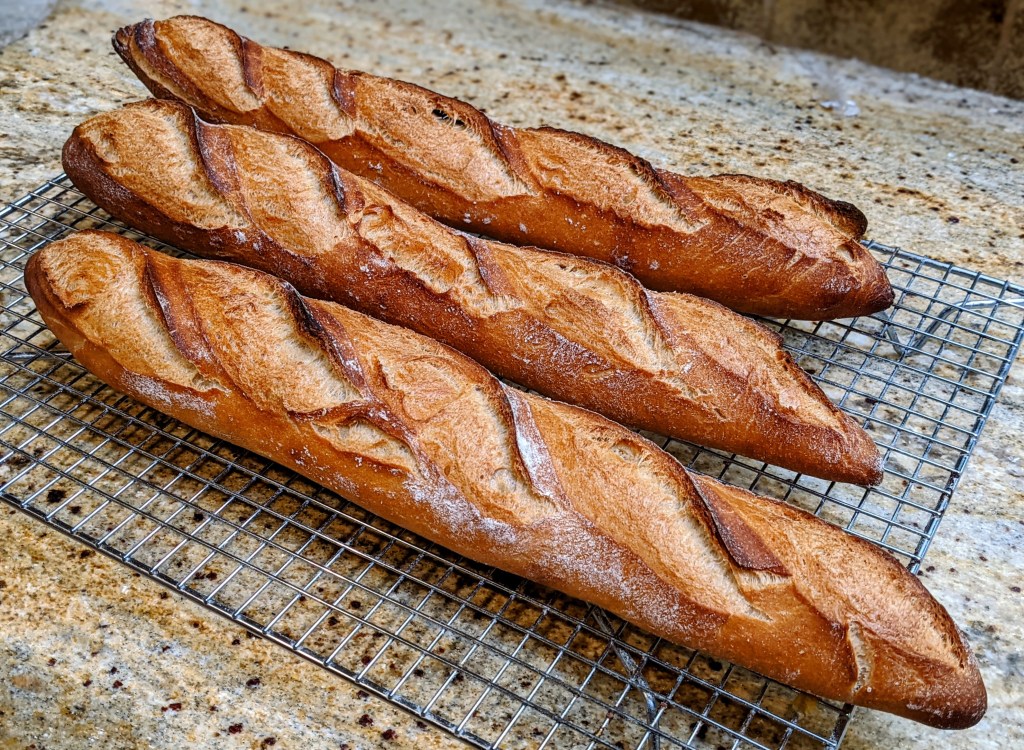
I make sourdough baguettes from time to time, but technically, baguettes are typically yeasted breads, using a poolish preferment, or a simply a straight dough as in the pointage en bac or baguettes de tradition methods. To me at least, baguettes using a levain are different. Don’t get me wrong. I love the taste, especially when I use one of my botanical starters. But I normally call the bread I make with levain Sourdough French Bread as opposed to being called a baguette. By French law, breads made with a levain are called “pain au levain.”

I realize that I’m splitting hairs, but if there’s one thing I’ve learned in my journey: I don’t like to mess with tradition with certain loaves. I may try different methods; for instance, I’ve learned 5 different approaches to make baguettes, but for the most part, I do my best to stick to the traditional methods where I can. This especially rings true for the ancient Italian bread that I make like Pane di Como Antico, or Pane di Altamura. These have literally been made for thousands of years. Who am I to tweak them?

That said, I’m not a curmudgeon. I innovate all the time, experimenting with different flour mixes or adjust protein levels or hydration or even levain amounts. But if I’m making something I intend to call by its traditional name, I pretty much follow the traditional method.

As Emily Winston, owner and chef of Boichick bagels said:

I wasn’t trying to be an innovative chef, and I wasn’t trying to make something new. I don’t have a horse in that race,” Winston said. Instead, she was “trying to make something that already existed…

That totally reverberates with me. With the traditional recipes I use, I really don’t want to be an innovator. Obviously, I can’t copy everything that was done hundreds or even thousands of years ago, and I certainly don’t have a stone hearth oven. But I do my best to observe the ingredients and processes that are in the recipes. I’m trying to make something that already existed, that has hundreds or even thousands of years of tradition behind it, not to mention bakers who have devoted their entire lives to making that bread. For me at least, I think it’s super important to carry on that legacy where I can.

Happy Baking!

Working Backwards… Or, Thank Goodness for Formulas!

Once I started getting into more advanced recipes, be they sourdough or straight dough, and especially reading books like Jeffrey Hamelman’s “Bread,” which focus heavily on production, it made me start thinking in terms of yield. That is, how much dough should I produce based on the size (weight) of the loaves I wanted to make.

For months, I kind of flailed around using a kilo of dough for pretty much everything, then dividing it up into equal portions. But frankly, that wasn’t very efficient, and it certainly lend itself to consistency from bake to bake.

Why? Simply because if you tweak anything, it changes the weight of the final dough. For instance, let’s say I always use 1 kilo of flour. If I’m making baguettes, I know that I want my hydration to be 75%. Easy enough, the final dough’s flour and water will weigh 1750g. But what if I wanted to drop the hydration to 65% using the same amount of flour. That weight would drop to 1650g! See what I mean?

So what I needed was a way to calculate the ingredient amounts I’d need based on the final weight of the dough. For instance, if I’m making baguettes, my 20-22 inch baguettes should weight 350g apiece. If I want to make 8 baguettes, then I should produce 8 X 350 or 2800g of dough. That’s all well and good, but how do I calculate how much flour, water, salt, and yeast I’d need? This is where the baker’s formula comes into play.

Basic Calculation

Let’s take a simple straight dough baguette formula. In Hamelman’s book, the overall formula would look something like this:

Flour 100%
Water 76%
Salt 1.8%
Yeast 0.25%
Total: 178.05%

When I first saw a formula listed like this, I have to admit that I was totally confused about the number that added all the percentages together. What I later found out is that number is the key to calculating the amount of flour in a recipe based on the final weight of the dough! You simply divide the final dough weight by that number, and you get the total flour in the recipe!

So taking my need for 2800g of dough, the flour I’d need would be 2800 / 1.7805 which calculates to about 1573g, rounded-up. From there, it’s easy to calculate the water, salt, and yeast.

Factoring in a Preferment

A mistake that I used to make and what I see in some books, a lot of blogs, and forum posts is treating a preferment (starter, levain, poolish, biga, etc.) as an ingredient. For instance, saying to use 10% starter. A preferment is simply not an ingredient. It’s a dough development stage; that is, it is part of the overall dough formula and thus the weight of its constituent contents is what’s meaningful, not the preferment itself.

Why is this important? Think about it this way: Let’s take the 1573g grams of flour that I’d need to make my baguettes, for example. 10% of that would be 157g. But if we add 10% of that to the recipe, treating the preferment as an ingredient, we’ll completely throw off our weights. Remember, we’re after a final weight of 2800. If we add 157g to that, we go up to 2957g. Not good.

Furthermore, different preferments will have different hydration rates. If we use a 200% hydration liquid starter, that’ll completely screw up the hydration that I want to be at 76%; not by much, but enough to make a difference in how the dough performs.

So the better approach to take is to consider the flour content in the preferment as a fraction of the total flour, then subtract the flour and water in the preferment from the overall flour and water to keep the final weight the same. With this method, we ensure that the preferment is truly a fraction of the overall dough and not an added ingredient.

The spreadsheet below is something I put together to help me calculate my ingredient amounts for pretty much any kind of bread that I make. I’ve included various other ingredients that I might use. It all goes into the calculation. It’s also available on Google Spreadsheets. Just copy all and paste it into a new sheet.

This has become an invaluable tool for me in calculating exactly what I need to bake all sorts of bread.

Baking Bread on “Staycation”

Making a biga for ciabattas this afternoon!

So… I’m sitting here in Waimanalo, Oahu, Hawaii where my wife rented a house for a couple of weeks so we could all “work from home” away from our real home for awhile. We arrived in the early evening and went out for dinner last night, but we spent WAY too much on dinner, having dined at one of Guy Fieri’s Triple D restaurants, Uahi Grill in Kailua. It was good, but nothing spectacular.

I had the poké which was pretty good, but to be honest, Fresh Catch in Kaneohe is WAY better; so is the poké at Foodland Supermarket – and they have 10 different varieties that they make fresh every day! But I digress…

Anyway, after getting over the initial shock of spending over $200 on dinner last night (it’s not that we can’t afford it, it’s just a lot to pay for okay food), since we rented a house, I promised my wife I’d go grocery shopping the next day and get provisions so I could cook dinner most of the nights we’re here.

So early this morning, I drove to the local Foodland to pick up groceries and, of course, today’s supply of poké. On the menu, at least for the next couple of days, are some traditional Filipino and Hawaiian dishes like Pork Adobo and Pancit and Spam Musubi.

While I was going down the Rice and Pasta aisle, it just happened to be the baking goods aisle as well. I was not intending to bake on this trip. I was going to take a little break. But the kids wanted to make sandwiches for lunch and I’m sorry, even though Foodland bakes their own bread and it’s pretty good as grocery store bread goes, I just can’t get myself to buy grocery store bread any longer.

As I’m writing this, I looked up at my wife who’s sitting across the kitchen table from me and said, “I ust realized that I haven’t bought a loaf of bread for over a year! There’s just been no need.”

My aversion to grocery store bread was strong enough to overcome my wanting to take a bread from baking. Yeah, I’m pretty obsessed with baking, though not so crazy as to bring a starter with me. But truth be told, baking on this particular trip is purely practical. I’d rather bake my own bread where I know exactly what goes into it, than buy bread that has additives and preservatives in it.

Luckily Foodland had some King Arthur flour and Red Start Active Dry Yeast on hand. Niether were cheap, but I’ll be making ciabattas later today (I’ve got a biga started). Technically, I probably could make baguettes as well, but I’ll see how it goes with the ciabattas first.

The challenge here is that I have no scale, so I’m going to have to pretty much eyeball everything. As I wasn’t planning on baking in the first place, I didn’t even bring my trusty, compact precision scale which I could’ve easily packed. But hey! After watching several shows of people making traditional breads by hand, and owing to the fact that I bake so much that I’ve learned to determine a dough’s consistency by look and feel, this won’t be much of a problem for me. In fact, I’m pretty excited!

Every time I bake, I get this excited feeling. At least for the past year since I’ve put a lot of energy into artisan baking, I get this anxious feeling in the pit of my stomach. But it’s a good anxious; that anxiousness of anticipation, and I just can’t help but smile. I have to admit that I’ve been the happiest I’ve ever been since I picked up baking.

Even when I’m doing my charity projects where I’m baking a bunch of loaves at once, it’s like my brain releases a flood of serotonin into my bloodstream, and my feelings of well-being and happiness go straight through the roof! Is it weird? Maybe. But I’m addicted to the feeling.

Well, I just realized that I forgot to get a small bottle of olive oil, so I need to go out to the grocery store again…

Happy Baking!

P.S. Here’s what the finished product looks like!

Recipe: Biga Baguettes

I needed to make lunch for the family tomorrow and I didn’t figure out what I was going to make until too late. I knew that I wanted to make sandwiches, but I wanted to make them on baguettes. But since it was late afternoon by the time I was going to start making them, my recipe options were a bit limited. I couldn’t make my normal Pointage en Bac baguettes which require an overnight cold fermentation (I had to have the sandwiches prepared early in the morning). That also left out making a poolish.

But what I did have on hand was some nice, ripe biga that was in my fridge. So I pulled it out of the fridge, let it warm up for an hour or so, and started preparing the dough. They turned out fantastic! They’re so good that I thought I’d share the recipe.

Biga

Make the biga the night before you bake. This will make a lot, so put the unused portion of the biga in the fridge in an airtight container. It’ll keep for over a week. It’s actually much more flavorful a few days old. The biga I used for my baguettes was five days old and had a rich and slightly sour flavor. Here’s the formula:

Flour500g100%
Water390g78%
Yeast0.25g0.05%
Biga will be ready to use when it has doubled in size and is slightly domed at the top.

Final Dough

AP Flour500g100%
Water* (warm)390g78%
Salt10g2%
Yeast4g0.8%
Biga200g40%
*Target dough temp is 78-80° F

The process we’re going to use here is loosely based on Hamelman’s Baguettes de Tradition which is a great recipe for making straight dough baguettes.

  1. Sift the dry ingredients together and set aside then mix the biga and water together until biga is broken up. Add the wet mixture to the dry ingredients and mix thoroughly, making sure there are no lumps (there’s shouldn’t be if you sifted the dry ingredients together). Mix until you form a shaggy mass. Don’t worry if it resembles more of a batter than a dough. It’ll all smooth out and come together nicely.
  2. Bulk ferment for 3 hours. During the first hour of bulk fermentation, fold the dough every 20 minutes. I recommend doing stretch and folds as opposed to coil folds as this is a fairly fast fermentation and the commercial yeast will expand the dough nicely. By the third fold, the dough will have built up plenty of strength with noticeable bubbles. Try not to degas the dough too much with the third fold. Let the dough rest for 2 hours or until it has nearly doubled.
  3. The yield will be about 1100g, which will give you 4 20″ baguettes at about 276g apiece. If you’re using a 15″ length, it will make 5 baguettes at 220g apiece. Divide and scale out the size that works for you. With each piece, lightly flatten, then letterfold it, then gently roll it into a compact log. Place each piece seam side up on a well-floured couche or tea towel. Bench rest for 20-30 minutes or until the dough has relaxed.
  4. Shape into baguettes and let rise for 1 hour or until loaves have reach about 75-80% fermentation.
  5. Bake at 485°F for 12 minutes with steam, then 425°F for 8-12 minutes. Note that the baguettes will not be very dark.

What amazed me about these baguettes is that despite the fact that I baked them for much longer than the final 12 minutes they didn’t get darker than when the time was up. But no matter, the crust on these baguettes is thin but very crisp and the crumb is super-soft. The crumb isn’t really open and pockmarked with holes, but it it’s super-light – almost like a banh mi crumb.

When I pick up a baguette and it feels as if it has very little weight, I know it’s going to be a great baguette, and these baguettes are great!

Happy Baking!

Arnold Palmer: “The Road to Success Is Always Under Construction”

Those who know me know I have kind of an obsession about golf. I learned the game kind of late – at 18 years old – but from the moment I picked up a club, I was hooked. Absolutely hooked. I even moved to Las Vegas in the hopes of eventually becoming a PGA teaching pro. That didn’t happen for me for lots of reasons but my love for the game of golf has never wavered.

One of my golf idols throughout my playing career has been Arnold Palmer. To me, he was a man of the people. Though he had four green jackets from winning The Masters four times, he was always known to be totally accessible to his fans. But not only that, he carried a wisdom with him that he readily shared.

Arnie’s words of wisdom that I shared in the title of this post have inspired me through the years. I don’t remember when he said them (and I realize this quote is also attriuted to Lily Tomlin), but I remember that when I heard them, it was during a particularly difficult time in my life where I was struggling to figure out what I wanted to do. And upon hearing those words, I was inspired; inspired to keep on charging forward, to keep on working. To never quit.

I’m at that point with my bread making right now. I’ve started working with more difficult formulations and techniques and while the bread is coming out delicious and to the untrained eye it looks fine, I’m not satisfied. I’m not getting an ear with my many of my loaves as of late and it bugs me.

But this afternoon, I sat down at the TV to watch the Arnold Palmer Invitational golf tournament and right before a commercial break, they showed a statue of Arnold Palmer with the quote right next to it. I just smiled because I knew that though I’m frustrated right now, I just have to keep on working at it.

Plus, I realized that I should know better. I’m working with much more advanced formulations and techniques and I need to practice before I get the results that I’m expecting I should get. It’s a road that’s definitely under construction!

Happy Baking!

Dividing and Scaling Baguettes

One of the most important things I’ve learned about baking is striving to achieve consistency; that is, doing things the same way time after time to achieve consistent results. When bake a certain type of loaf, I expect it to fit a particular ideal I’ve established in appearance and taste. And as long as I haven’t strayed from the basic formula and process, it’s reasonable to assume that ideal will be met.

One way I achieve consistency is working with different ratios. After all, bread formulas are all about ratios. And working with ratios eliminates guesswork, and a lot of it you can do in your head. For instance, if I want to create a 75% hydration dough and I use a kilo of total flour, I automatically know that I’ll need 750g of water.

So given that, I worked out a ratio for scaling baguettes that ensures that I’ll get consistent results from bake to bake. Essentially it works like this:

Target Baguette Length (centimeters) X 5.5 = Portion Weight (grams)

Where did I get that “5.5?” I actually got it from Chef Markus Farbinger’s Baguette series on Vimeo. He scales out 220g portions for 40cm (~15 1/2 inches) baguettes. So given that, I took the weight of the portion and divided it by the length to give me grams per centimeter and that works out to 5.5g/cm. Because I have a nice baking stone, I bake 60cm baguettes (I used to do 40 cm), but I was able to easily scale up to 60cm and I know that each portion should be 330g. Easy, right?

I make four different types of baguettes: Baguette Traditional (straight dough), Pointage en Bac (straight dough with a slow bulk ferment – the one I bake the most), Levain, and of course, a Poolish baguette. No matter the type, I scale them the same. I may not bake them the same; for instance, the levain baguette gets a lot more oven time to get color into the crust. But they’re all scaled the same. For me, as I mentioned above, it takes the guesswork out of things.

The less you guess, the more consistent your results!

Happy Baking!

Jeffrey Hamelman’s Poolish Baguette (Adapted)

It’s no secret that I love making baguettes. In fact, I made a batch of sourdough baguettes based on Hamelman’s Baguettes de Tradition from his great book “Bread” this morning. Technically, Baguettes de Tradition is a straight dough. But I love the processing technique and it’s difficult to make because the hydration is 76%. And using a levain further exacerbates things because the acid in it makes the dough more extensible – and sticky.

But after I made them, I wondered what the chef’s poolish formula was like, so I looked it up and was a little shocked by his formula. A 66% hydration dough? That couldn’t be right. It’s commonly accepted that baguette dough is around 75% hydration, give or take a percentage point or two. It’s a fairly wet dough. But 66% is getting close to stiff!

But the kicker for this recipe is the long bulk fermentation at 2-2 1/2 hours and the long final fermentation at 1-1/2 hours. This gives the dough plenty of time to form lots of air bubbles, which is what you want with baguettes plus, the long periods of rest in the bulk fermentation give the dough plenty of time to relax. With a moderately stiff dough like this, you want to give it plenty of relaxation time if you can.

As my title indicates, this is an adapted recipe. The reason for this is that in the book, the quantities are all listed in kilos and pounds, which leads me to believe that this recipe really is geared towards a full-fledged bakery. But everything can be scaled if you work out the percentages properly. Also, the chef uses fresh yeast in his final dough, but I adapted the recipe to use regular, instant dry yeast for both the poolish and final dough. There’s no difference in what either does. You just use less granulated yeast. Here’s the formula:

PoolishFinalTotalBaker’s %
Bread Flour3306701000100.00%
Water330330*66066.00%
Salt0.0020202.00%
Yeast0.704**4.700.47%
*Target dough temp is 76-78°F so adjust water temp accordingly.
**If you have fresh yeast and want to use it in place of the granulated yeast, just divide by 0.4.

Poolish

  1. Mix all the ingredients together until smooth. I like mixing the yeast into the flour first to distribute it, then adding the water. Let ferment at room temperature for 12 to 16 hours or until the top is highly pockmarked and bubbling and ever so slightly domed.
  2. When the poolish is ready, dump everything thing into a mixing bowl and mix thoroughly. If using a mixer, incorporate ingredients at low speed for a couple of minutes, then increase speed to second speed and run for 1-2 minutes to break up any large lumps. Once the dough starts to pull cleanly off the sides, stop. If mixing by hand, thoroughly mix until moderately smooth being careful not to knead the dough too much.1
  3. Bulk ferment the dough for 2 hours, gently folding it after the first hour and being careful not to degas it too much.
  4. Divide2 the dough and lightly shape it into rounds, then bench rest (covered) on a lightly floured surface seam side up for 10 to 30 minutes depending on tightly you preshaped them. I recommend having a fairly light touch as you don’t want a skin to form.
  5. Once the dough has relaxed, shape them into long cylinders then set them on a well-floured couche or tea towel seam side up.
  6. Let the shaped loaves do a final fermentation for 1-1 1/2 hour. This is VERY important because shaping the loaves will have degassed them a bit and this long, final fermentation allows the gluten to relax and reform bubbles.
  7. Preheat oven to 460°F. When the loaves are ready, bake them for 24-26 minutes applying steam for the first 15 minutes.

Notes

  1. Whether using a machine or mixing by hand it’s important to NOT knead a baguette dough too much. You want the fermentation process to naturally form the gluten bonds and not force it by kneading. This will really tighten up the dough which you don’t want.
  2. Since I bake on a stone, I divide the dough into five pieces at about 336g apiece and 20″ long. You can do 8 pieces at about 14-15″ long as well to fit on a baking or baguette tray.

I’ve been writing this post while smack dab in the process of making these baguettes. I have to admit that I was really surprised at how supple the dough was when it ready to shape. It wasn’t nearly as pliable as my normal, high-hydration baguettes, but it was still pliant and luxurious.

And because it was rather cool in my kitchen, I let bulk fermentation go for almost three hours. And even at that point, it was easily less than 80% fully proofed. But that’s okay because it gave me plenty of runway for final fermentation, which I’ll probably take to a full 1 1/2 hour to ensure the loaves are close to fully proofed. This is definitely a recipe where I need to let everything that happens before baking get most of the work done on the dough!

Happy Baking!

Caveat Emptor! Where You Buy Your Flour Matters!

When I first started getting serious about baking artisan bread, I knew that I’d be eventually going through flour pretty quickly. So I researched various places in which I could purchase bulk flour in amounts equal to or greater than 25 lbs..

The obvious first choice to look was at the largest online retailer that we all know and… we all know… It’s tempting to go there because with Prime, there’s free shipping. But here’s the thing: The retailers jack up the price of the flour. How do you think they can ship for free?

For instance, to get a 50 lb bag of King Arthur Sir Galahad flour (the brand that is the bakery/restaurant equivalent to their retail AP flour), the cheapest I saw it was around $59.00 with free shipping. BUT I can get 25 lb. bags of KA AP flour at my local Smart & Final for less than $17.00! So you see, the online price has the shipping built into the price.

I had to learn this lesson the hard way. I purchased a 50-lb bag of KA Special Patent Flour which is similar to their bread flour. I paid $60 for that bag! And after spending that much I literally spent days poring over the ‘Web to find different sources of flour where I could either buy direct and pick up, or as in the case of Azure Standard (no, it’s not an affiliate link), the company has various “drop points” near me where their truck will stop and I can pick up my order.

For instance, a 50-lb bag Azure Standard unbleached organic bread flour is about $42. I pick it up at a drop point that’s 20 minutes from my home. So not only do I get my flour with not shipping, I’m getting certified organic flour. It’s amazing!

Mind you, it’s not that I mind paying shipping. But I do mind being misled by the whole “free shipping” bit. So if I can get my flour locally or all I have to do is drive no more than 30 minutes to pick it up, it’s a fair trade-off.

That said, I will pay for shipping if there’s a flour I just can’t get locally. One of those flours is the Hudson Cream brand by Stafford County Mills in Hudson, Kansas. Their white whole wheat flour is just a dream to work with and is milled to a super-fine consistency. It’s almost like working with bread flour! I’m not sure if they add any sprouted, malted barley to the flour for the amylase (which helps break down flour into sugars), but I get such great oven rise out of this flour. But King Arthur sources flour from this mill, so it’s definitely high-quality.

The reason I’m writing this entry is because we’re living in a world right now where there are lots of dishonest people taking advantage of the lockdown situation for their own personal gain. So take some time to do your research before you pull the trigger on flour with “free shipping.”

Coil Fold vs. Stretch & Fold: Which One to Use?

Before I start the discussion, let me say this: This isn’t a discussion meant to argue that one is better than the other, nor will I suggest you use one folding technique exclusively. But what I will say that at least in my experience, the folding technique you use depends on the bread you’re making, and it will affect the type of container you use for fermentation, though I realize many bakers prefer to do their folding on their bench.

So I have a rule-of-thumb with respect to the type of folding I do: If I’m using whole grain flour at or above 20%, or if my dough contains inclusions such as cheese or nuts or dried fruit, I will invariably use coil folds. The reason for this is that it is much gentler on the dough and the particles of inclusion material or bran have less of a chance of tearing the dough. Otherwise, I’ll just do regular stretch and folds.

Now that’s the kind of general rule-of-thumb I use. But the reality is that as of late, once my dough becomes pretty gassy, I tend to do coil folds for my final sets, irrespective of inclusions or whole grain. I do my best to retain the gases as much as possible especially with naturally leavened bread. I don’t want to ruin all the work the wild yeast has done.

The exception to this is when I do yeasted breads, such as baguettes. I will always do stretch and folds with a dough that uses commercial yeast. The reason for this is that it’s fast-acting and once activated very active, so I’m less concerned about degassing the dough and can be a little more assertive with it. Those little buggers will just pick up and fill the dough wtih CO2.

I realize that this is nothing groundbreaking, especially for experienced bakers. And this entry, as most of my non-recipe entries – is more of a reminder for me to practice what I just preached.

Happy Baking!

Book: Naturally Fermented Bread

Click on the book to go to Amazon (and no, it’s not an affiliate link)

This past Friday, I was in downtown Mountain View at Books, Inc. and as usual when I’d go to a bookstore nowadays, I immediately went to the cooking section to see if there were any bread baking books that I haven’t read or heard of yet.

Sure enough, I ran across “Naturallly Fermented Bread” by Paul Barker. I almost dismissed it, thinking that it was just another book on sourdough. But I since I had never heard of the book before, I decided to pull it off the shelf. I was immediately intrigued because on the cover wasn’t a picture of a sourdough culture or loaf of bread, but a watercolor of fermenting fruits and vegetables!

For those that don’t know me, I love fermenting hot peppers and other veggies and fruit, so when I saw the cover, I knew I had to take a closer look. Plus having recently created starters from grapes and – ahem – cannabis, I immediately thought that this was right up my alley! But what further intrigued me was the tag line:

Learn to use yeast water starters to bake wholesome loaves and sweet fermented buns.

When I made my wild yeast starters from grapes and pot, it was a suspension of the ingredient within a flour-water dough. But that tag line suggested that the actual fermentation liquid is used. That was a real face-palm moment for me! And I thought to myself, Of course! I’ve always used fermentation liquid from a previous fermentation to kickstart a new fermentation, so it makes sense to use it for freakin’ bread!

So what about the book? The real meat of the book where Paul Barker talks about how it all works is actually only a few pages. The rest of the book talks about breadmaking techniques that while useful, have been covered in lots of other books. That’s about the first third of the book. The rest of the book contains his recipes and how to use a botantical culture in conjuction with the yeast water to leaven dough.

The book’s not long at all, but it’s great and I highly recommend it. It’s in hardcover, but also available in digital format. Personally, I’m a bit old-school when it comes to cookbooks, so I just bought the hardcover.