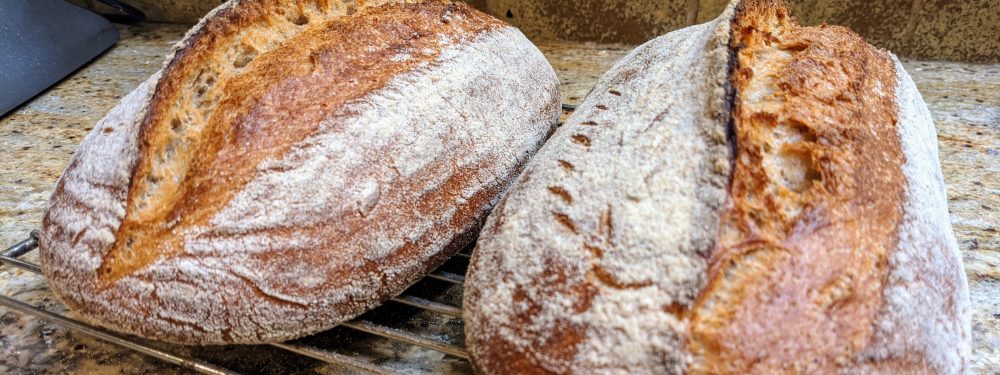
Yeah, yeah, before any Texas chili purists chime in, I like my chili with beans, but with this recipe, beans are optional.
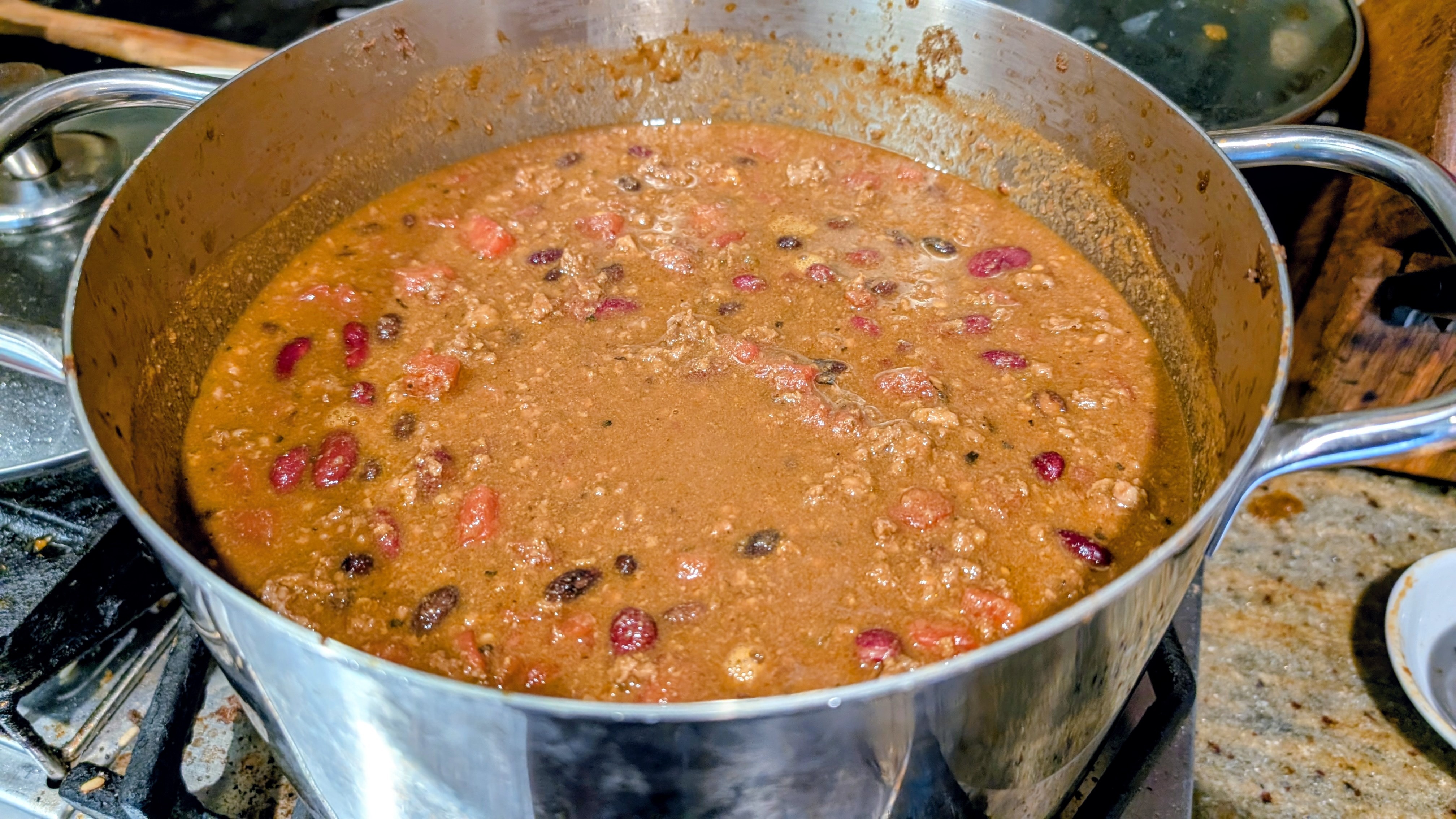
This is a recipe that took me years to develop. I don’t know – or care – if it’s competition-worthy, but it’s hearty and delicious. The batch above was made with venison hamburger and venison sausage. But pork or beef or any meat will do – even ground turkey and chicken!
This is a low-and-slow chili that takes about 3 hours to finish, but it’s simple to make, even though it may take some time to cook.
Ingredients
4 large, dried Guajillo chilis
1 yellow onion
6 cloves of garlic
1 1/2 lb lean ground meat (85-15 to 90-10)
1/2 lb sausage (preferably something with low sage like Texas breakfast sausage)
1 1/2 tbsp cumin
1 tbsp chili powder
1 tbsp cocoa powder
1 tsp black pepper
1 tsp MSG (optional)
1 tbsp paprika
1/2 tsp ground coriander
1/2 tsp black pepper
2 bay leaves
2 cans diced tomatoes (I like fire-roasted)
2 cans of beans, drained (optional – I like kidney and black beans)
2 tbsp corn starch slurry
Salt to taste – about 1 tbsp for me, usually
8 oz. beer (I prefer Pilsner or a Lager. IPA are too bold)
- Rehydrate the dried chilis in 2 cups of warm water
- Cut the onion into quarters and place in a blender with the garlic
- Once the chilis are rehydrated (about 1/2 hour to an hour), remove the stems and place in the blender with the onion and garlic.
- Pour about a cup of the chili water into the blender and blend. You want the consistency to be thick, but not a paste. If it’s too thick, add a bit more chili water.
- Add all the dry spices to the blender and mix thoroughly.
- In a medium pot, add some olive oil, then fry up the onion blend over medium heat until aromatic.
- Add the tomatoes and slurry and mix thoroughly.
- Add the meat and break it up till there are no large chunks. Stir often.
- Add the bay leaves.
- At this point, you can add the beans.
- Pour in the beer and fold it in thoroughly.
- Allow the chili to come to a boil, cover, then reduce heat to simmer.
- Let simmer for an hour and a half, stirring every 15-20 minutes.
- Uncover, then let simmer without a cover to help thicken. Stir once halfway through.
- Turn the heat off, cover, and let the chili rest for an hour.
- Before serving, remove the bay leaves.
- Serves 6.
Notes
- This is just a basic recipe, but you can tweak it any way you want. I sometimes add a small can of chopped green chilis to give it an extra kick.
- It’s even better the next day! I often make it the day before I serve it, let cool down, then pop it in the fridge overnight. All the flavors marry.
- You can top with chopped onions, sour cream, and cheddar cheese.
- This sounds crazy, but this is great on spaghetti!
- If you don’t add beans, you might let this simmer partially covered so more water evaporates from the chili.


 The Dawg House!