Gimme Some Skin!

A friend recently asked me what drew me into my bread making obsession. I shared that when I first started, I had no idea I’d totally fixate on this. All I was doing was jumping on the bandwagon and my only goal was to be able to make a decent-tasting loaf of bread. But once I made my first few loaves, inevitably, my sense of aesthetics kicked in and I didn’t want to just create decent-tasting bread, I wanted it to look good as well as taste good.

Then I wanted it to be much more nutritious than other bread. In essence, I went on, what drew me in was the nuance; those little niggling details that all come together to create a beautiful loaf of bread. As I discovered, all those little things affect how the bread turns out. And one of those little things I have found to be absolutely critical is, of all things, pre-shaping.

I have to admit that when I first started out, I kind of took the pre-shaping step for granted. After all, it seems like such a minor step: Shape the dough into a ball, let it rest for 15-20 minutes, then shape. And mind you, I was learning alot of technique from YouTube videos, and none of the chefs I watched ever explained the importance of this step. But I found that the more care I put into pre-shaping, the better my loaves turned out. Let me explain why…

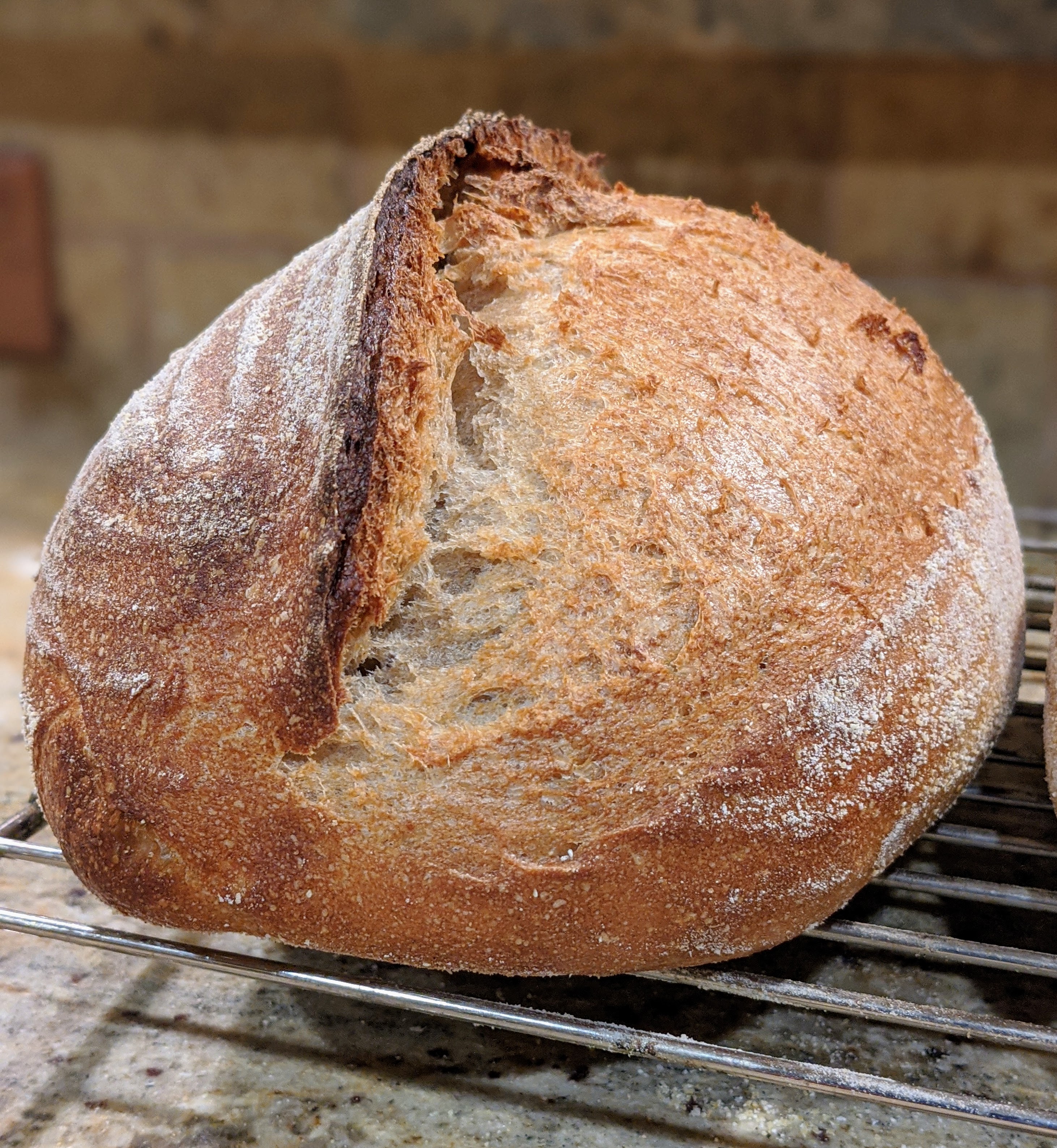
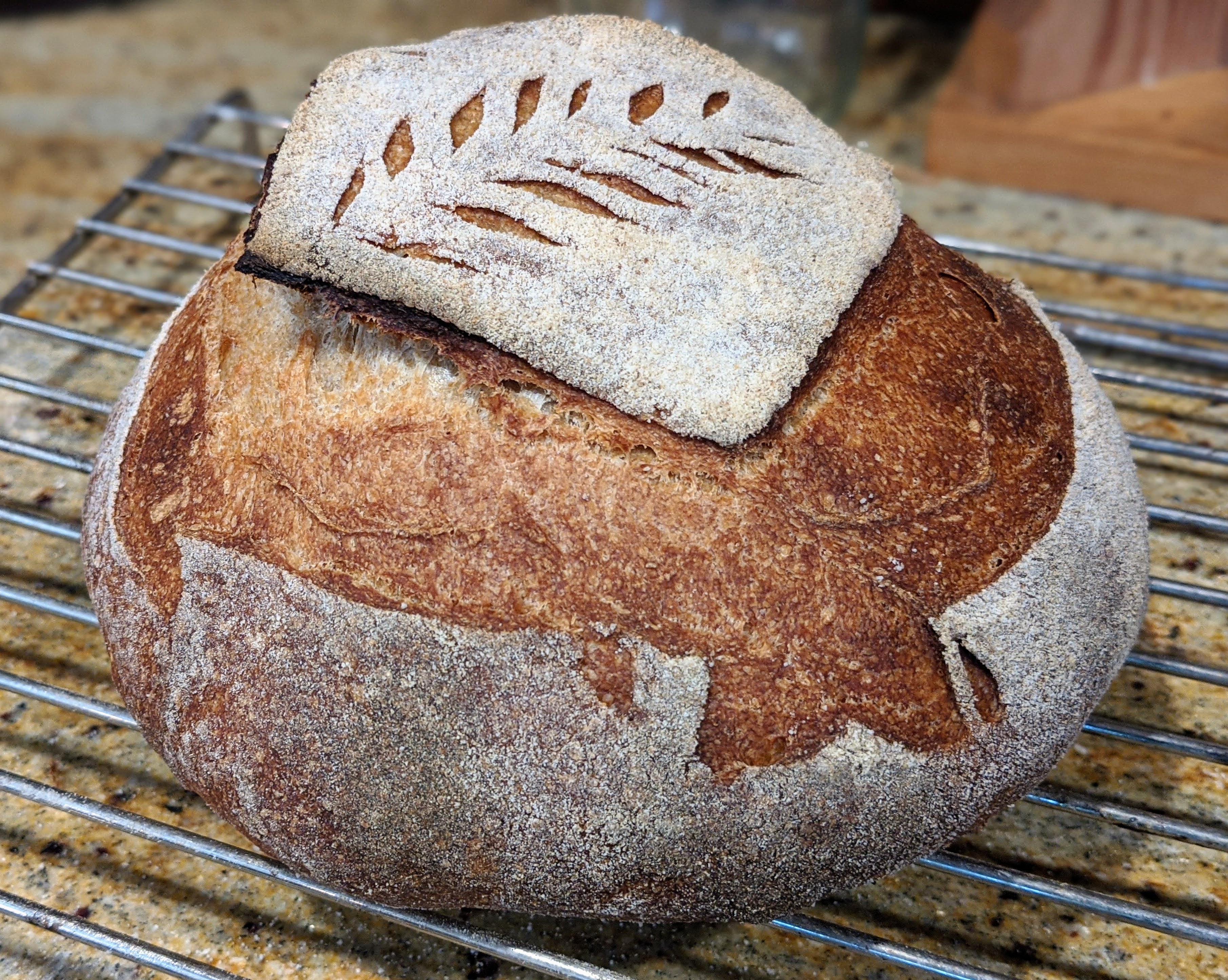
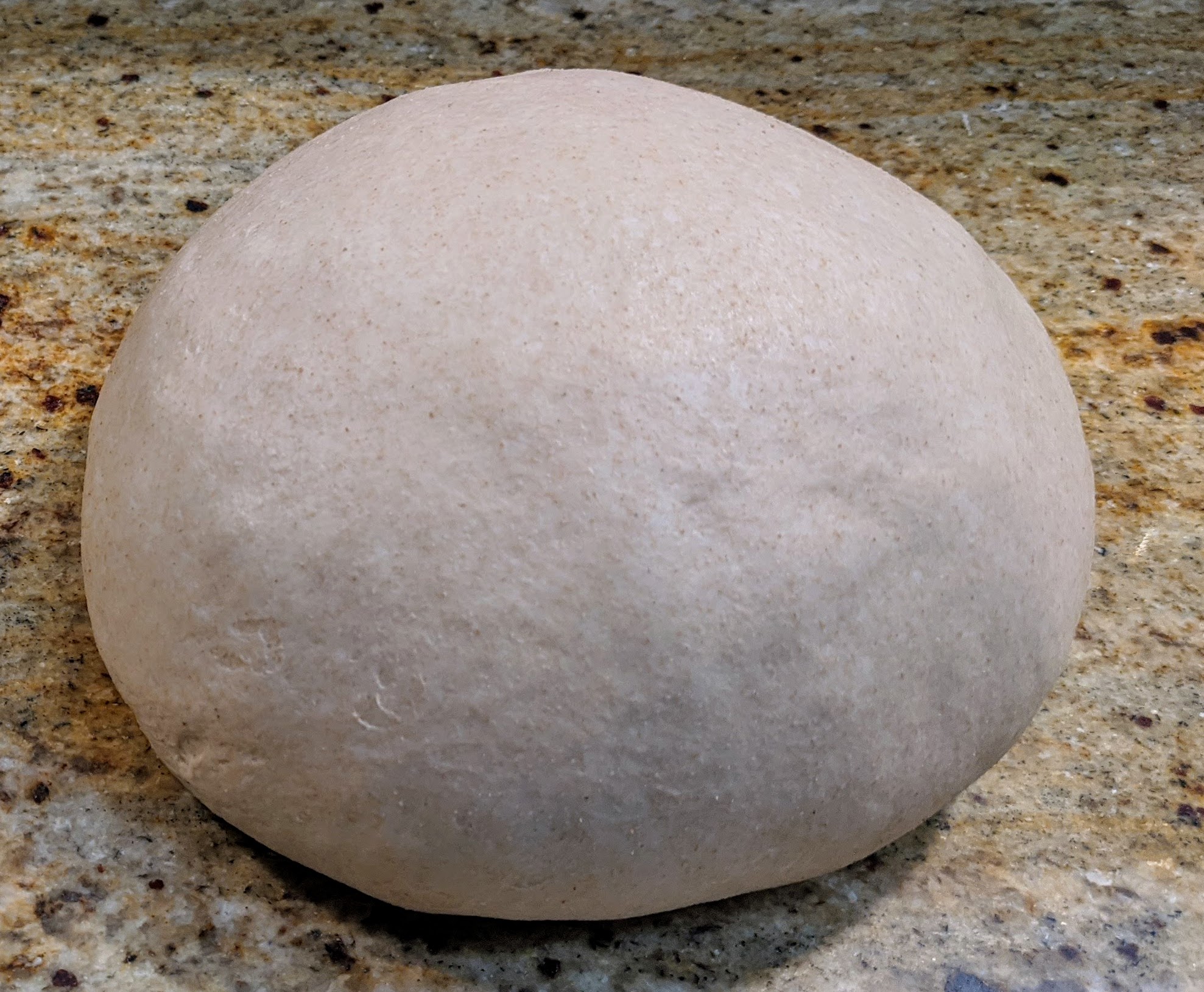
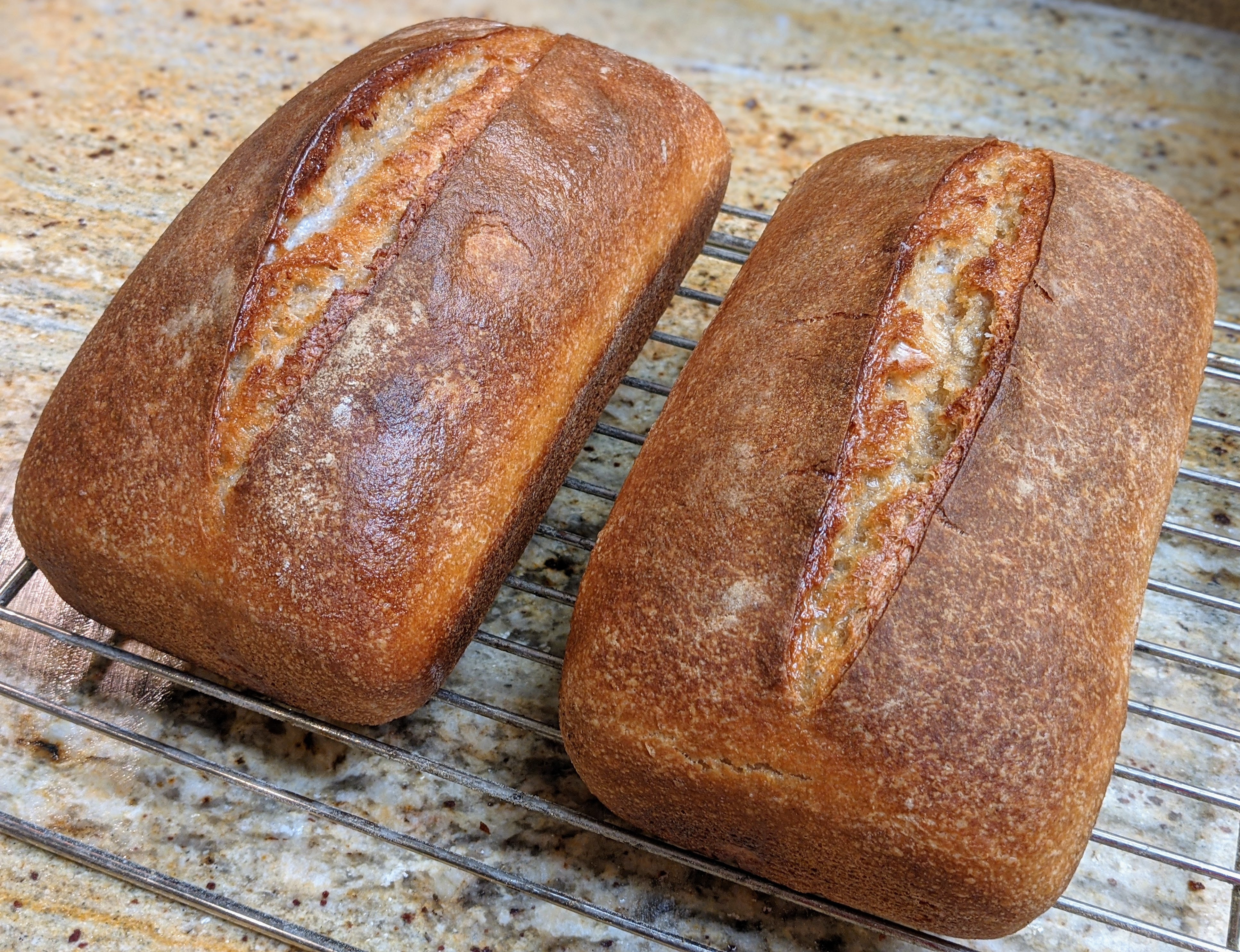
First, pre-shaping establishes the “skin” of the bread; essentially creating the canvas that will be presented to the world. But that skin isn’t just for looks. It plays a vital role in the overall structure of the loaf. Arguably, this is the most important item of pre-shaping’s importance. In pre-shaping, you don’t want to just create a smooth outer skin, it has to be taut, stretching the gluten strands to begin to establish the outer structure of the loaf.

Secondly, pre-shaping begins orienting the gluten strands to make it easier for the ultimate shape. It doesn’t seem that apparent when making boules or batards, but that orientation is really apparent when making baguettes. It gives the dough a little bit of a head start before shaping.

Finally, pre-shaping re-arranges the yeast and other microbes in the dough, so that the little beasties that have exhausted their food supply during bulk fermentation can be moved to a new spot to get new food. This may explain why oftentimes during pre-shaping, you’ll see bubbles spontaneously form. Pre-shaping wakes up the microbes and that’s a great thing. You want them to be active during final proof!

When I first started out and didn’t put any emphasis on establishing the skin, I believe it negatively affected my ultimate shaping in that my loaves would often collapse. But once I started making sure I’d create a nice, smooth, taut skin during pre-shaping, I had fewer and fewer collapses to the point where my loaves – which are generally 75-80% hydration – just don’t collapse unless I over-proof them.

But as I always say, this is just one aspect of the whole process; though on the surface it seems like a minor item, it really isn’t.

Happy Baking!

Okay… I Admit It. I’m Obsessed.

I took this weekend off from baking because I went on an annual trip to Lake Tahoe to spend a few days with some of my oldest friends from college (yes, I brought up a bunch of bread that got completely gobbled up – it was very pleasing to witness that). Throughout the weekend I was having what amounted to mental withdrawal symptoms because I wasn’t baking.

My best friend who came with me asked me on Saturday what I felt like not baking. I replied, “I have to admit that I don’t quite know what to do with myself. For the past six months, my hands have been covered in either flour or dough, so to have completely flour-free hands the entire day is a little unsettling.”

But now that the weekend is over, I still can’t bake this week at all as my house is being tented for termite fumigation. I have to admit that even though I know that I’ll be just fine, baking bread has been part of my daily life these past six months that I’m feeling a little… weird…

So yeah, I’m a little obsessed.

Open Crumb? Sure… But Not All the Time

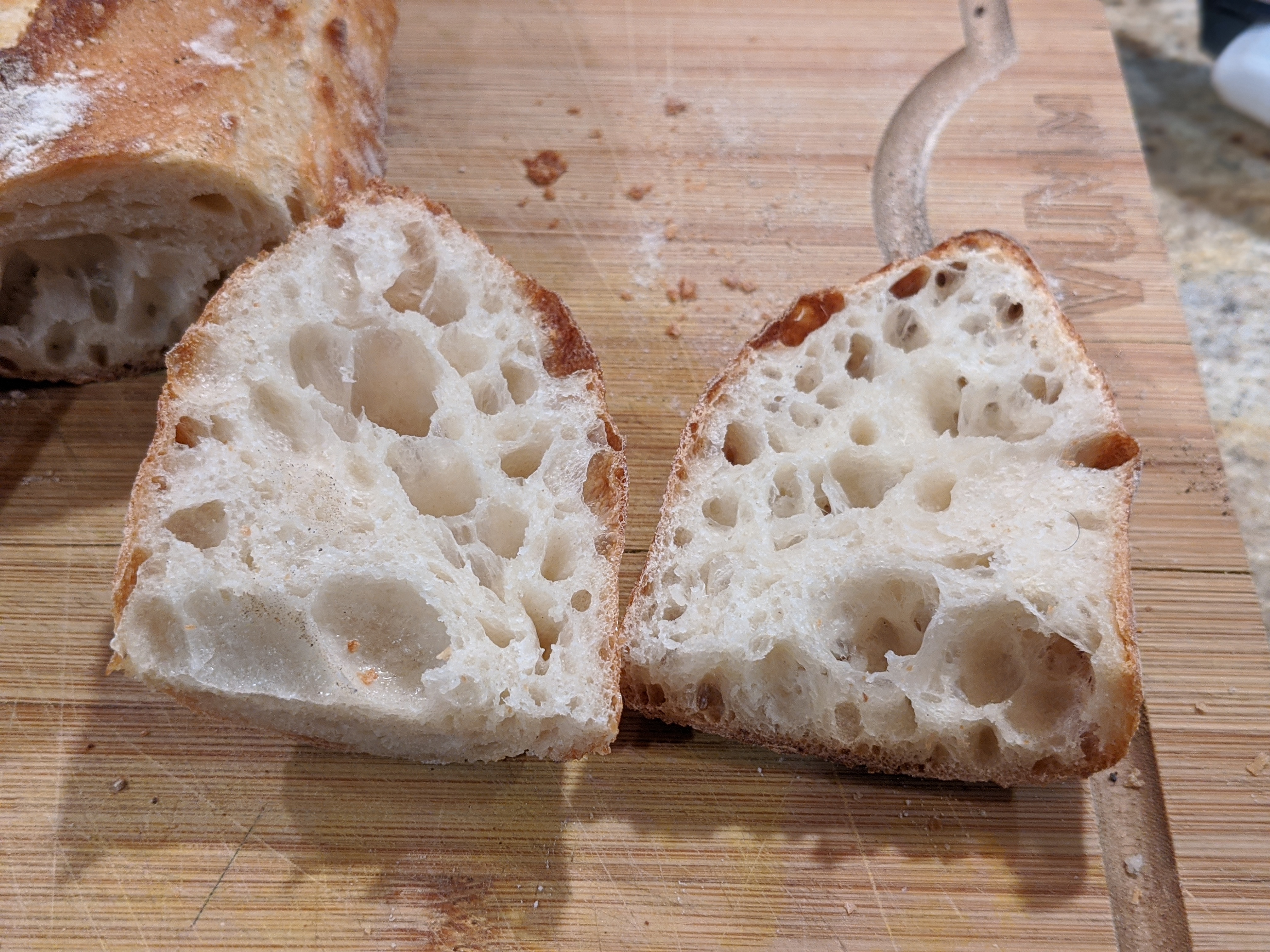
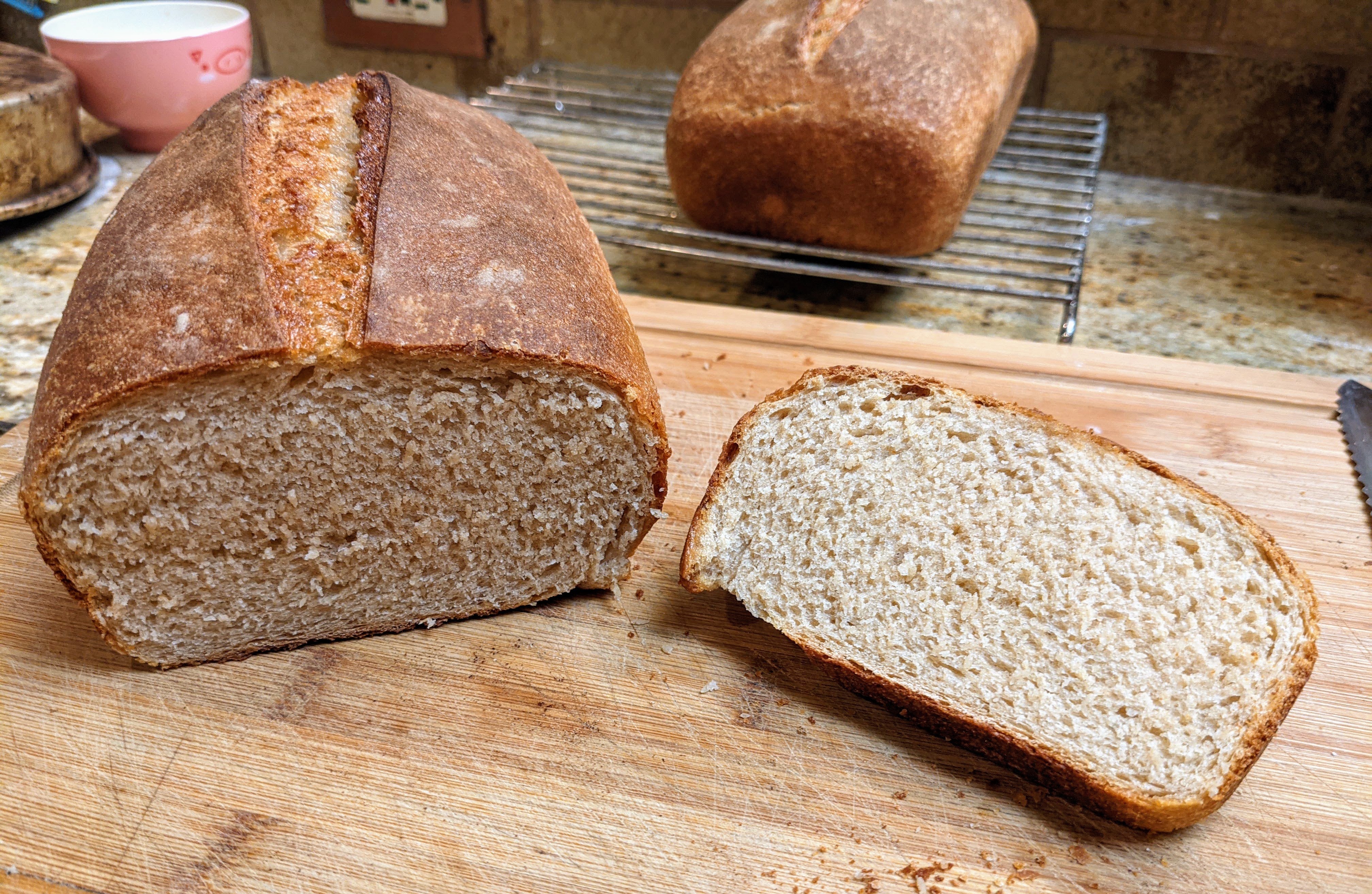
Generally, the bread I bake has a fairly open crumb, considering the high-extraction flour I use. With the loaves pictured above, the only pure white flour bread is in the top-left corner. I can get that kind of open crumb every time with any kind of loaf I bake when I use white bread flour. But the other ones? They use my 75-25 combination of high-extraction and white whole wheat flour.

Their crumbs may appear to be pretty open. But if you pick up a slice, there’s a certain heft to it. In fact, your first reaction will be that it’s dense. But when you bite into it, it doesn’t feel dense at all. The reason is that instead a really big holes, what I get with this flour are lots of small gas pockets, which makes the bread a lot more airy than how it might appear. And that’s exactly the end product that I’m after.

I want to strike a balance between open crumb and density to make my bread versatile. A loaf with big, open pockets isn’t really good for making sandwiches. But then a super tight crumb is just too dense and filling. But striking a balance between the two is perfect. I get to make my sandwiches, and my wife and kids love making avocado toast! And the bread is great with pasta and sopping up sauce!

This really isn’t a rant. But there is this preponderance of thought that an open crumb is the ultimate aim of artisan bread. For me, getting an open crumb was certainly a goal when I first started. But now that I’ve gained a lot more experience these past six months, what crumb I get is based on what I want to achieve with the bread.

For my baguettes and boules, I definitely want to get a nice open crumb. But for my batards and hand-shaped long loaves, I want a slightly less-open crumb (not tight, but less than open than a boule or baguette). For my loaf pan breads, I definitely don’t want big bubbles at all, though I do want to make sure the dough is airy.

The reason I’m writing this is because once you get to the point of consistently being able to create bread with an open crumb, you may also start asking yourself what you want to do with the bread; in other words, practicality may make you think about the different loaves that you make and what their ultimate purpose might be.

Mind you, I’m not arguing against an open crumb. But what I am saying is that an open crumb doesn’t necessarily define what makes a good loaf of bread. To me, what does define success is if the loaves I create fulfill the purpose I have in mind for them. And, of course, they have to taste good…

Best Videos Yet on Shaping and Baking Baguettes

I’m always trying to learn different techniques of shaping bread, and just when I thought I had baguette shaping down, I ran across the following videos with Chef Markus Farbinger. He has this quiet, soothing teaching style that I just love and great technique! But best of all, these videos are for making baguettes in a domestic oven! To me, this is the best of both worlds: A professional chef instructing for home baking. It doesn’t get better than this!

Shaping Baguettes

Scoring and Baking Baguettes

I love his passion and I really connect with his excitement. Even with all the loaves I’ve baked these past six months, I still get totally jazzed when my bread comes out of the oven! I addicted to the warm and fuzzy feel-good!

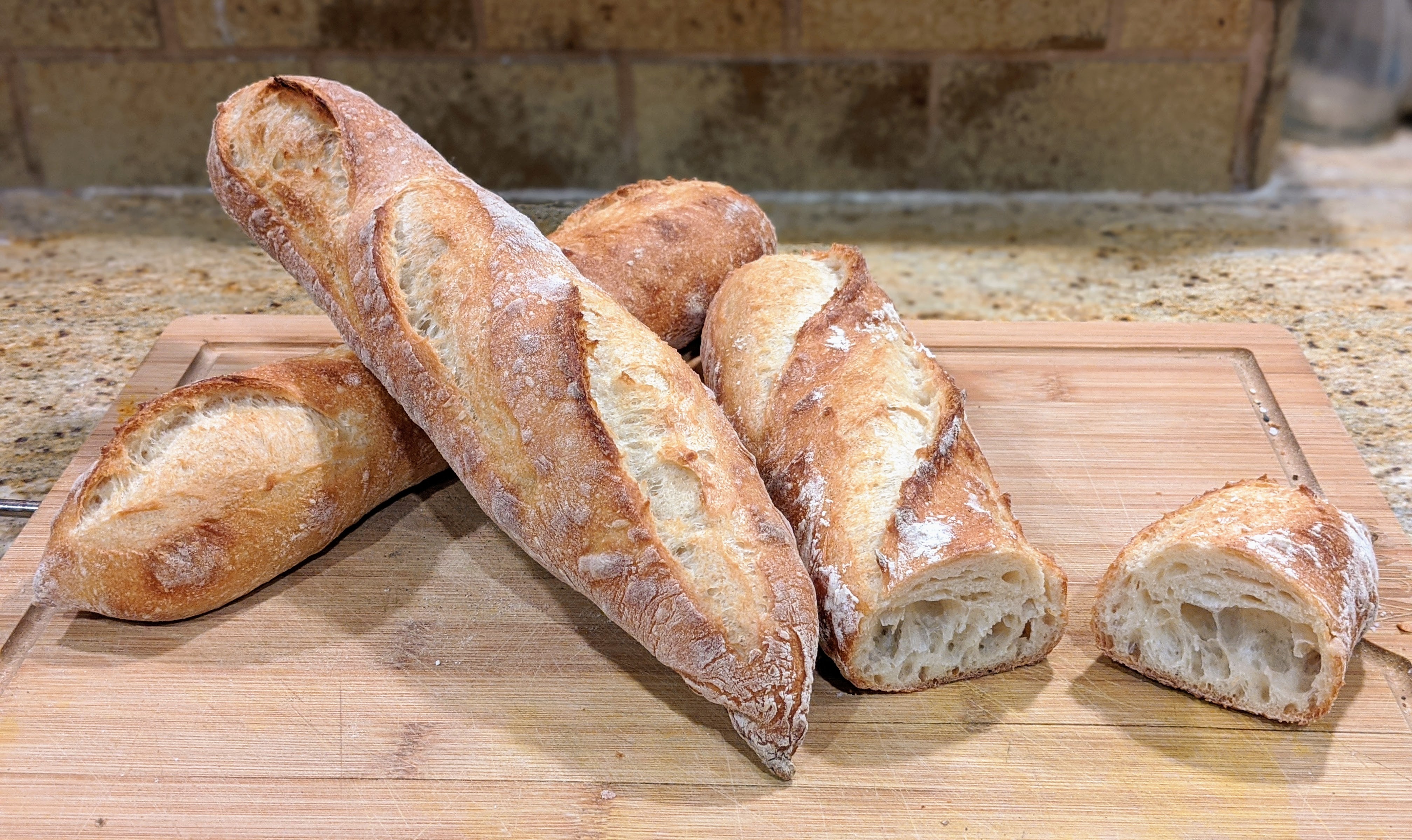
And following his techniques, here’s what I produced today!

Okay… I’m following his shaping technique from here on out. These came out perfect!

Baguettes Are Easy. NOT!

My favorite bread to make is baguettes. I love sandwiches and I especially love to make sandwiches with baguettes. And ever since I started making bread, my goal was to make my own baguettes so I could use them for sandwiches. And of all the different kinds of bread that I make, baguettes are the simplest with respect to the process. But they are also the easiest to completely screw up.

With my earliest attempts, the baguettes had a great shape. They appeared to get great oven spring and from appearance alone, they just looked right. But most of the time, they were pretty dense inside and super-chewy. I’d pick up a loaf and my heart would sink because I could feel the heft. They tasted okay, but damn if I couldn’t make a 6″ sub and not be completely weighed down by the dough.

But now my baguettes are light and airy. They have a great chew, but the dough gives very easily. And with the flour that I use, while the crust is crunchy and crispy, it’s not overly so. This bread is perfect for making sandwiches!

What changed to get me to making much better baguettes? In actuality, not much. I just did less; specifically, I worked the dough far less than I would with a larger loaf like a boule or batard. What I realized is that while forming a good, strong gluten network is important with any bread, with baguettes, there’s an inflection point that defines whether I get a light, airy crumb or I get a dense one. And that point comes a helluva lot sooner than when I’m making larger loaves.

With my larger-format loaves, I’m pretty aggressive with mixing the dough upfront until the dough is completely smooth. Then I do about six stretches and folds over the course of three hours from the initial mix. But with baguettes, I mix to a much courser consistency, rest the dough for a half-hour, then do at most two stretches and folds within the first hour then let it rest from 1 1/2 to 2 hours.

It reminds me of making biscuits. With biscuits you never want to overwork your dough. You mix only until all the ingredients are just incorporated and the butter or shortening is reasonably distributed throughout the dough. Then you roll it out and cut the biscuits. It’s a similar thing with making baguettes. Less is definitely more!

I wish I could explain where that inflection point is, but it’s something I feel. What I can share is that once I finish the second stretch and fold, if I can pull on the dough mass and the whole thing wants to come up, I know I’ve hit that point where the dough’s strong enough. And then I leave it alone!

Leaving the dough alone was a very difficult thing for me to learn. In fact, even with my larger-format loaves, I’ve learned that resting is just as important as manipulating the dough. And it’s been especially tough for a naturally impatient person as myself. As I used to say, “If patience was a virtue, then I’d be a slut.”

Sorry, I Just Won’t…

…eat grocery store bread any longer, unless there isn’t an alternative. And if there isn’t one, I will be extremely picky of what I buy. Luckily for me though, I bake practically every day, so the likelihood of me having to buy a loaf of bread is pretty low.

I realize that this might seem obvious considering this blog is now almost entirely about my bread-making journey and I think it’s clear that I bake – a lot! But if baking bread was merely an occasional affair, I’d certainly be buying bread from the grocery and wouldn’t feel compelled to write an article like this. But yeah… I’m kind of done with store-bought bread.

What prompted me to write this was last night’s dinner which was graciously prepared by a good friend to help my family out while I recover from surgery. She made an absolutely wonderful vegetable frittata, a fresh green salad, watermelon, and brownies for dessert. And she included a small loaf of heat and serve sourdough. My family really enjoyed the meal. But not one of us could eat the bread beyond a single bite!

I took a bite of it and put my piece down. But I didn’t say anything to the rest of the family because I didn’t want to seem ungrateful. But then my wife asked my son, “Do you want my bread? I can’t eat it. I like Dad’s bread more.”

Then she turned to me and asked, “What do you think of it?” I replied, “I can’t eat it.” My wife laughed and said, “We’ve gotten really spoiled with Daddy’s bread.” We all had a bit of a laugh at that remark, but it’s true. To all of us, store-bought bread’s taste and texture simply pale in comparison to what I can produce at home. But that’s not the only thing…

It’s well-known that commercial bread and bread products have additives. But did you ever consider what the nature of these are? Honestly, I was blissfully ignorant of these for years. But once I started successfully making my own bread and doing a lot of research on home versus commercial baking, I was shocked at some of the things I discovered.

Did you know that lots of bread labeled “sourdough” isn’t made from an actual sourdough starter? They inject acetic acid in the dough to give it its sour taste! Furthermore, manufacturers enrich bread with all sorts of chemicals to help the dough be fluffier or give it longer shelf life or give it a better color. And especially in the US, commercial bread makers add chemicals that have been linked to cancer and even banned in other countries. Click the link I provided above. It’s eye-opening.

The FDA argues that the parts-per-million amount of these chemicals is so small as to be negligible. But what does that mean? Is that negligible against an average response? What about those people whose systems will react at just the slightest amount?

That said, I’m not going to eschew commercial bread entirely. If it’s the only thing available, I’ll eat a bit of it, though I will limit my intake going forward. But if I have access to artisan bread, either made by me or someone else, I’ll choose the artisan alternative.

Surgery Recovery? Here’s My Remedy: I Baked Baguettes Dammit!

I’m actually pretty amazed at how mobile I am just three days after full hip replacement surgery. And I have to admit that my relative comfort level has quite a bit to do with the pain meds I’m on. But irrespective, since I’m capable of moving around and to avoid getting bored, I decided to bake baguettes!

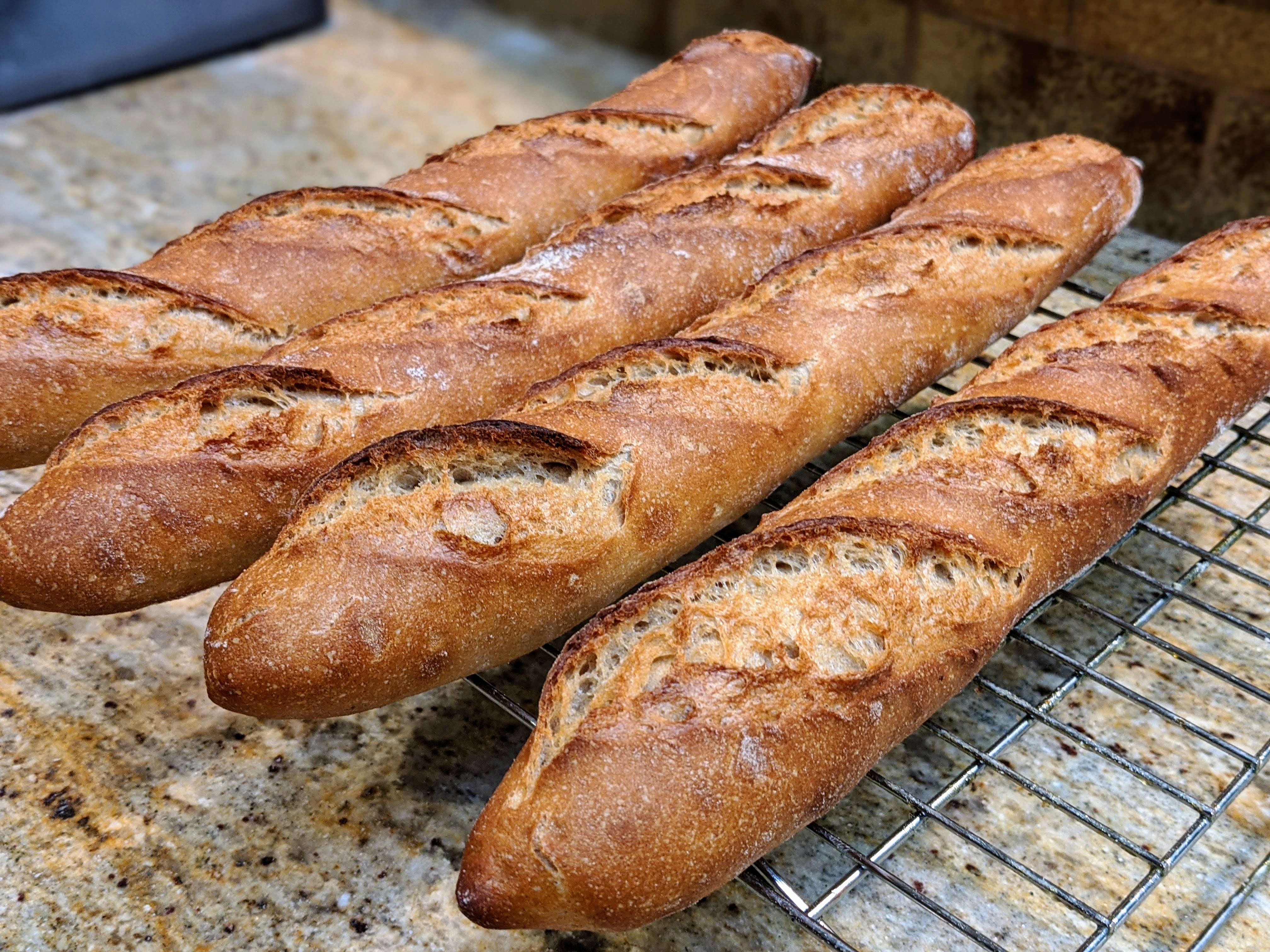
I just pulled those baguettes out of the oven a few minutes ago! You’ll notice the ears on one loaf and just nice openings on the others. I was experimenting with my scoring and wanted to see what a shallow score would produce. I’ll stick with the deeper score. 🙂

Now normally when I bake baguettes, I make a poolish the night before I bake. But I was pretty exhausted last night, so I decided to make a straight dough this morning. Here’s my recipe:

FlourWaterSaltYeast
500 grams365 grams (85º-90º F)12 grams7 grams
This will produce a 73% hydration dough
  1. Measure out your flour into a large mixing bowl.
  2. Add the water and mix until no dry ingredients are present and you form a shaggy dough.
  3. Let the dough rest for 30 minutes (autolyse)
  4. Sprinkle the salt and yeast evenly over the surface of the dough.
  5. Thoroughly mix the salt and yeast into the dough.
  6. Dump the dough onto an unfloured surface
  7. Knead the dough until it just starts getting smooth (about 5-8 minutes). Do NOT overwork it! The moment you start feeling tension in the dough (it feels like you’re fighting it), stop kneading.
  8. Transfer the dough back to your mixing bowl and let it rest for 30 minutes.
  9. Now do a stretch a fold and form the dough into a ball, then turn it over onto the folds.
  10. Allow the dough to rise from 1-2 hours. Check after an hour – you want the dough to have expanded at least 50%. You should see some bubbles formed on top and the surface should be nicely domed. At about 50% rise, you have room for proofing/final rise which I found is critical with baguettes.
  11. If you don’t see much activity, which typically happens on cooler days, do one more gentle stretch and fold and let the dough rise for an hour. But check it at a half hour because sometimes all the little beasties needed was a nudge. 🙂 Again, you want to see some bubbles, but not a preponderance of them.
  12. Gently remove the risen dough from the bowl onto an unfloured surface.
  13. Portion out the dough into four equal pieces. By weight, the pieces should weigh about 213-215 grams apiece. Alternatively, you can portion out into three for a little beefier baguettes (I do this when I’m making baguettes for sandwiches).
  14. Lightly sprinkle the tops of the portioned dough with flour, then pre-shape each into a nice, tight ball.
  15. Flip the balls over on their folds, sprinkle a little more flour on top, then cover with a cloth and bench rest for 15 minutes.
  16. Shape the balls into baguettes. Here’s a simple, yet effective shaping technique from Markus Farbinger. But just take note: When you fold the dough, you want to make sure you’re creating good tension on the skin without tearing it! You don’t want to be lackadaisical with the folding because you won’t get any spring.
  17. If you have a couche, transfer the shaped loaves to the couch (or you can use a well-floured towel) and let them proof for an hour. This is why you don’t want to over-ferment in the bulk fermentation stage.
  18. Preheat your oven to 480 degrees.
  19. Once proofed, transfer the loaves to your peel, score with nice longitudinal cuts, then bake for 15 minutes. Provide steam for the first 15 minutes, then remove the steaming container. Then turn your oven down to 450 for 10 minutes.

You might be wondering why I’m using 7 grams of yeast. You can definitely use less, but it lengthens the timeline. I came up with this recipe specifically because I wanted to produce the bread relatively quickly with limited manipulation because I was literally three days out of total hip replacement surgery. But you know what? I like this process because it produces great results!

What About Using a Poolish?

You can absolutely use a poolish, and that’s my normal method of making baguettes. Typically I use 25% of my total flour for the flour I use for a poolish, and I make the poolish at 100% hydration. I do this the night before I bake and give it about 12-16 hours to ferment. At 12 hours, it will not be sour, but at 14-16 hours, it will get nicely sour, so if you vary the times of the poolish, you can make different flavored baguettes.

If you do use a poolish, you have the option of bumping up the fermentation activity with some yeast, or just let the poolish be the only leavening agent. If you do decide to use a bit of yeast, use no more than 2 grams of yeast because you have a lot of active microbes already in your dough, and you just want to give it a little kick.

Yet Another Word on Flour

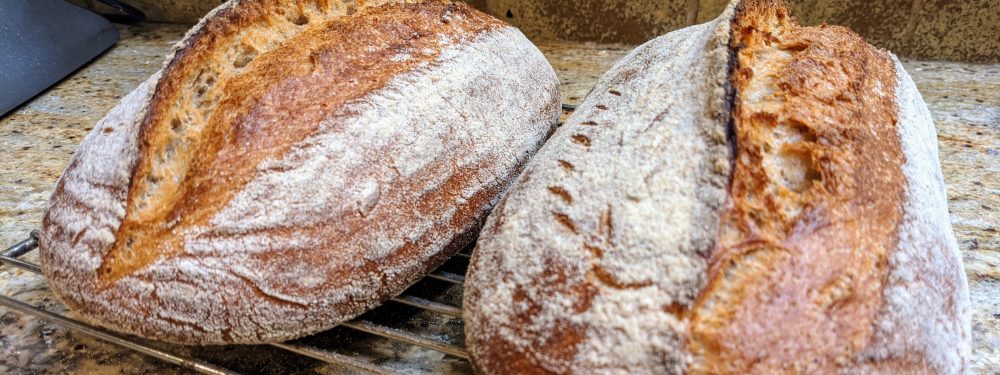
If you read this blog with any regularity, I’m pretty obsessed with flour. Now even though I occasionally make my baguettes with white flour, you all know that my flour of choice is a 75-25 blend of high-extraction flour and white whole wheat flour (the second picture); and specifically, flours produced with the Unifine milling process. I prefer the darker crust it produces (the picture at the top) but more importantly, the nutrition those flours provide.

If you venture into high-extraction flour (Type 85 and above), do not expect to get the kind of open crumb you get with white flour. It just ain’t gonna happen. The particulates in high-extraction and whole wheat flour cut the gluten strands. And if you think working the dough to build more structure will help, it won’t. The strands you do create will be so tight, you won’t get any holes!

This is why I advocate for doing a shorter bulk and a bit longer final proof. This allows the dough to really relax so when you place the loaves in the oven, the final activity before the microbes die will allow for better gas pocket formation.

The “Paranoia” Surrounding Gluten

Celiac disease is thought to affect roughly one percent of the population. The good news: it can be treated by quitting gluten. The bad news: many celiac patients haven’t been diagnosed. The weird news: millions of people without celiac disease have quit gluten – which may be a big mistake.

The Demonization of Gluten Podcast by Stephen J. Dubner on Freakonomics

For years, a very good friend of mine has claimed to have celiac disease. He went to a doctor but wasn’t actually diagnosed to have it, though the doctor did say that he could be one of those folks that has a non-celiac sensitivity to gluten. But he has so thoroughly convinced himself that he has this sensitivity that he has foregone many gluten products like pasta. Frankly, I think his sensitivity is more psychosomatic than anything else. I know that sounds a little insensitive of me, But here’s the rub: He can eat as much of the bread I bake as he wants with no side effects.

What’s actually funny is that even though he gobbles up my bread, he catches himself and says, I really should go easy on this stuff as if he’s telling himself he has this allergy or sensitivity; a belief that is bolstered by all the marketing around “gluten-free” products. It has gotten so bad that some bottled water companies advertise that their water is gluten-free. WTF? The gluten-free craze has really gotten out of hand.

Though I’m no scientist, maybe people’s recent sensitivity to bread has more to do with all the shit that’s put into mass-produced bread, like sugar and vitamins and preservatives. Maybe people’s bodies have absorbed the limit of what they can take and their systems are reacting.

I shared this thinking with my friend and also added that the bread I bake as well as that of other artisan bread makers has just four ingredients: flour, water, salt, and a leavening agent. There are no enrichment materials, no preservatives. The bread we make is made the way bread was originally made for literally thousands of years.

In the excellent documentary series on Netflix called “Cooked,” author of the book on which the documentary is based and star of the show Michael Pollan delves into this subject of how mass-produced bread has taken us away from the traditional healthy aspects of bread. The specific episode is called, “Air.” He too posits that perhaps most people who claim to have a gluten sensitivity may not be sensitive to gluten at all, but all the other stuff that’s present in mass-produced bread, suggesting that perhaps people with a gluten sensitivity try out traditional bread and see how they react.

Having said all that, I don’t want to discount the fact that there are people who have a real intolerance to gluten. But the only way to really know is if you are diagnosed by a doctor with having celiac disease. With respect to my friend, I pointedly asked him, “Did your doctor specifically diagnose you with celiac disease?” He said no, to which I replied that I while I didn’t want to discount his possible sensitivity to bread that it’s telling that he doesn’t react to bread made in the traditional way.

Gluten has really gotten a bad rap. Even I was kind of falling for this gluten-is-bad craze. But that kind of went out the window once I started baking. And I also started becoming a lot more aware and sensitive to the marketing behind the anti-gluten movement. Beware of companies using the term “gluen-free” with products that could never have it in the first place, like… water. Bear in mind that they’re using that phrase to convey that their products are somehow superior because they’re gluten free.

Unfortunately, this kind of marketing has created a paranoia around gluten. Obviously, you’ll have to decide for yourself what direction you take with respect to gluten. For me, after having done a bit of research, I’m not falling for it any longer. And no… I ain’t no conspiracy theorist…

A Day Out of Surgery And All I Want to Do Is Bake

Coming to you live from my hospital bed… I just had a full hip replacement surgery yesterday and the reality is that I will probably be out of commission for the next week to ten days recuperating from the surgery. So I most likely will be in bed. But despite that, I really just want to bake bread.It’s my Zen-thing. It puts me in an emotional and psychological place where everything is in balance and in perfect harmony.

For me, the act of baking bread is almost cathartic. Pent-up stress, anxiety, work-related issues – they’re suddenly released when I start working a dough. From the time I start weighing out ingredients to producing the finished product, I’m in the zone.

And in a very large way, baking is healing for me. I could be in the crappiest of moods when I start making bread, but by the time I’m finished my “baditude” is gone.

There are so many other things I could point out, but irrespective of them, I just want to heal up and get back to baking as soon as I can!

Flour Makes Such a Difference

Now that I’m more experienced at bread baking, you could say that being a bit of a Captain Obvious. But when I first started baking it wasn’t at all. I thought I’d just merrily use any old AP or bread flour and that would be that. And it was fine for the first few times. The loaves I made were tasty, if not necessarily aesthetically pleasing to look at; a little misshapen, or risen so much in the Dutch oven that it was a perfect imprint of the inside of the pot, or a replica of a flying saucer.

But as my initial interest starting transforming into the obsession it is now, I started looking into different techniques and ingredients that would improve the quality of the bread I baked, and one of those things was flour.

Like many, I jumped on the King Arthur bread flour bandwagon. It seemed that most home bakers used it and quite frankly, it’s great flour. And for the first couple of months I was baking, I used either that or the KA Special Patent flour which creates a real smooth, fluffy texture as it is geared towards buns and pastries.

But as I’ve shared a few times in previous posts, because of health reasons, I had to seriously reconsider not just the visual and taste quality of my bread but also its nutritional value and quality. So I started to make 100% whole wheat loaves. They looked pretty good, but ugh! They felt a little grainy and also tended to be a little dense as whole grain bread can be.

This led me on a quest for flour that I could work like regular bread flour but had the nutritional value of whole wheat. And that brought me to the flour that I use now and that I’m absolutely crazy about: The Unifine White Whole Wheat and Ultra-Unifine Bread Flour. Used in a 25-75 ratio, I get the feel of working with a bread flour but the nutritional benefits of a whole wheat flour as the bread flour is a high-extraction flour.

But more importantly, the taste of the bread that this combination produces is unlike any bread I’ve ever had. No matter if I create a sourdough or straight dough, I’m always rewarded with a slightly sweet aftertaste and an absolutely wonderful, chewy texture. The Unifine milling process smooths out the particulates in the flour so you don’t get that graininess that you normally feel with whole grain bread. But from a taste perspective, you know you’re eating whole wheat – or at least close to it.

So this is now my master flour despite having claimed that in another post for a completely different combination. And for me, having discovered this combination completely changes the game for me because I can focus all my baking efforts and skill development around working mainly with this flour. It just removes some of the guesswork and I can create a more consistent process.