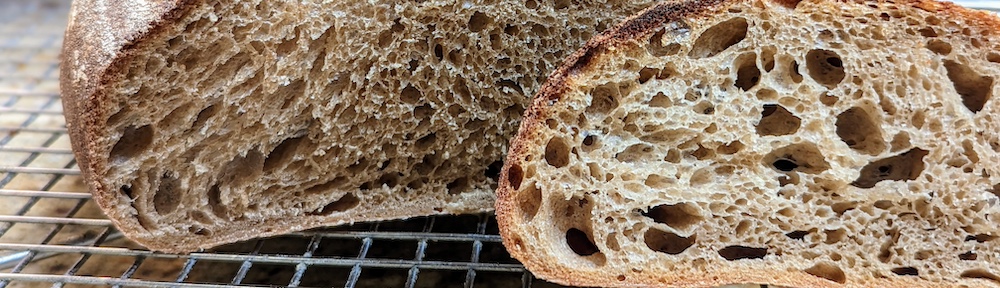

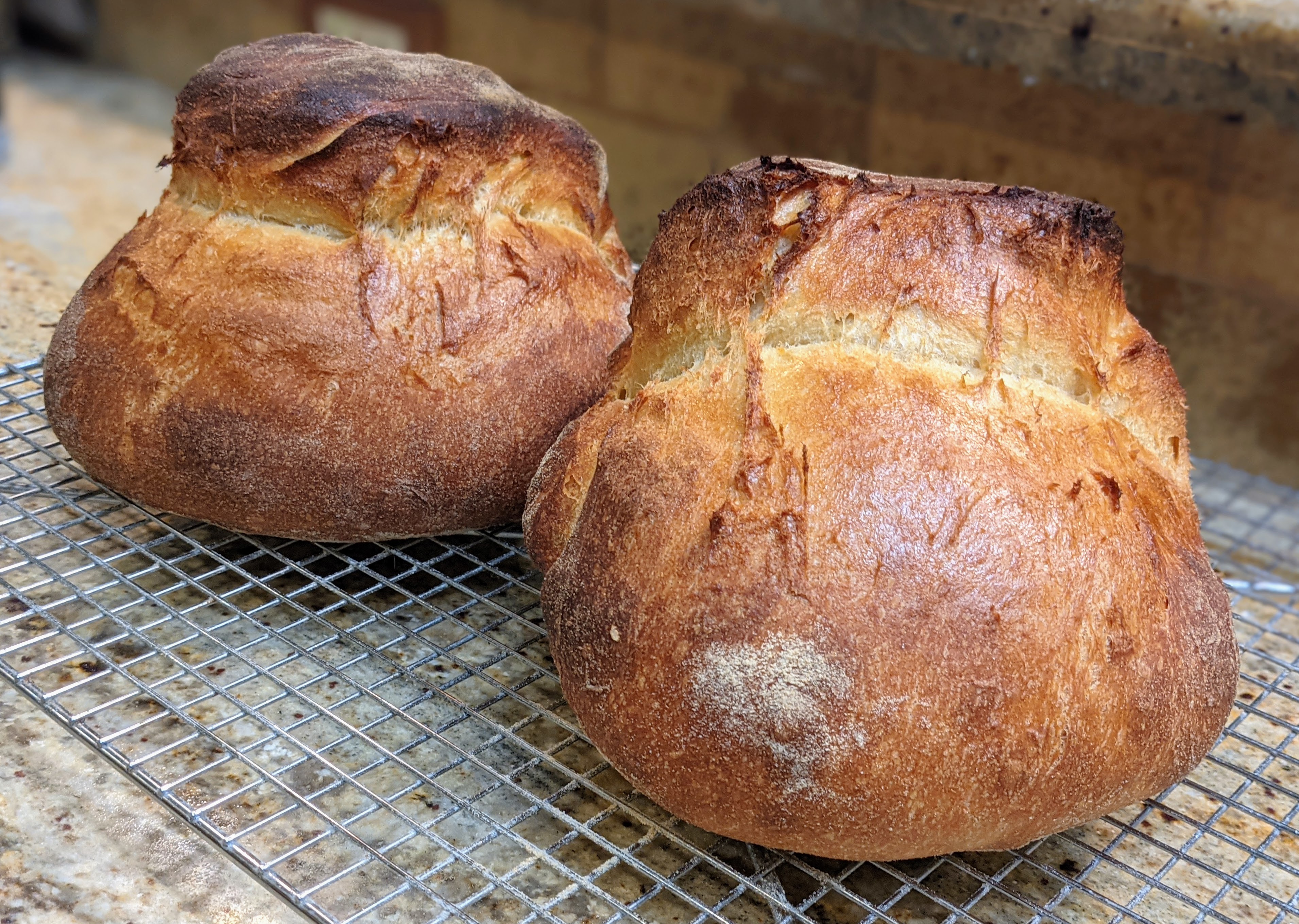
Ever since I got Carol Fields’ book, “The Italian Baker,” I’ve been wanting to make this bread. It is a truly ancient bread from the Puglia region of Italy and documented by Horatio as far back as the first century BC. The most notable loaf shape has a bit of a pompadour on the top (not sure about the history behind the shape). But that said, the DOP doesn’t certify the bread by shape, but rather by ingredients and structure (e.g. the crust must be 3 mm thick).
Now truth be told, this recipe is technically NOT true Pane di Altamura because it is a “protected” bread under the Denominazione di Origine Protetta, which specifies that the flour must come from the Puglia region. Plus, the high mineral content water of that area apparently contributes to the distinctive taste of the bread. But even still, I believe we can get pretty close to the original. All I know is that the two loaves I made today are gone. My family ate one loaf, and the family to whom I gave the other loaf demolished the bread! This will definitely be a regular part of my repertoire from here on out!
Durum Flour
I get my durum flour from Azure Standard (and no, this isn’t an affiliate link). This is certified organic and milled using the Unifine method, which creates a finer texture while retaining the nutrients as it uses no water that could leach off the nutrients. Note that you can’t just use any “semolina” flour. Most semolina flour is too coarse to make bread. You have to make sure the grind is extra-fine.
Update 9/16/2025: I realized after looking at the formula and final dough numbers last night that everything was way off, so I reviewed Ms. Fields’ recipe and found that she didn’t make a 72% hydration biga, but a 96% hydration biga. That makes sense considering the high absorption of the durum flour. Then I re-ran the numbers through my dough calculator and now everything checks off.
Overall Formula
| Flour | 100.00% |
| Water | 90.00% |
| Salt | 2.00% |
| Yeast | 0.25% |
| Total % | 192.25% |
Biga Formula
| Durum Wheat Flour | 100% |
| Water | 96% |
| Yeast | 0.5% |
Biga
| Durum Flour | 276g |
| Water | 265g |
| Yeast Required | 1.4g |
| Total Weight | 542.4g |
Final Dough
| Durum Flour | 505g |
| Water | 440g |
| Salt | 15g |
| Yeast | 1.6g |
| Biga | 491g |
| Total Yield | 1453g |
This is a least a two-day process! In my experience, the biga alone takes a full day to mature because of the small amount of yeast used. Note that technically you could dispense with the rest of the yeast in the final dough since the biga will have plenty of yeast in it. But it’s there to help boost rising.
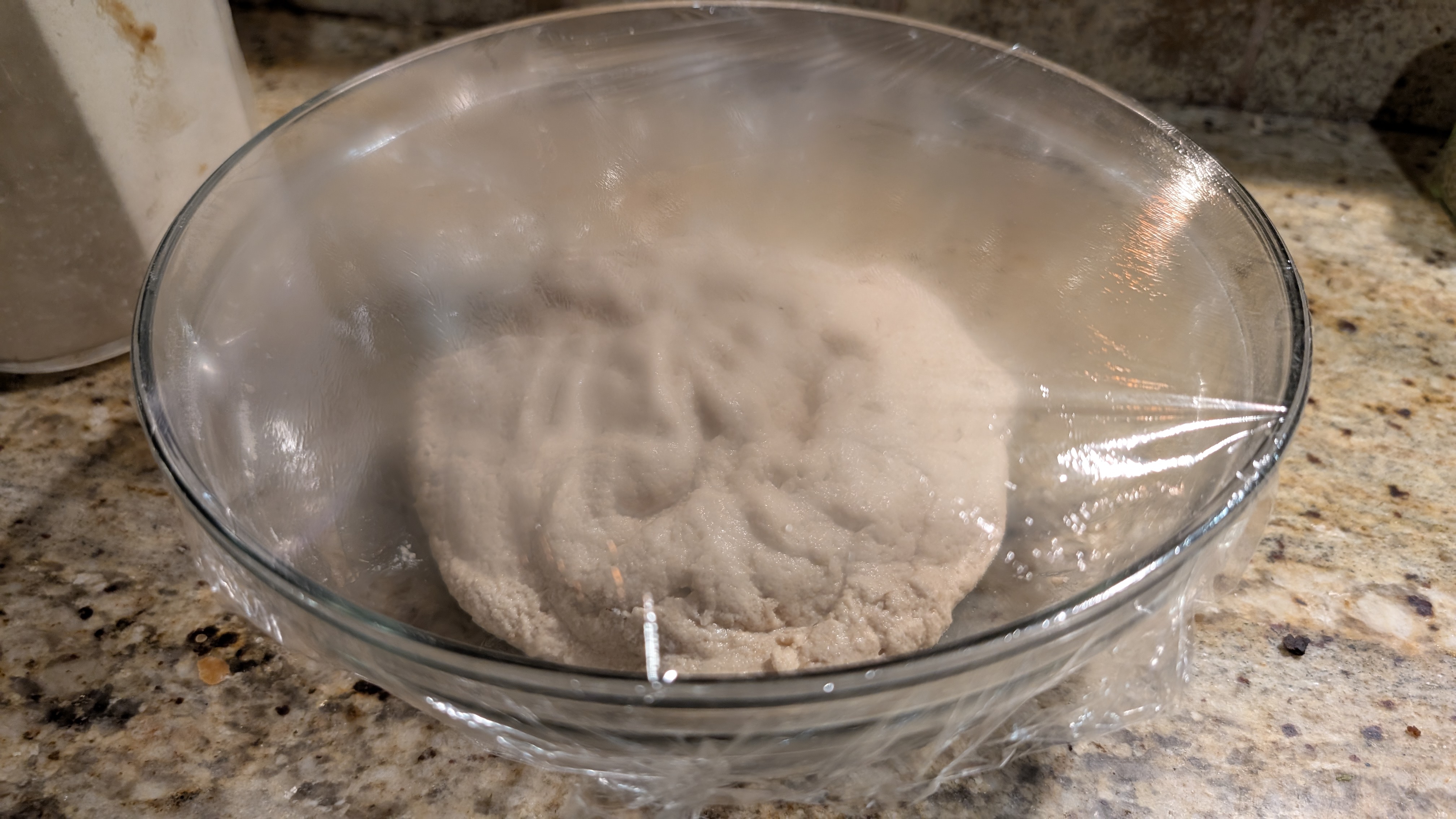
Make the Biga. The night before you bake, make a 96% hydration biga. Use room temperature water, then let it rise in a cool place for 6-24 hours. You’ll know the biga is ready when it is nicely domed at the top and is filled with bubbles and according to Carol Fields, it should be triple in volume. If it’s done before you’re ready to bake, just pop it in the fridge. It’ll keep for up to a week.
Biga Pro Tips:
- One trick I’ve used in the past is to treat the biga like pizza dough. Once I mix it, I’ll let it stand at room temperature for a couple of hours, then I’ll retard it in my fridge for 48-72 hours. When I’m ready to bake with it, the biga is pungent with yeasty, acidic goodness. I use what I need then feed what’s left, let it sit on the counter for a couple of hours, then pop it into the fridge.
- Another thing you might try is to make a levain with 50g of mature starter and 250g of durum flour and 240g water, respectively, then let that triple in volume. When I do this method, because the durum is such a hard wheat, I use about 1% diastatic malt powder to help the natural yeast metabolize. This also has a nice effect on the crumb, making it soft and fluffy.
Either of these methods creates what Carol Fields calls “Biga Naturale.”
If you REALLY want to get traditional, from what I’ve been able to gather in my research, Italian bakers use a pâte fermentée method in that they use part of the previous bake’s mixed dough as the preferment for the coming bake. Once they’ve mixed the new dough, they break off part of that batch, then set it aside to be used as the leavening agent for the next bake. They call this the “mother” and in one video I saw, a baker said his “mother” was over 100 years old!
If you want to apply that to this recipe, make the biga as instructed, but immediately add the rest of the final dougn ingredients to create one big dough. Mix it thoroughly, then break off 500g of that dough then put it aside in the fridge to ferment and use for later. To maintain the 90% hydration going forward, adjust the flour to 500g, the water to 450g, the salt to 10g and yeast to 1g in the final dough.
Initial Mix. Measure out the necessary amount of biga that you’ll need into your mixing bowl. Add all but 50 grams of the water to the biga, then break up the biga. When the water turns milky white, start adding the flour in a few batches. As with many of the Italian breads I’ve learned to make, I use a mixer for this step. Mix until all the ingredients are incorporated and the dough starts coming together. Don’t freak if you see that the dough is a bit crumbly. It will come together, and gluten strands will eventually form.
Autolyse. Durum is hard wheat and semolina flour takes a while to absorb the water, so it benefits from an autolyse. Autolyse for 30-60 minutes (use the longer time in cold weather). BTW, we’re doing a fermentolyse here because we mixed in the biga. For those unfamiliar with the term, it just means to let the dough rest to give the flour time to hydrate and start forming gluten.
Final Mix. Dissolve the salt into the reserved water. Add the yeast to the dough, then lightly incorporate. Finally, add the salt and work it into the dough until all the liquid is absorbed. If using a mixer, mix on low speed (but I recommend working the saltwater into the dough by hand first).
Knead. Lightly knead the dough in the bowl or turned out onto an unfloured work surface. This is done simply to ensure that all the ingredients are distributed evenly with moderate gluten development. Get the dough to a smooth, even consistency. If using a mixer, the dough should easily pull away from the sides of the mixing bowl. Knead until you feel the dough has developed good strength.
Alternatively, you can mix to a shaggy mass, then fold the dough a few times during bulk fermentation. But unlike sourdough, we’re not looking for an open, lacy crumb. This bread’s crumb is somewhat dense and moist. From what I’ve been able to gather, most Italian bakers – professional and home bakers both – just knead the dough to a smooth consistency with ample gluten development.
Bulk Fermentation. Allow the dough to double, yes, double. This will take up to 3 hours or more with the small amount of yeast that’s used. But that’s a good thing as it helps develop the flavor!
Divide and Pre-Shape. For this recipe, divide the dough into two 720g pieces (or you can eyeball halfing the dough). Pre-shape into rounds, then bench rest for 45-minutes to an hour to fully relax the dough and let it puff up a little. In warmer weather, this will be shorter – maybe 30 minutes.
Final Shape and Fermentation. As I mentioned, while there is no standard for the shape, traditional Pane di Altamura is best recognized for its pompadour or high form. Study this video clip to shape the loaves. Of course, that baker makes it look easy. And having made this several times, I’ve finally gotten it down. But it does take practice. Here’s another approach. This is quite a bit easier. The only thing I’d do differently is to press down the fold as the baker does in the first video. This will give a more pronounced shape to the pompadour by steepening the backside of the loaf. Place in a warm place and allow the dough to expand about 25%-30%.
Bake. Bake at 485ºF/250ºC for 50-60 minutes. Use steam for the first 15 minutes to promote oven rise. I’ve never baked this bread in a Dutch oven, but it technically could be done. Start with the lid on for the first 15-20 minutes of the bake, then remove the lid and finish the bake. Note that at least with my oven, baking at full temp like that for that long will burn the bread. So, once I remove my steaming containers, I turn the oven down to 425ºF/200ºC to finish the bake. The crust should be chestnut brown, with little to no black.
NOTE: If you have trouble retaining steam in your oven, spray water over the loaves right before you place them in the oven and spray again about 5 minutes later.
Step-By-Step Shaping of a Pane di Altamura Loaf
After updating the post, I decided to add a step-by-step shaping guide. This was just as much for my edification as it was for sharing what I’ve learned.
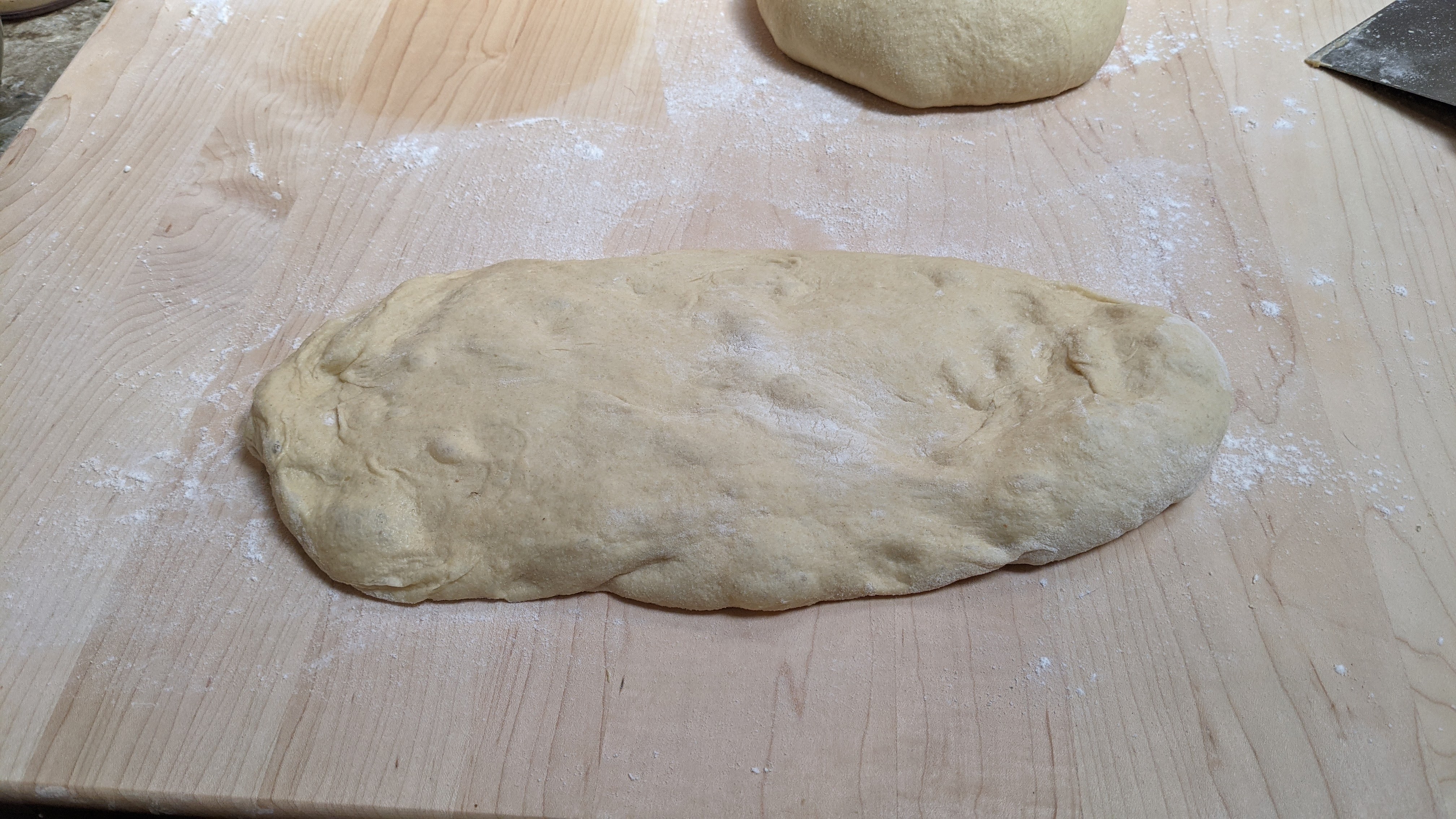

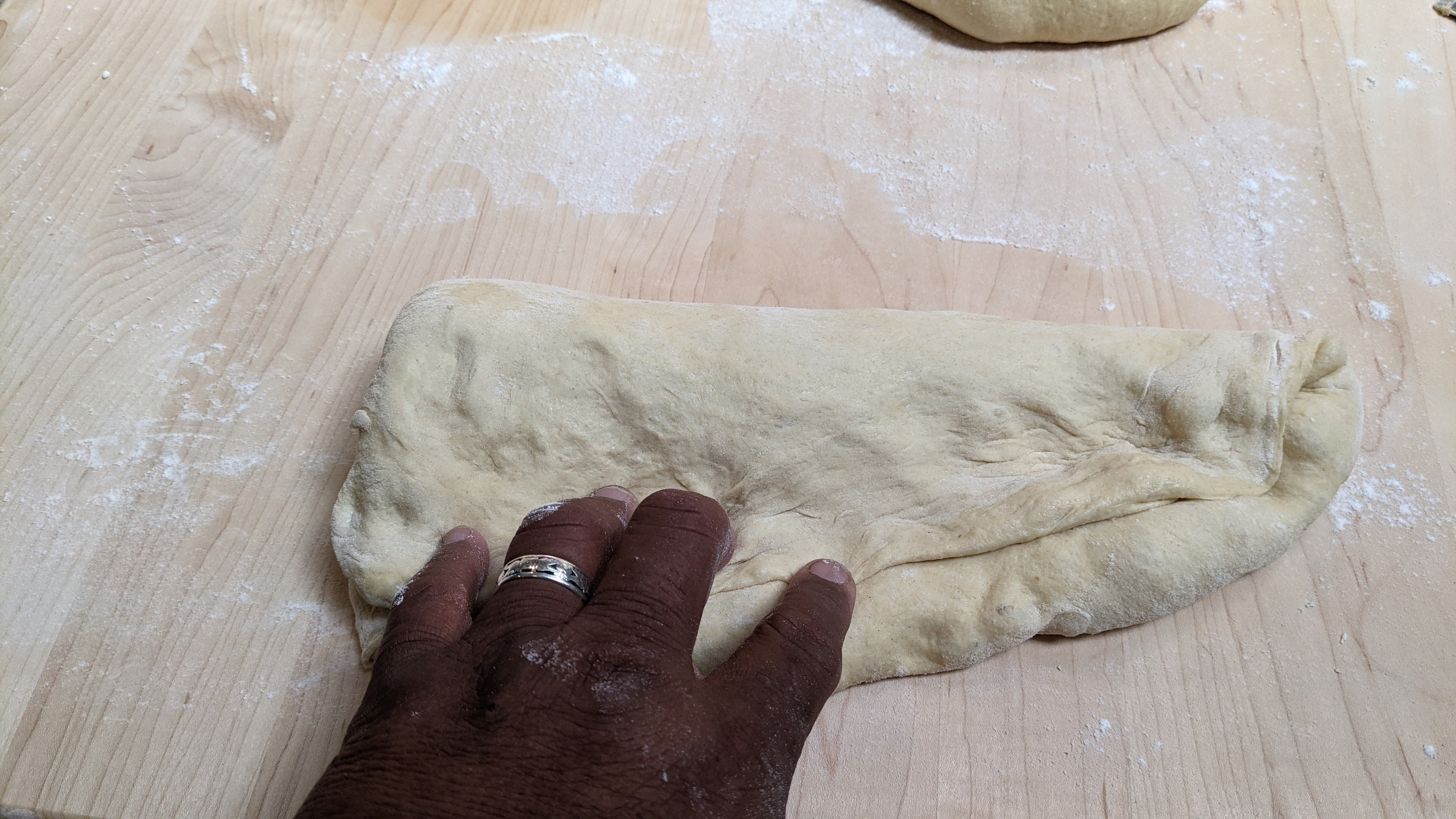


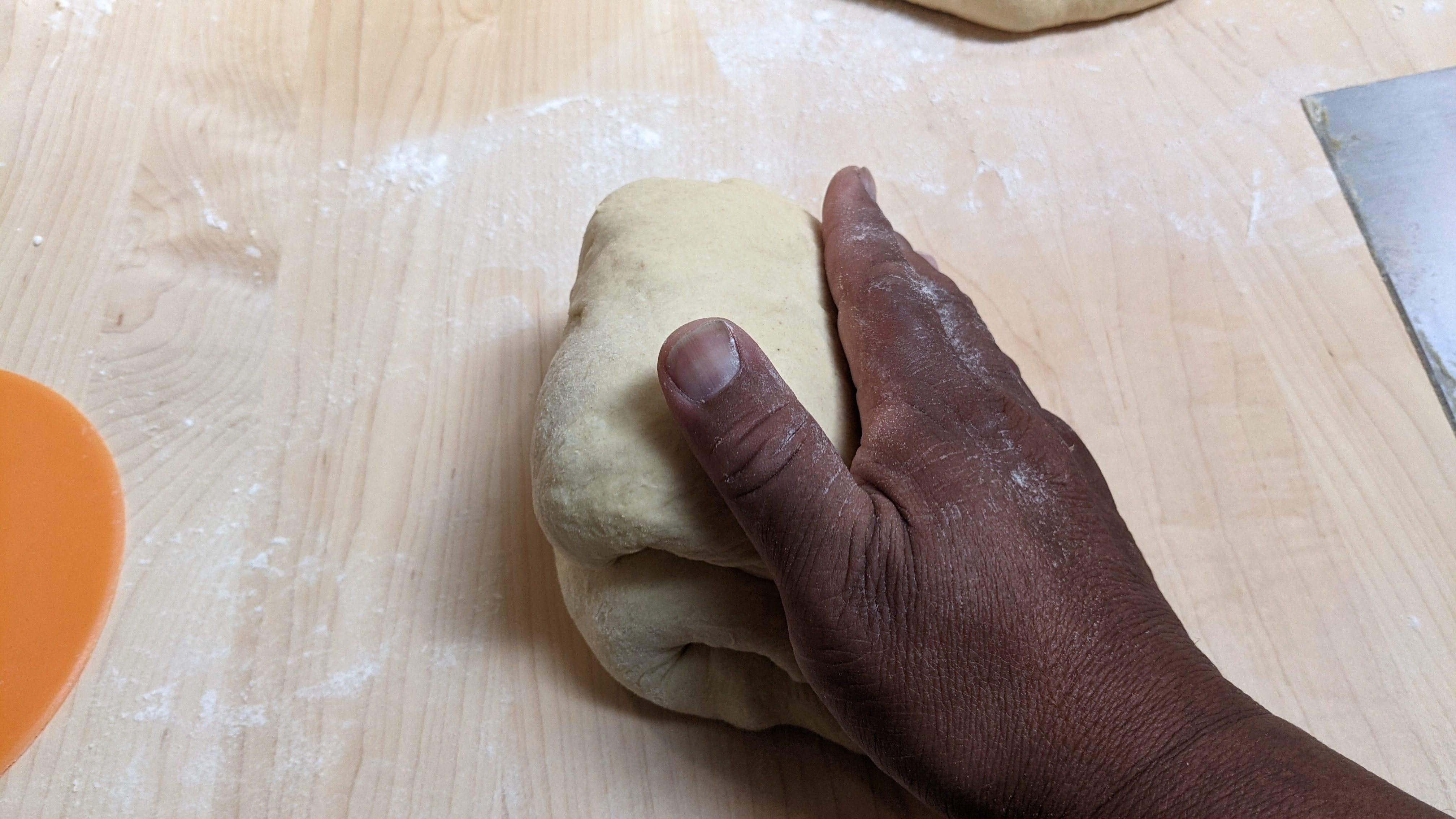
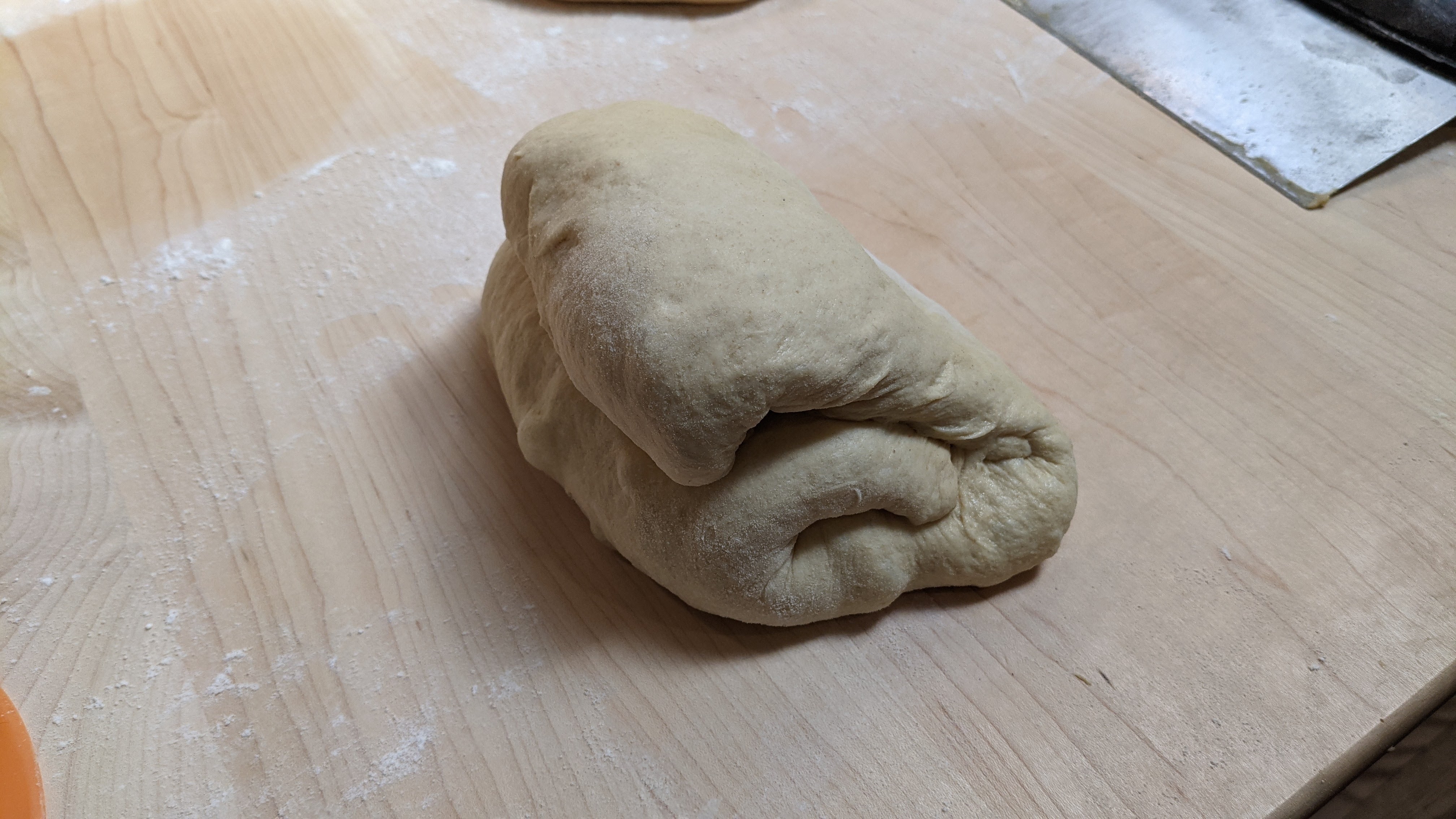

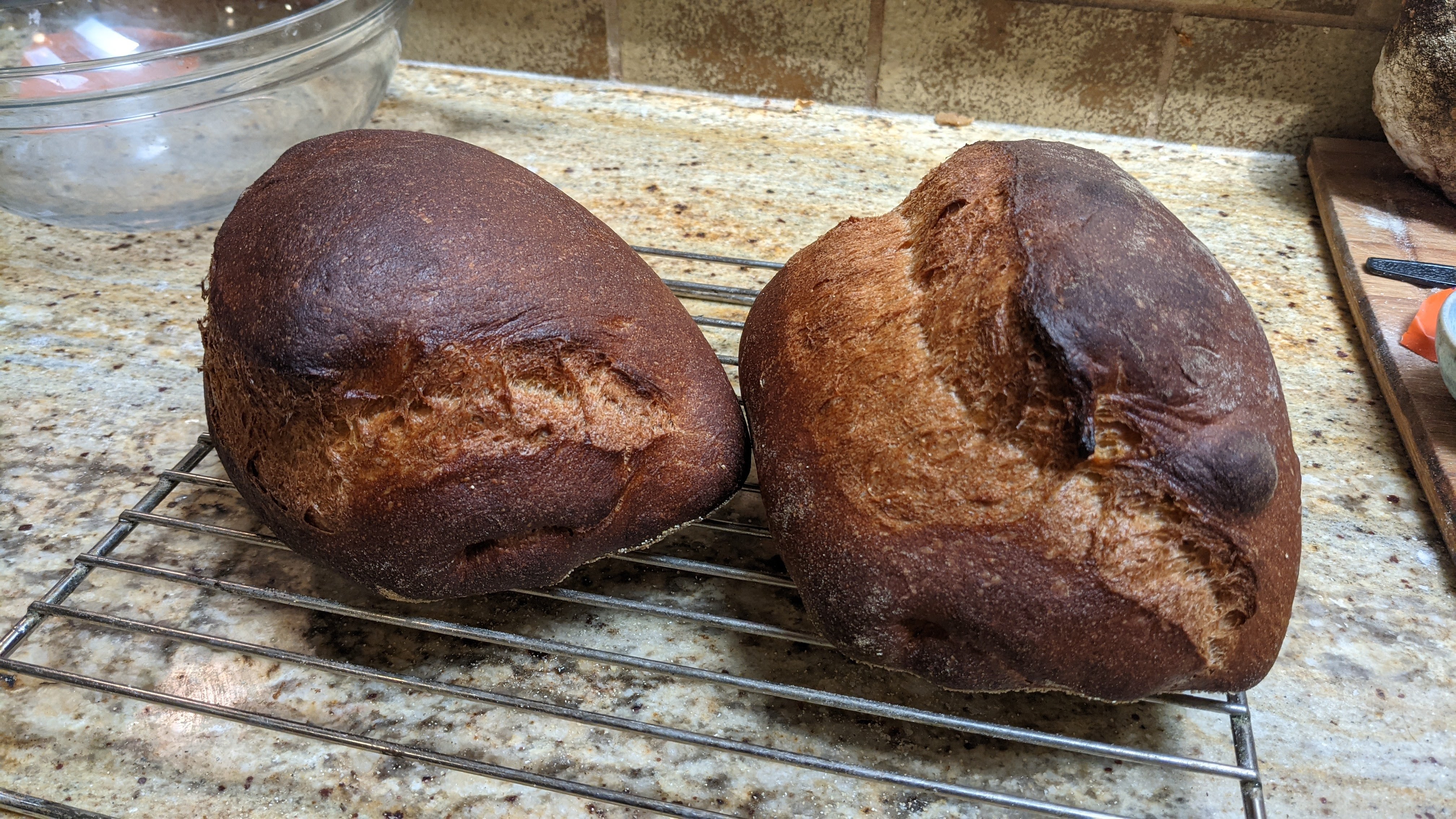
You can make a much more pronounced pompadour by narrowing the top half and shaping it into a cylinder. I did this to mimic some of the pictures I had seen, but it made cutting the bread a little problematic. So, my more practical side took over and I just overlap. As long as I get a triangle cross-section, it’s all good!
 The Dawg House!