It is said the only way to learn is to fail. Bullshit. Especially if you know what you did. So this morning, I was all set to bake a batard I had sitting in my fridge since last night for a cold ferment. I got out of bed, performed my morning ablutions, then went into the kitchen to preheat my oven.
Coffee was ready, so I poured myself a cup, then set about to make myself some breakfast. After preparing my simple meal of a toasted sourdough sandwich with some charcuterie meats and cheese, I sat down in front of the TV to watch the talking heads have their post-election discussions.
My oven signaled that it had come up to temp, and without a second thought – and mind you, I hadn’t finished my first cup of coffee at that point – I got up, went to my dough retarder fridge in the garage, pulled the loaf, stuck it on my board, scored it, then popped it into the oven. Then I got some hot water and poured it into the broiler pan I use for steaming.
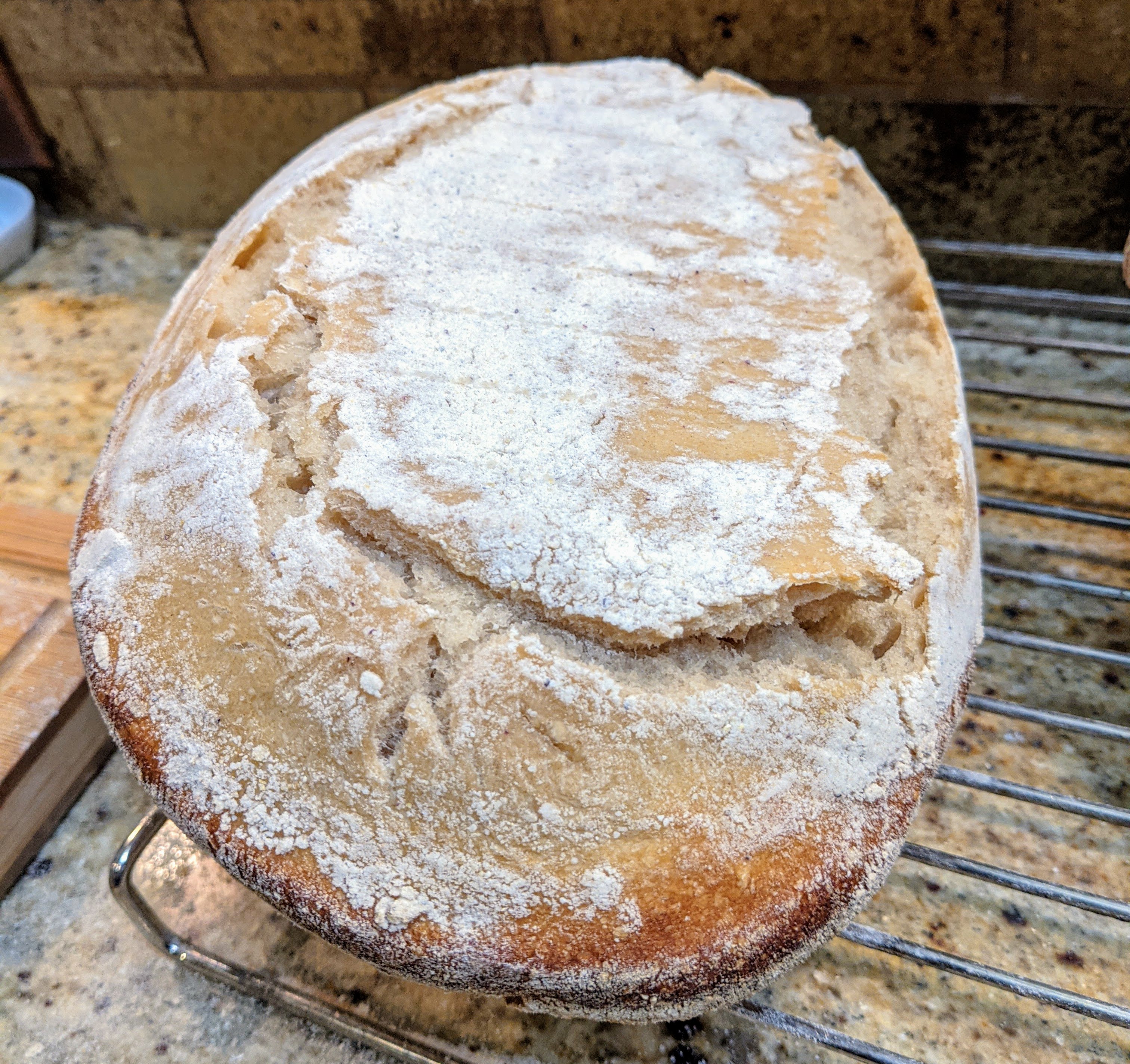
About ten minutes into the bake, and coincidentally having finished my first cup of coffee, it dawned on me that I probably didn’t give my baking stone enough time to come to temp. So I got my ass up off the couch and checked the loaf.
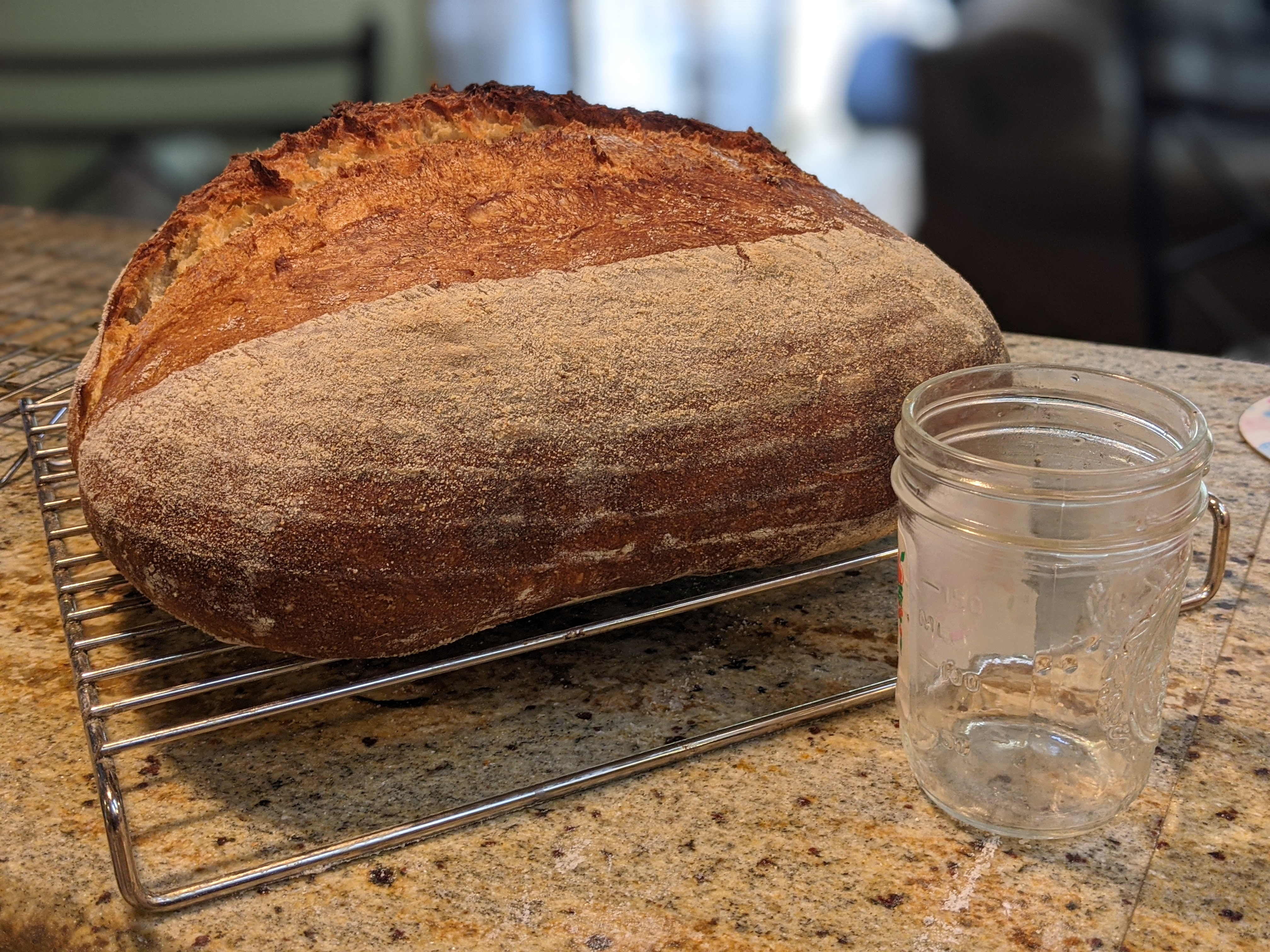
Expletives immediately issued from my mouth seemingly of their own volition as my eyes beheld the fly saucer shape in front of me. It was like looking at the silhouette of the Jupiter 2 from Lost in Space but in bread form! My potty-mouth soon turned to laughter as I mentally kicked myself for this rookie maneuver.
Is there a lesson in any of this? Obviously, I need to be more mindful. That’s a given. But to be honest, I doubt I would’ve made this mistake had I been a bit more alert.
I’ve actually been meaning to write about this for a while but keep on forgetting because it was just part of my process. But a few months ago, I got a little frustrated with my loaves’ crusts. They looked great, but they just weren’t very crusty; that is, they were softer and more pliant than I wanted. So I did a little research on various techniques and discovered a neat trick that I use for all my loaves now, and that is what can be called, curing my loaves when they’re done.
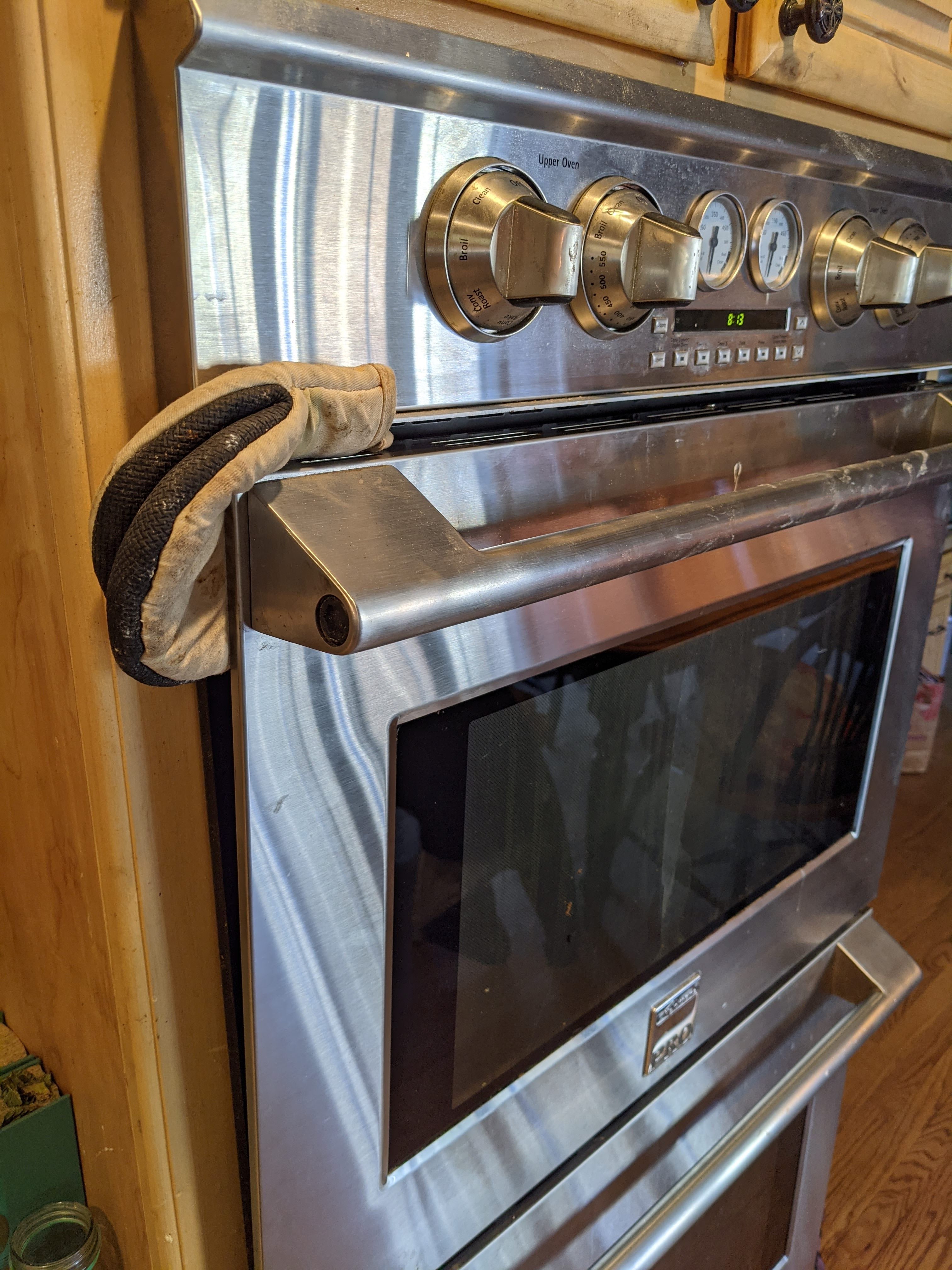
I use an oven mitt to crack the door.
All that entails is simply shutting off the oven when the timer goes off, then cracking the oven door and letting the loaves sit in the oven for about 20 minutes. The oven is still quite warm but no longer cooking, per se, but it’s hot enough to dry out the crust which, in turn, makes it crunchier.
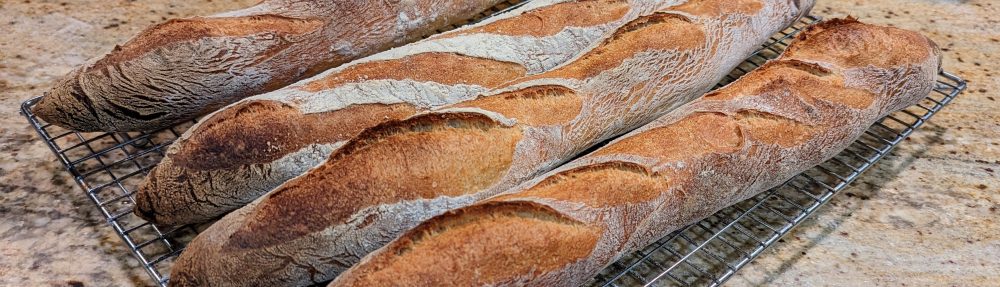
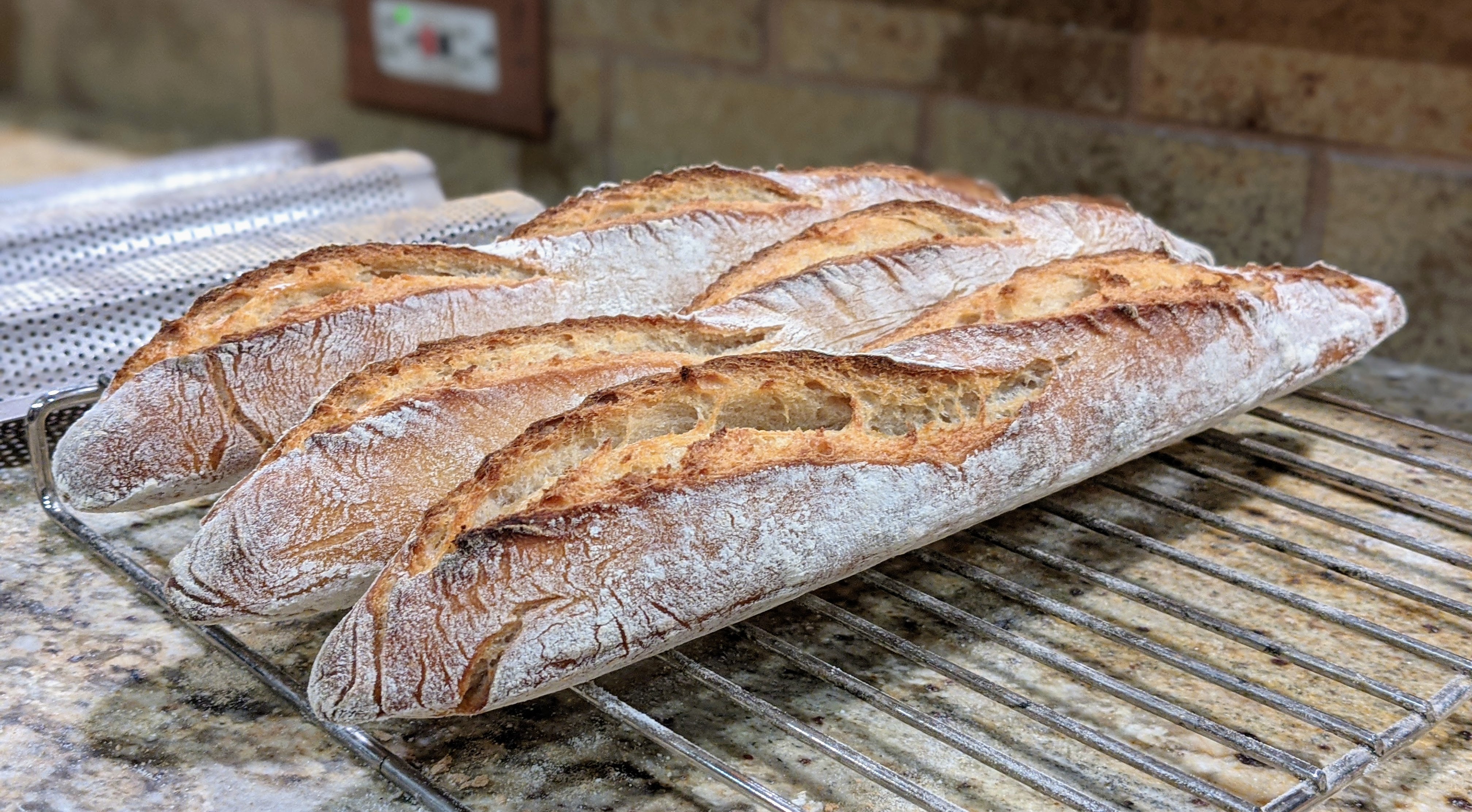
Once I started doing this – especially with my baguettes – my crusts have been nice and crunchy! Check this out!
These past several bakes I’ve been experimenting with different AP flours as I use a three-flour blend of whole wheat, high-extraction, and AP flour depending on the types of bread that I’m baking. I’m pretty much set in the whole wheat and high-extraction flour area, but I’ve been trying out different AP flours for one simple reason: cost savings. Flour expenditures add up and I need to be as economical as I can considering how fast I go through it.
Now you might be thinking, Just get some King Arthur AP flour. But here’s the rub: It’s almost $7.00 per 5-lb. bag! I go through 10 pounds of AP flour a week. No doubt, it’s a high-quality flour, but the cost adds up. Bob’s Red Mill AP flour is great as well and it’s only $5.00 per 5-lb. bag. BUT, Gold Medal and grocery store “house” brands (let’s call them generic flours) are less than $4.00 per 5-lb bag, making them excellent alternatives, at least cost-wise.
On the surface, the cost-savings is great, but from a practical standpoint, there is a cost, and that is that the generic flours are very low in protein. Whereas Bob’s Red Mill and King Arthur AP flours are just below 12% in protein, generic flours are around 10%. That might not seem like much of a difference. But it’s huge.
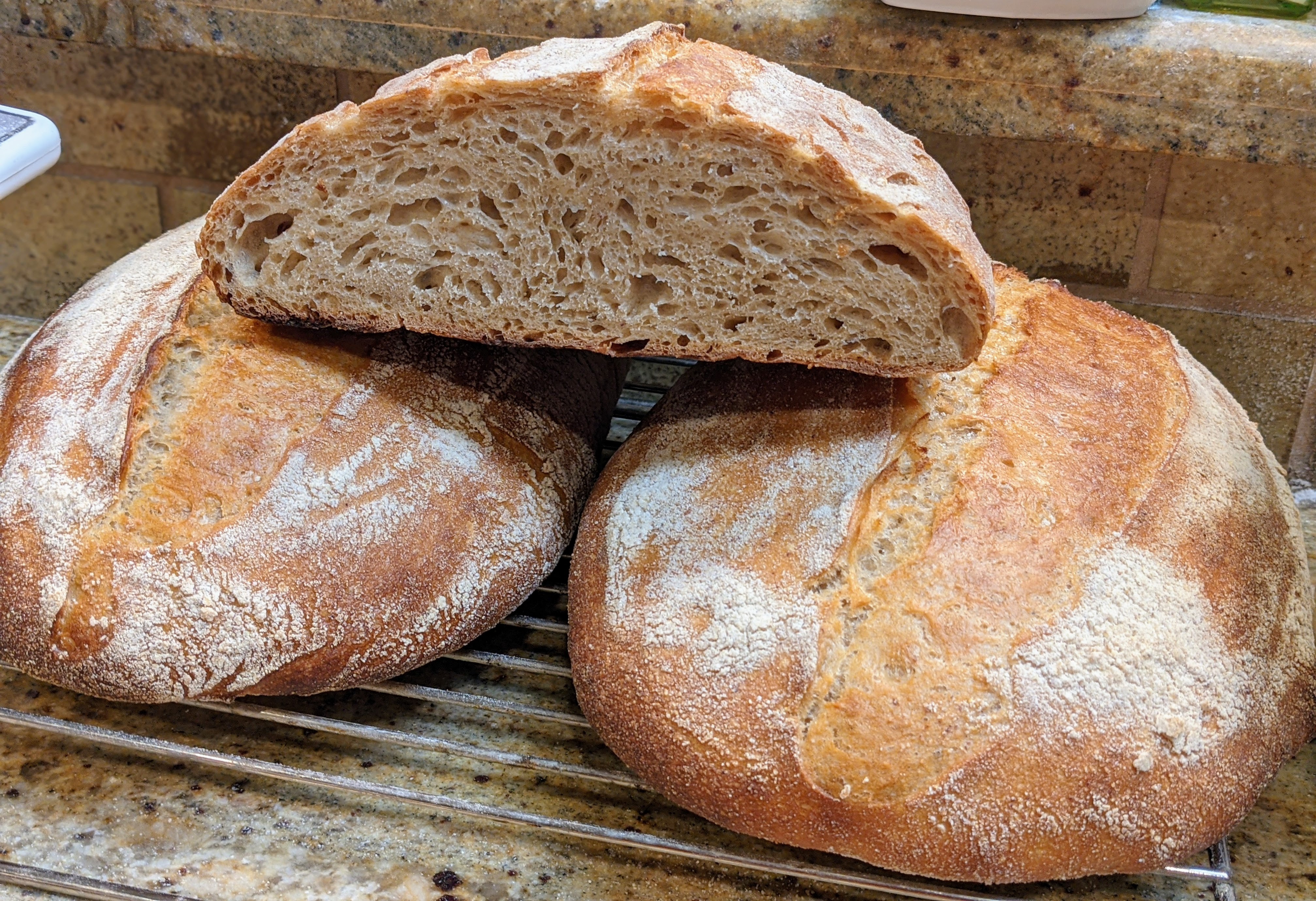
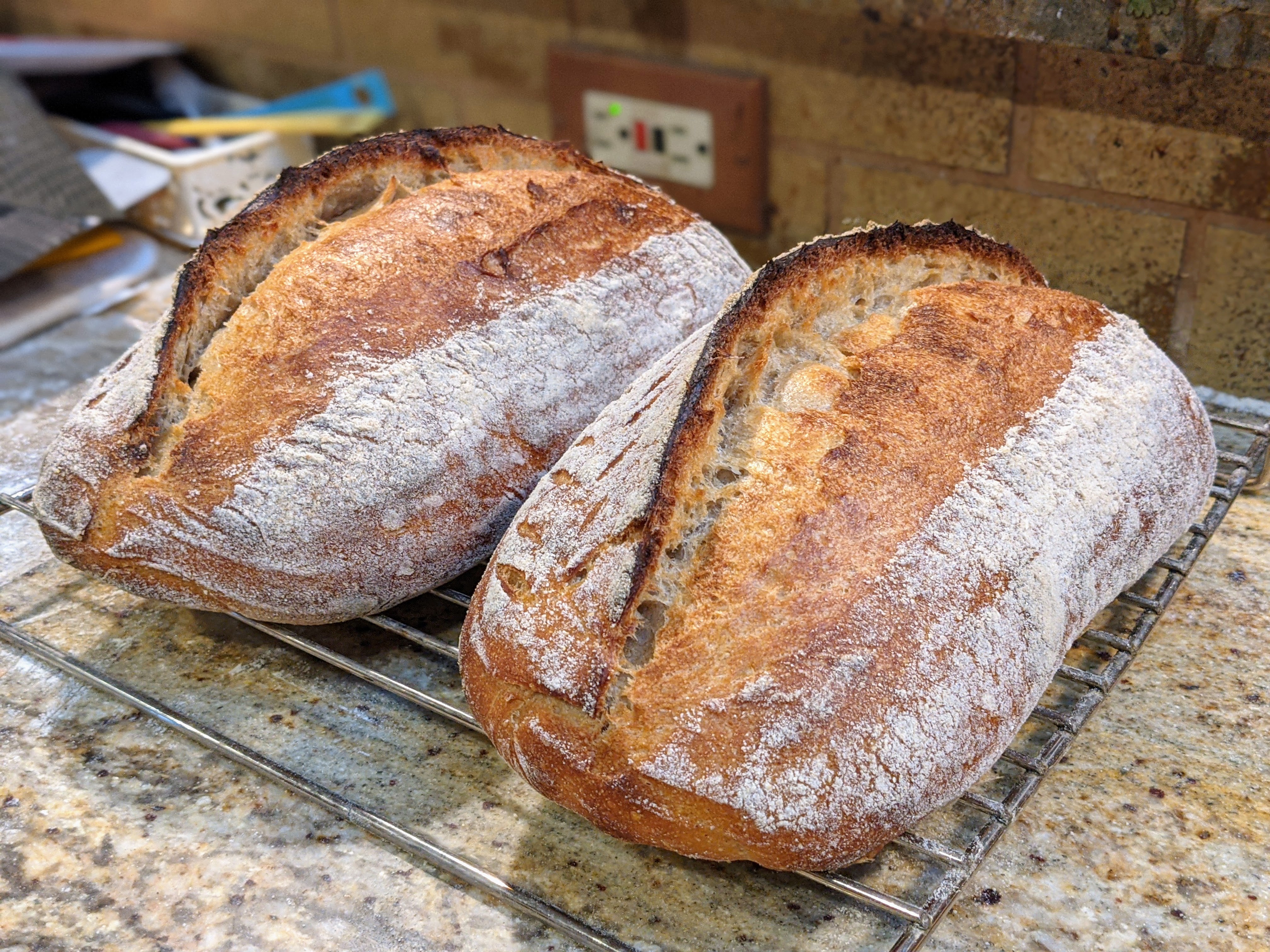
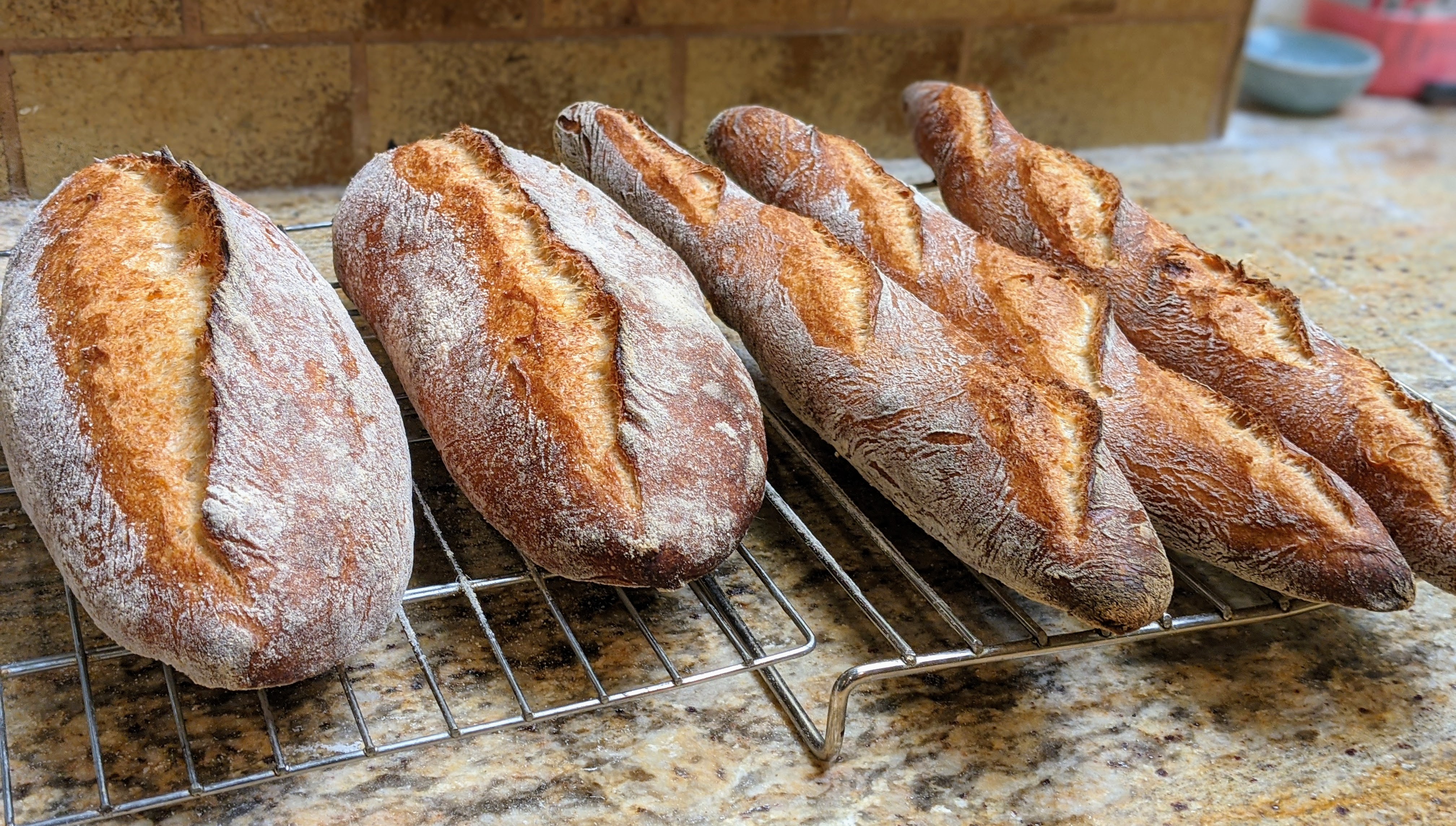
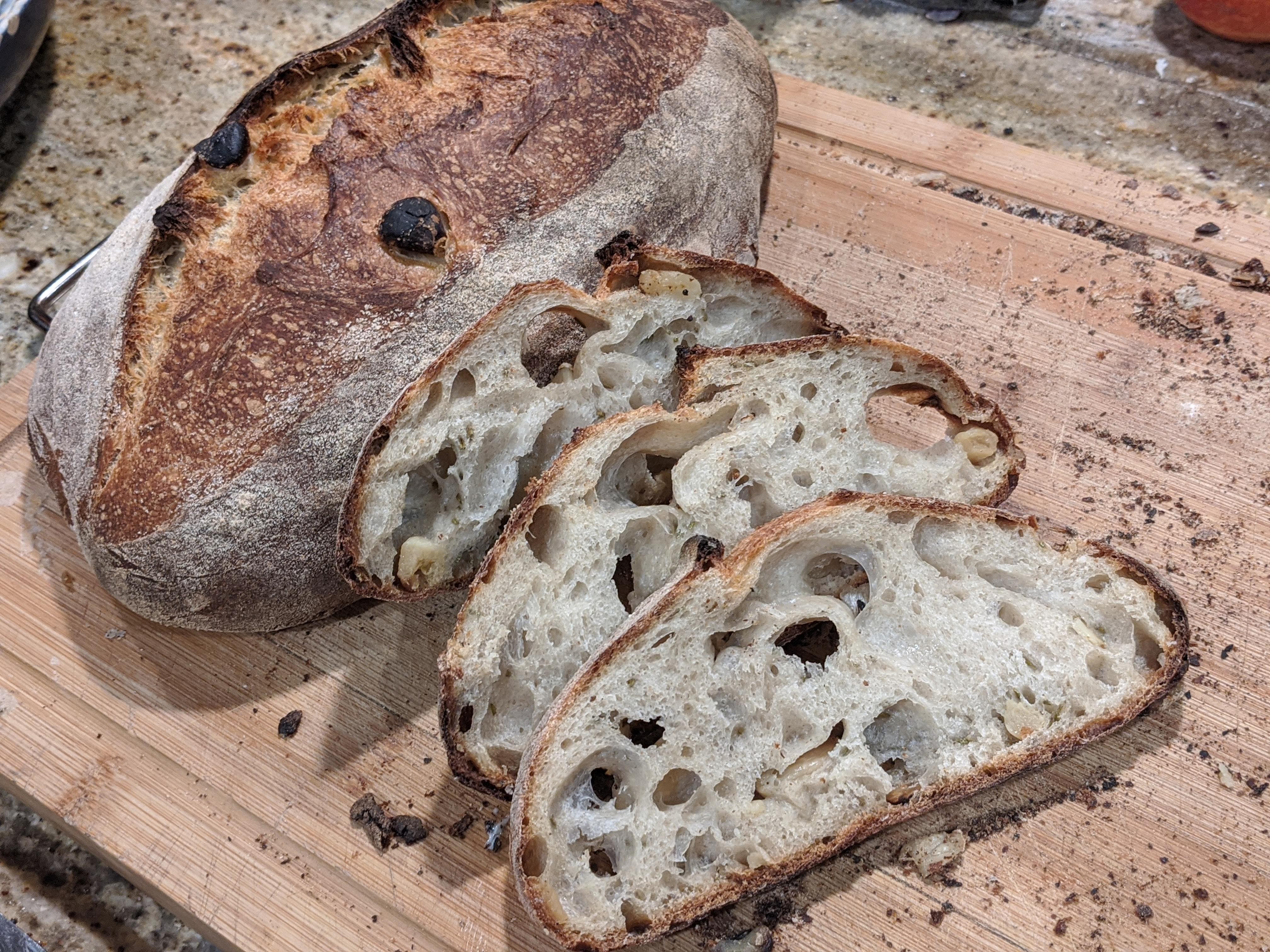
The picture I included at the top of this post is of high-hydration sourdough loaves that I baked over the last couple of days (~85% hydration). They were all made with half Gold Medal Unbleached AP flour, 20% whole wheat flour, and 30% high-extraction flour. The crumb in each of the loaves is nice, but the oven spring was horrible! And developing the gluten in these loaves was incredibly difficult.
Granted, the high-hydration dough doesn’t want to hold up once shaped. But with proper gluten formation, it will not lose its shape readily, and with the whole wheat and high-extraction flour, I thought I’d have plenty of protein to give me some structure. But with these loaves, no matter how much I worked the dough, I just couldn’t get them to hold together. I even did an overnight cold ferment to help set the dough, but even that didn’t work.
As a result, the loaves are a little flat. Without a doubt, they’re delicious. But I can’t say that I’m not disappointed with the end result. I’m actually extremely disappointed. It takes a long time to make bread, so it sucks when things don’t turn out as expected. Technically they were all supposed to be batards, but they ended up being more like ciabattas. I swear that I spent lots of time with the loaves, developing an outer skin, but to no avail.
Now, one way of approaching this is to add some vital wheat gluten. I actually did that with the uncut set of loaves in the picture. Maybe I didn’t spend enough time developing the gluten, but all those loaves went through six sets of stretches and folds over the course of three hours. But for the life of me, I couldn’t get the dough to “fight” me in any of the sets. I’d feel a bit of tension, but not really appreciable tension. Even my regular ciabatta dough develops great tension!
So it kind of boils down to this: Generic, grocery store AP flour is great for things like cakes and cookies. But for bread, there’s a base threshold. I just can’t go below it. Luckily though, my favorite mill, Azure Standard, carries an AP flour that I can’t wait to get delivered. It’s unbleached, unbromated, and organic. I ordered 20 lbs. and I can’t wait until it arrives!
In closing, despite my disappointment, the bread didn’t go to waste. We made sandwiches from the cut loaf, and I gave the other loaves away. Like I said, they were delicious, so I didn’t have any worries in the taste department. But when you’re after an aesthetic, you expect the aesthetic, and falling short can be frustrating to say the least.
I’ve resisted making a sourdough starter for a long time. It wasn’t that I was completely averse to it. It was just that I didn’t want to divert my focus from the other steps in bread production. To me, a levain is just a leavening agent, a tool. But it’s a tool that needs time to develop; honestly, time that I just didn’t want to spend, having developed and maintained a culture in the past.
But I got to the point where I’ve gained enough confidence in my process, so I started to create starters (yes, plural). I have one that I feed every day that focuses on the yeast that I use for baguettes and ciabatta. And I have one in the fridge that I use to really bring out the sour notes in my bread, and just this past weekend, I started creating a grape starter, inspired by acclaimed chef and restauranteur, Nancy Silverton.
I’ve been intrigued by this sourdough starter ever since I read about it in some random blog post. To be honest, I had known about Nancy Silverton for a long time, but I had no idea she had made her starter from grapes! When I read that, I started doing research and vowed that once I had the time, I’d make this starter. Well that time came a few days ago.
Nancy’s recipe calls for unwashed organic grapes. This is important because they’re covered with natural yeast. That said, even washed, organic grapes will still have microbes on them, but if you look at fresh-off-the-vine grapes, they’re covered with a dusting of natural yeast.
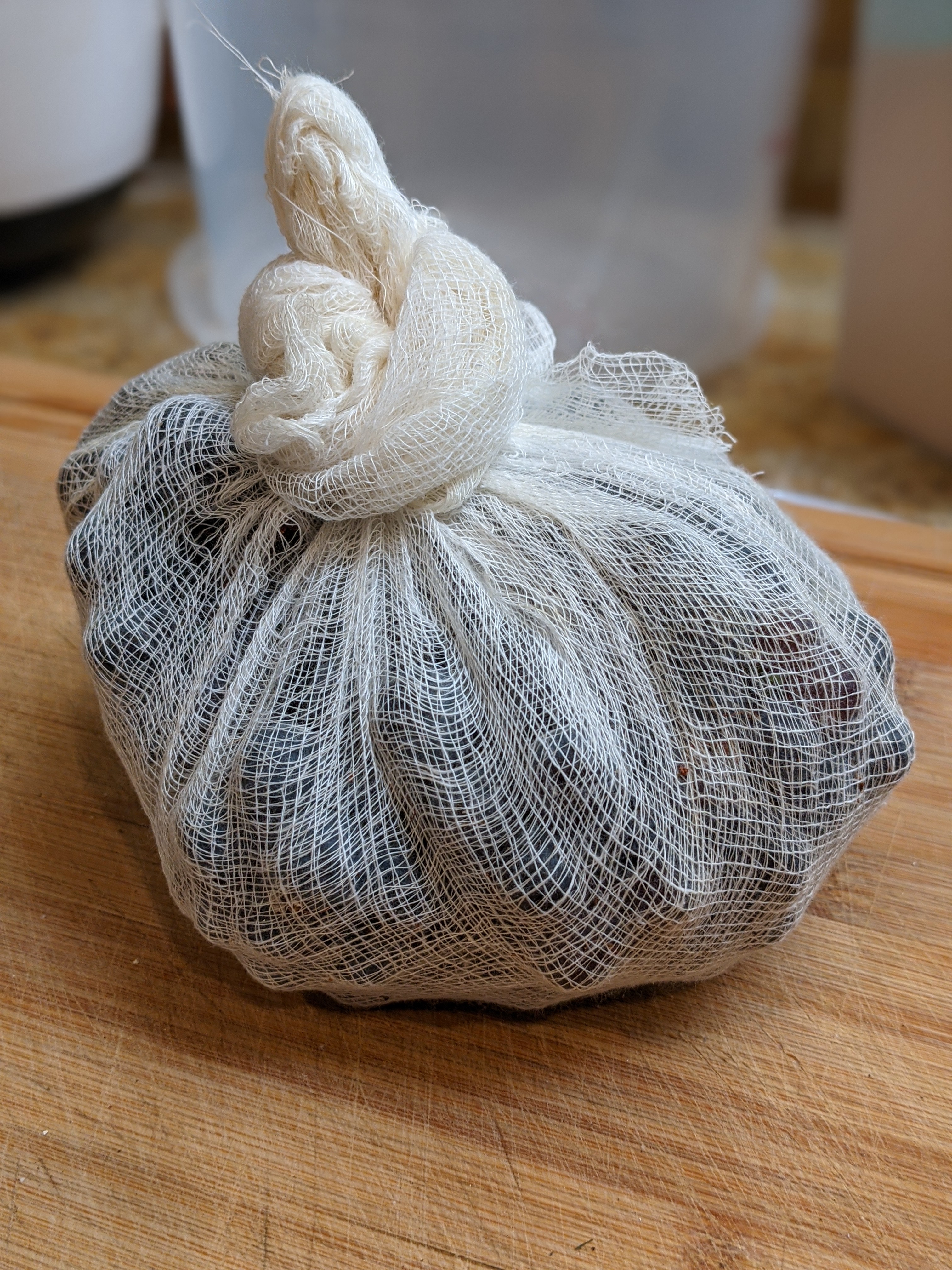
Luckily for me, my best friend works at Eden Rift Vineyards in Hollister, CA. So I took a day trip down to Hollister this past Saturday and after drinking some VERY GOOD wine, he clipped a cluster of grenache grapes from one of the vines. Talk about fresh! If you look at the picture of the cluster above, you’ll see the dusting of yeast all over the grapes.
For recipe guidance, I referenced two different articles from Food.com and The Quest for Sourdough. If you reference the Food.com article, the “real” instructions are actually in the first comment in the comments section. I used the “The Quest…” article as simply a reference for the weights as I didn’t have the same weights listed in the Food.com article.
So now I’m on Day 3. What I’ve noticed with this particular starter is that the fermentation bubbles are actually much smaller than with my other starters. I forgot to take a picture of the starter before I mixed it, but I was amazed at the difference between how those wild yeasts act vs. the wild yeasts from my regular starters (which I suspect has a lot of commercial s. cervisiae).
The smell is fruity of course and quite alcoholic. With that grape juice, wine is also being made – those fine bubbles that I mentioned above are reminiscent of champagne bubbles – very cool. Taste-wise, the sourness is actually much milder than I expected, though I imagine it’ll get more intense once the two-week process to grow this starter is complete.
…or my peel, or my freakin’ fermentation container for that matter. If you want to do that, go ahead. It’s all good. And no, I wouldn’t dream of ridiculing anyone who does this. I’m just not that sentimental when it comes to baking and cooking.
Shit! If I was going to name anything, I should probably name my cast iron skillet that I’ve been seasoning for almost 30 years. But a starter? I’m not so sure.
However, when I was feeding the starter in the picture the other day, I harkened back to Anthony Bourdain’s book, “Kitchen Confidential,” where in one segment, his bread guy called him and said, “Feed the bitch! Feed the bitch!” referring to his starter. When my wife walked into the kitchen while I was in the middle of remembering this passage, she asked me, “Watcha doin’?” I laughed and replied, “I’m feeding the bitch!” That got a weird look and I didn’t explain myself…
So maybe I’ll be a copycat and call it The Bitch… Nah… I’m just not attached enough to it to personify it. It’s just another tool. To me, it’s a consumable, like seasonings. Granted, I have to build up and maintain a starter, but even still, it’s something I consume in the process of baking.
That said, though I may not name my starter cultures, I do intend to classify them based on what I want out of them. Yes, I’m going to build up a few different starters. This particular starter is probably going to be my “daily” starter that I use for everyday baking. It has some classic banana esters that are pretty damn cool-smelling! I’m also going to be building up a couple of different grape starters based on Nancy Silverton’s grape starter recipe that will mostly be held in cold storage. I’m getting the grapes from the Eden Rift vineyard in the Cienega Valley in Hollister, CA tomorrow. I’m really looking forward to getting those starters built up!
Today was baguette day, and it’s usually my favorite day because I love making baguettes. But it was also a bit of a weird day. I didn’t feel quite on it today, and I was not at all happy with my baguette dough. I felt it was way too wet and the bulk fermentation went way too fast which in turn made me cut my pre-shape and final proofing short – like to 10 minutes each!
Then on top of that, I was really struggling with shaping! The dough being wet, I felt it was fighting me and by the time I finished shaping my second loaf, I said out loud, “Dammit! I can do better than this!” I’m normally really good with shaping, but today, I felt as if I had two clubbed hands!
Then finally, when I transferred the loaves to my loading board, even though they seemed puffed up on the couche, they immediately collapsed on the board! At that point, I just shook my head, scored the loaves, then popped them into the oven, accepting my fate that I’d be baking baguettes that were going to be DOA. But when I went to remove my steam container and parchment paper, they had sprung up in the oven! Talk about an F me moment!
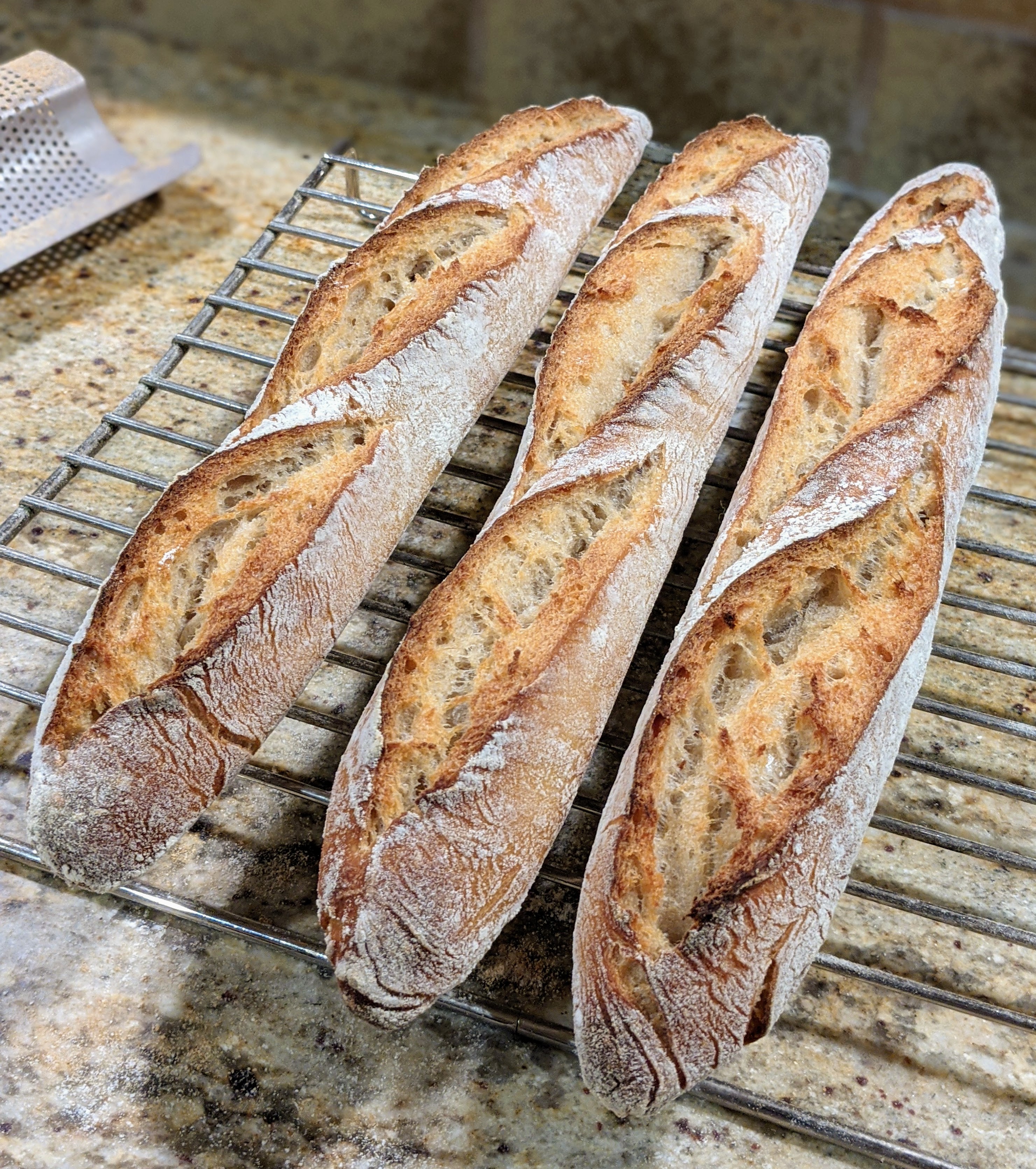
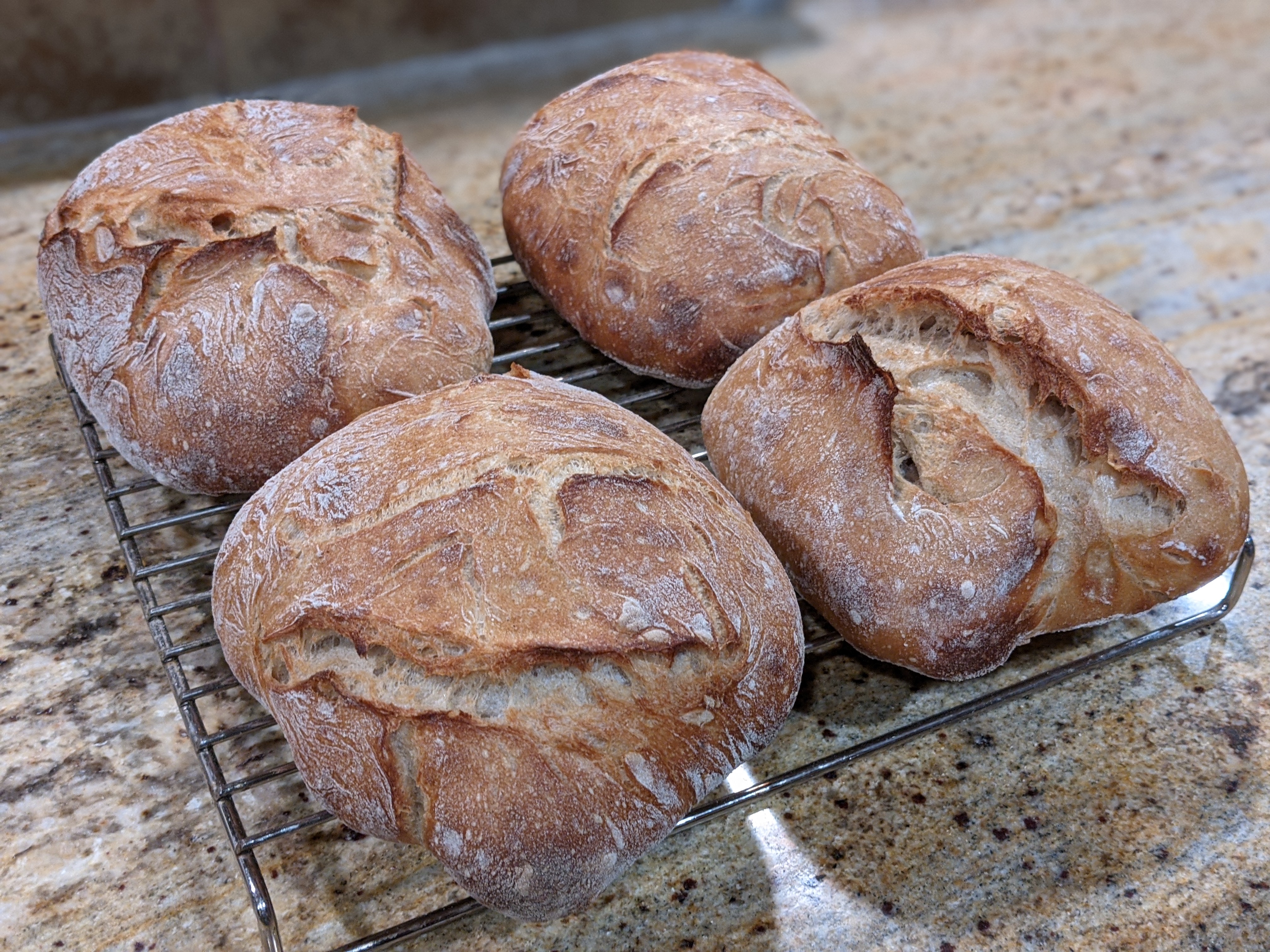
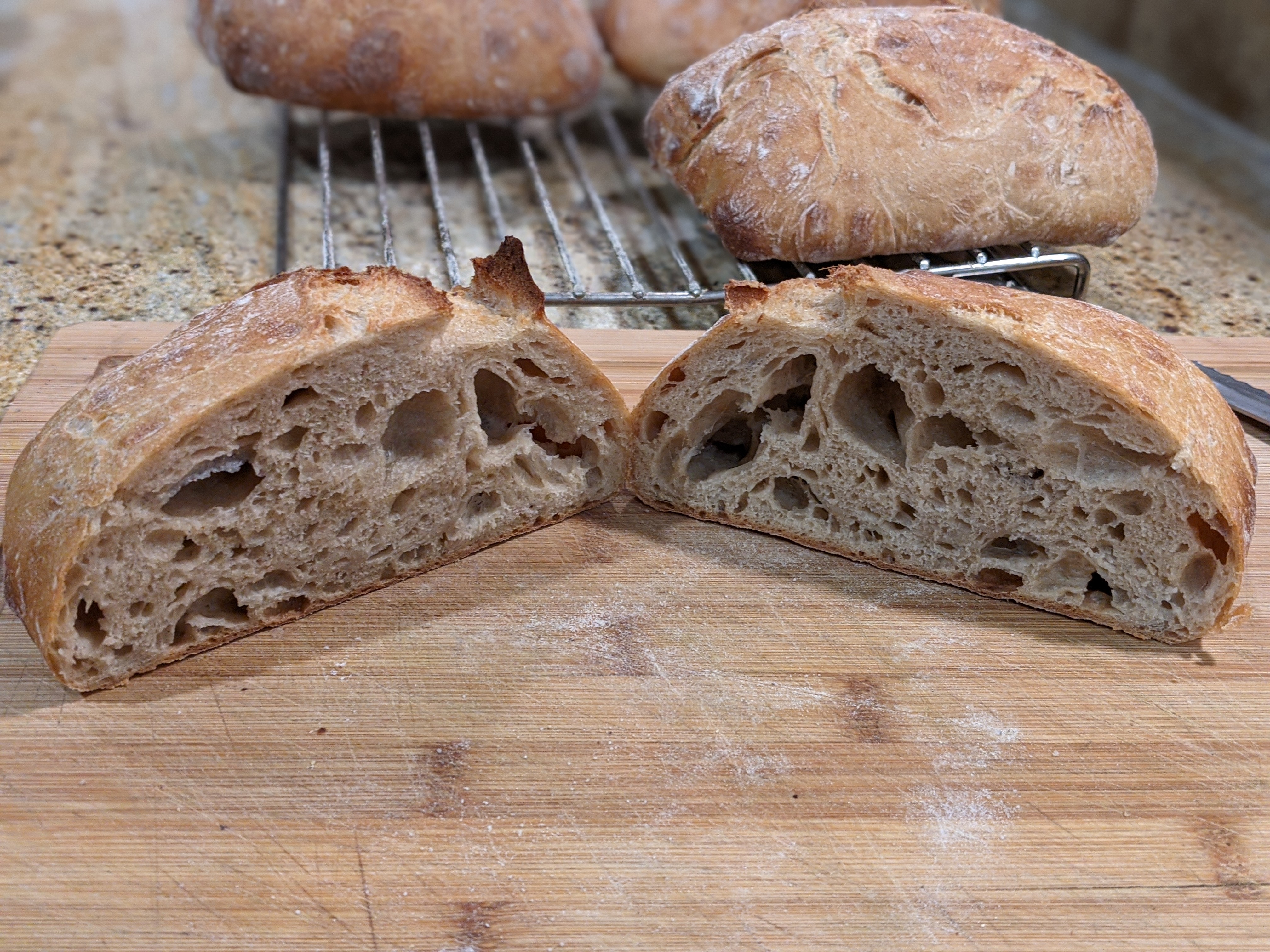
As you can see from the pictures above, the loaves turned out great! They have nice oven spring and a reasonably open crumb. It’s certainly not my best work, but it’s far from being the total fail that I thought it was going to be. ‘Scuse my language, but Fuckin’-A!
So as the title of this article says, things sometimes just work out. I think what saved my loaves was the fact that I cut off the final proofing. I normally do a 15 minute intermediate (after pre-shape) and a 30 minute final proof. But as I mentioned above, I cut them off to about 10 minutes each. I’ve done baguettes enough where I’ve developed a bit of an instinct as to when to move on to the next step based on what I’m seeing and feeling. And this was definitely one of those cases where I followed my instinct and went off script completely.
So yeah, things sometimes do work out, but the lesson for me here is to trust what I’m seeing and feeling and not be overly canonical and parochial about the process. Sometimes, you have no choice but to go completely off script!
Call me anal retentive but to me, especially with baking, if I’m going to do the same thing a number of times, I need to be consistent with how I execute; otherwise, I’ll get different results from instance to instance. Over the months I’ve developed my process and I do specific steps in specific ways. And it has been important to learn to do this because now, not only can I be confident that I’ll get consistent results, those steps have become second-nature and I just do them automatically.
Even with something as simple as washing my fermentation tub… As soon as I’ve dumped my dough out onto my board following bulk fermentation, I immediately rinse out my tub with hot water. The reason for this is that it is a total pain in the ass to clean off dried dough from anything. It’s like cement! Plus, once I rinse it out and put it away, it’ll be ready for my next round of baking.
And of course, the obvious candidate for consistency is shaping. I now do five different kinds of loaves on a fairly regular basis – though I probably do three of those much more frequently – and I’ve learned different shaping techniques for each that I do over and over again. And it has been comforting know that I can produce repeatable results.
But with respect to my batards, even though I’ve shaped them all the same way, for months I’ve been using two different bannetons which has meant that even though they come out looking nice, you know they’ve come from different proofing baskets. Well… I know because I see them side-by-side. And I have to admit that that difference has bugged the shit out of me!
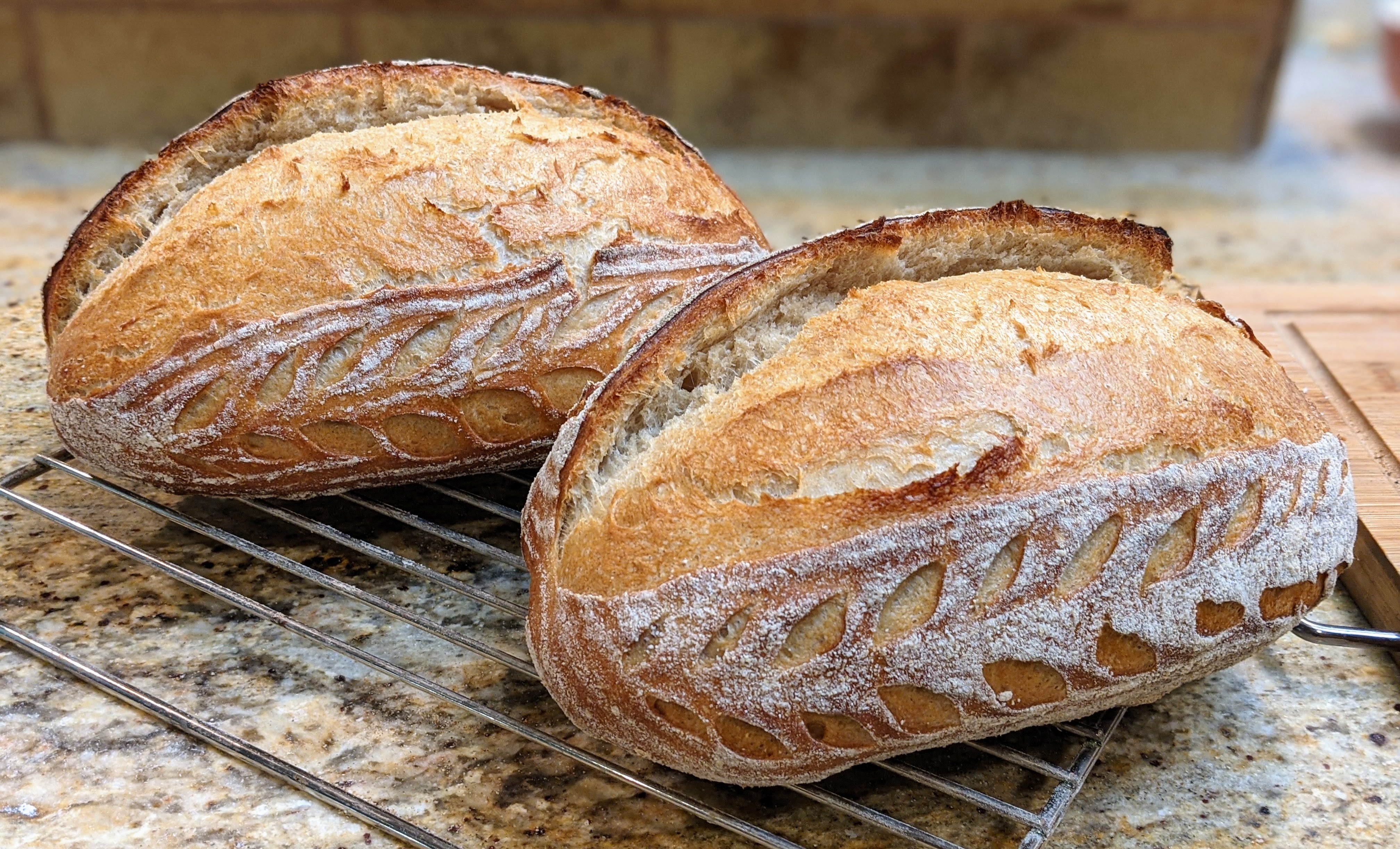
It finally came to a head last week and I vowed that I wouldn’t make another set of batards until I had a matching pair of bannetons. So last week, I ordered a match to my favorite banneton and yesterday, I made a couple of sourdough batards that are shown above. No, they’re not exactly alike but they are consistently shaped in the right way to me.
The ears came up pretty much the same, the width of the loaves was generally the same, and they both sprung up the same. When I was using two different bannetons, one loaf would always be wider than the other because that other banneton had a wider base. Like I said, that bugged the shit out of me!
But now I’m a happy man. I feel that with respect to batards at least, I’m complete. Consistency is a good thing!
I hate to waste anything, especially levain discard. I’m in the middle of creating a new starter so of course I have a daily or twice-daily discard, and rather than just toss it – and I can’t give it away because everyone I know who bakes has gotten a starter – I use it. Yesterday I made baguettes from the discard and today I’m making ciabatta buns.
This is a super-straight-forward recipe that doesn’t require a feeding like you would with a levain. And the great thing with making ciabatta, it’s a same-day bread! No overnight bulk or final fermentation! The challenge, as with any ciabatta, is that it’s a wet dough, so it’s sticky. But as long as you develop the gluten structure in the process, then it’s not too hard to work with.
Note: To help the discard microbes, I use a small amount of instant yeast ~ just 2 grams. No, it’s not cheating. I do this because discard can sometimes be a little unpredictable, and that little bit of yeast helps boost the fermentation activity just enough to keep the process on schedule. That said, the yeast amount is also highly dependent on the temperature of my kitchen that varies wildly. When I made this the other, my kitchen temp was 84° F, and I used just half a gram of yeast! Even with that small amount, the fermentation went a bit crazy and I had to shorten my bulk fermentation to just 10 minutes!
Ingredients
Flour
Water
Salt
Yeast
Discard
Whole Wheat Flour 100 g Bread Flour 300 g AP Flour 600 g
800 ml
20 g
2 g
100 g
The Process
Combine the flours and mix thoroughly.
Weigh out 100 grams of discard from your container, then place that directly into the flour.
Add all the water to the flour/discard mix and combine everything until you fully incorporate all the ingredients, and you form a shaggy dough.
Rest for 30 minutes.
Sprinkle the yeast and salt evenly over the surface of the dough then mix thoroughly until smooth. I do all the mixing with a stand mixer. It’s just more efficient.
Regarding “shaping,” as I mentioned in the process I linked to, I letter fold my divided pieces to shape them into pillows. And especially if I’m making sandwich ciabatta where I want the mini loaves to come together during baking, shaping them ensures that each piece has its own structure. Also, if I’m making sandwich ciabatta, I use parchment paper on my transfer board, and I place the mini loaves about 1/2″ (roughly a 1 cm) apart so they’ll spread out and come together during baking.
An artist by nature, I’m not naturally inclined to being disciplined. But I’ve had to be very disciplined to bake the loaves I bake with any semblance of consistency. To that end, I’ve come up with rules that I follow to ensure all my bakes are reasonably successful.
Rule 1: Be Prepared
In a commercial kitchen, this is generally known as mise en place, where everything that I need – from ingredients to implements – is within easy reach and my workspace is cleared and set up for my process. There is nothing worse to me than having to scrounge and scramble for something I need in the middle of the process.
Rule 2: Keep It Clean
“It” means pretty much everything. I’m obsessive about keeping my hands clean, but I also keep my workspace clean. If I flour my bench, as soon as I’m done, I use my scraper to clean up the loose flour and put it back in its container. As soon as I’m done with a mixing bowl, I wash it and put it away. Clutter is the enemy!
Rule 3: No Peeking!
Actually, this is another way of saying, “Be patient.” This especially applies to bulk fermentation. When I first started out, I’d check my dough every 15 minutes to see if something was happening. But with the generally small amount of yeast I normally use, things just don’t happen very fast. Of course, I’ve gotten to the point where I implicitly know how long things will take given different parameters. So when I set the timer for some part of my process, I just let the dough sit. That said, I do usually check about 2/3 of the way through, but it’s a quick inspection just to confirm everything’s okay.
Rule 4: You Do You!
Like many, I learned a lot by watching videos and participating in online forums, and interacting with lots of different bakers. All that activity was critical to my process because it opened my eyes to different shaping and scoring possibilities and even more importantly, showed me the most efficient ways to do things. But once I established a sense of what works for me, I stopped trying to achieve a particular look or follow someone else’s process. Especially with respect to my process, I had to work out what worked for me and my equipment and environment.
Rule 5: Use the Right Tools for YOU
You’ll read or get advice that you should get this or that or whatever. But my advice would be to not have a knee-jerk reaction and get everything you read about or hear about and instead try to use what you have on hand first. For instance, when I first started taking bread-making seriously, like many, I read Ken Forkish’ Flour Water Salt Yeast book. In it, he recommended getting a 12-quart tub. When I read that, I immediately got a quizzical look on my face because that size of tub seemed awfully big for the amounts of dough in the recipes. Lucky for me I already had some food-safe tubs on hand and I used those until I finally got an 8-quart tub (I actually still use them as pre-ferment containers). But I’ve encountered so many people who purchased one of those 12-quart tubs and now no longer use it because it’s TOO DAMN BIG! But that story aside, you probably have a lot of the tools you’ll need already. Yes, they may be old, but that doesn’t make them obsolete.
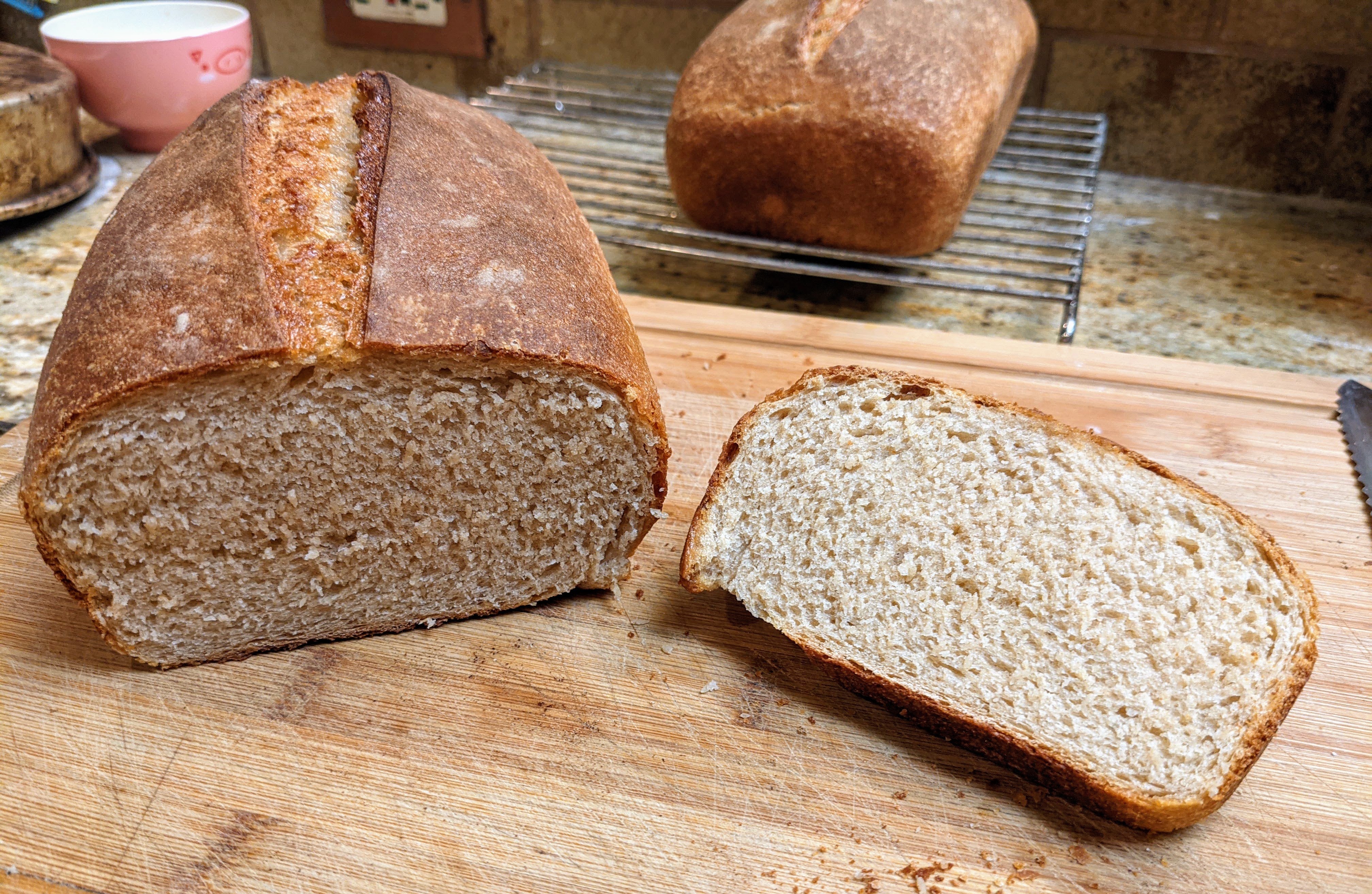
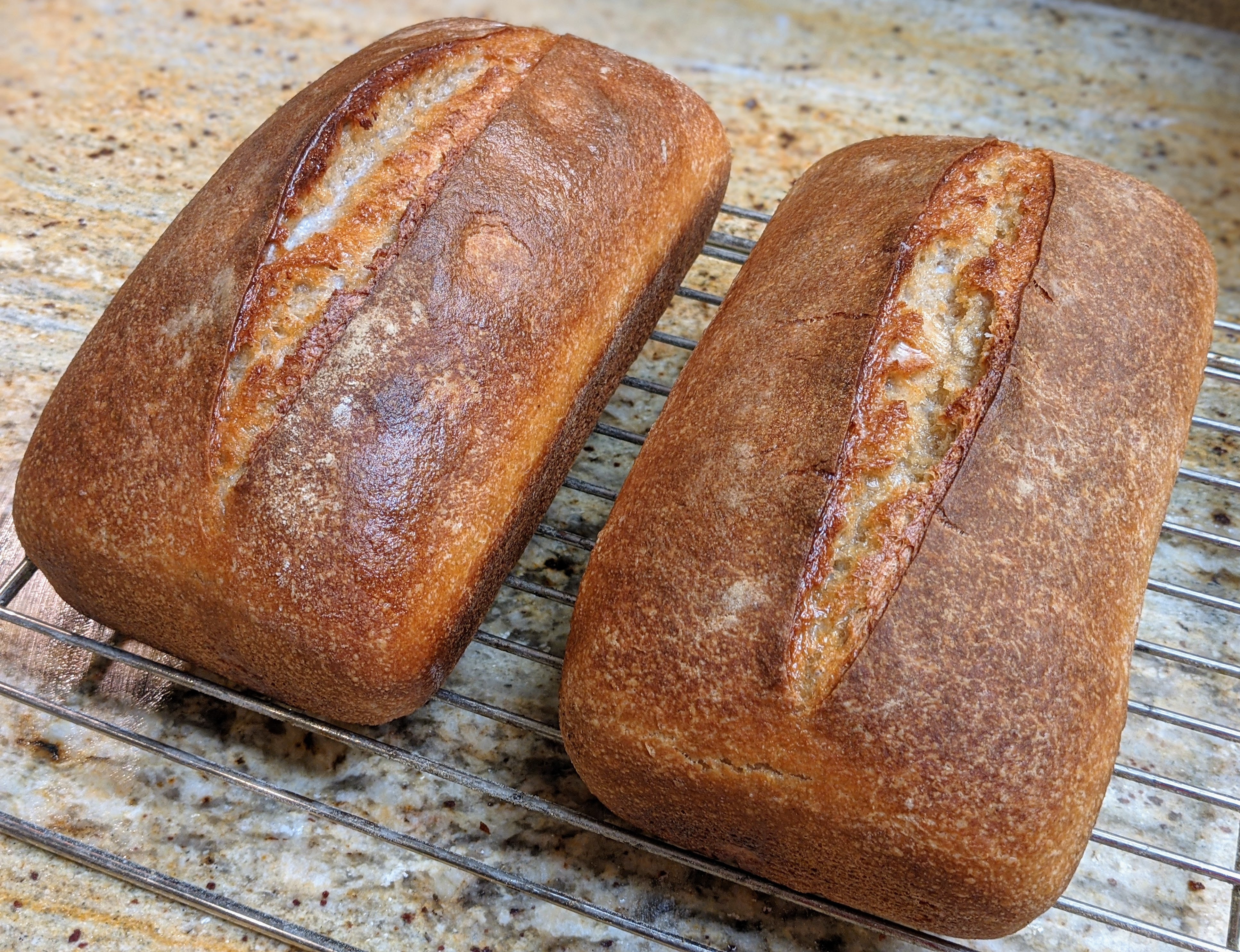
Okay, it’s not 100% whole wheat which is why I didn’t put 100% whole wheat in the title. But it’s damn close. This uses my favorite flour combination of 25% White Whole Wheat / 75% High-Extraction Flour, both milled using the Unifine process. The high-extraction flour is like a Type 85 flour that retains at least 85% of the bran and germ of the wheat berry when milled, though this particular flour is more like Type 90. What this means is that it is very close to whole wheat but it’s SO much smoother.
This recipe uses an overnight poolish. But unlike other recipes I’ve developed, where the poolish only accounts for about 20-25% of the total flour, this recipe uses a poolish that accounts for 50% of the total flour. The reason for this is because all the whole wheat flour goes into the poolish and soaking it overnight ensures that the bran and germ are fully hydrated. Here we go!
The Night Before ~ Make the Poolish
Flour
Water
Yeast
250 g High-Extraction Flour 250 g Whole Wheat
500 g
0.5 g
1. If you don’t have any high-extraction flour, I advise using whole wheat bread flour. It’s milled finer than regular whole wheat flour. 2. Mix everything together until you form a thick, but smooth batter with no dry flour left over, and no lumps (this is important).
Baking Day – Make the Final Dough
Flour
Whole Milk or Half N Half
Salt
Yeast
Butter
500 g High-Extraction Flour
200 g
20 g
12 g
1 tbl (softened, not melted)
In a separate bowl, mix the dry ingredients together with a whisk.
Use the milk to loosen up the poolish by slowly pouring it around the edges of the poolish, then use a scraper or spatula to tease it away from the sides. Then moving about the container, pull the spatula towards the center (like you would making an omelet), scraping the bottom of the container. The poolish should now just pour out and into your mixing bowl.
Once your poolish is transferred, make sure to get as much of the residual material out of the poolish container, then incorporate the milk into the poolish until it’s fully dissolved.
Working in batches, add the dry ingredient mix to the poolish. Once you’ve added a cup or so, drop the softened butter into the mix, then continue mixing until all the ingredients are incorporated and you’ve created a shaggy dough.
You can also do this in a stand mixer, which is my preferred method of mixing ingredients.
Dump out the dough onto an unfloured work surface, and knead it until smooth (about 8 minutes). Again, you can do this in a stand mixer as well (about 3-4 minutes).
Transfer the dough back to your mixing bowl and cover with a towel or plastic wrap and let the dough rest for 30 minutes.
After 30 minutes, do a stretch and fold of the dough, then turn it over onto the folds.
Rest the dough another 30 minutes and do a final stretch and fold.
Rest the dough from 1-2 hours until it has risen about 50%
This is the tricky part. I just made my loaves early this morning, around 6 am, and my kitchen was a bit cold, so even though I proofed in my oven with the door slightly ajar so that the oven light provides a little heat, it took a little over 2 hours to rise.
After the bulk ferment, dump out the dough and divide and scale it into 2 equal pieces.
Pre-shape the dough into balls, either using the stretch and fold technique, or the scraper technique. Set the balls aside, sprinkle a little flour on top of them, and let rest for 20 minutes.
Preheat your oven to 485° F (about 250° C)
Take a ball, flip it over onto the floured side onto a lightly floured surface.
Using your fingers, gently form press out the ball into an 8″ X 12″ rectangle (it doesn’t have to be perfect).
Roll the sheet up by folding from the top and gently pressing out, much like you’d shape a batard. What we’re trying to do here is really get the skin taut.
Seal the seam, then place it into a well-oiled loaf pan.
Repeat steps 12 through 15 for the second loaf.
Cover the loaves with a floured cloth and let them go through their final proof for at least an hour.
Mine took about an hour and a half this morning until they passed the finger dent test.
Once proofed, score the top of each loaf with one long slash, then place the pans gently in the oven and apply steam.
For steam, I use an old metal cake round that I put about a cup of scalding water, and I throw a few ice cubes on the bottom of my oven.
Set the timer for 15 minutes and once it goes off, turn the loaf pans around to ensure even baking and remove your steaming container.
Bake 10 more minutes, then remove from the oven.
Melt about a 1/2 stick of butter, then slowly pour it into the cracks of the loaves.
Some butter may run off the sides, so I suggest placing a plate under the loaves to catch the spilled butter, then use a paper towel to soak up the excess and wipe it on the top surface of each loaf.
Let the loaves cool at least 45 minutes before cutting (if you can last that long).
Notice I don’t have any added sugar in this recipe. It doesn’t need it. The use of butter and milk provide fat which helps soften the bread.










 The Dawg House!