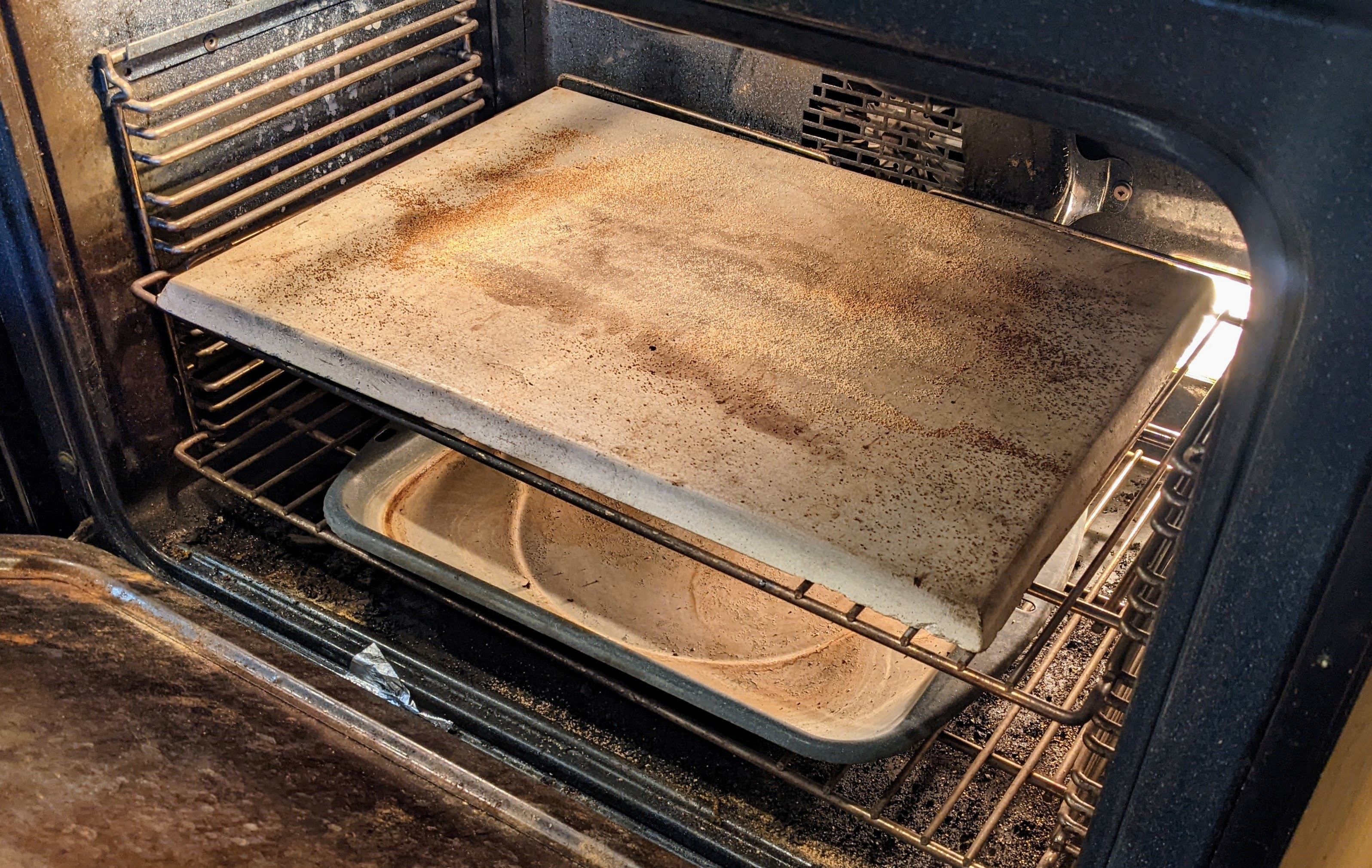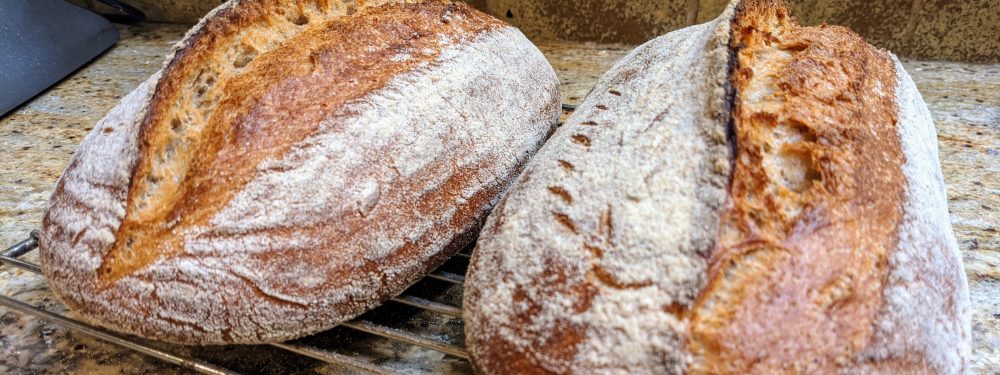
As I returned to baking bread in earnest after a long hiatus, and “in earnest” that meant baking every single day, not just the same kind of bread, but many diverse kinds from French to Italian bread. For instance, I learned to make ten distinct kinds of baguette. I learned to make several traditional Italian loaves. I had four active starters that were optimized for different outcomes (sourness, fast rise, etc.). But here’s the thing: Other than buying simple implements such as a Danish dough whisk or some good scrapers or getting a baking stone. I didn’t get a new mixer or other high-end equipment. I baked everything in my standard electric oven.
I mostly mixed by hand but also used a mixer for specific kinds of dough. For that I used my trusty KitchenAid Artisan 5-quart mixer; yes, even for large batches when I had to make bread for a shelter. In those cases, I had to make several small batches of dough. And since I only had two ovens to work with, I had to work out timing. And though I was tempted to get a spiral mixer (I still dream about it) and a dedicated bread oven (I will get that in the next year or so), I still got by with what I had. And I made some incredible bread. My thought was that if I learned how to use what I had on hand, there wouldn’t be much I couldn’t do.
But I think a major reason keeping me from getting higher end equipment was that I had worked out a process and got so proficient and efficient with it that I didn’t feel a pressing need to buy new gear. Honestly, I’d forget the new stuff and would only remember when I deliberately thought about how nice it would be to have a spiral mixer or dedicated bread oven. And that leads me to the reason I wrote this post in the first place.
There’s an urban legend about the famous violinist Izthak Perlman who broke a string during a concert, then proceeded to finish the concerto playing only on three strings. At the end of the piece, he spoke to the audience and said, “You know, sometimes it is the artist’s task to find out how much music you can still make with what you have left.”
No one knows whether the story is true, but the quote is inspirational, nonetheless. And I think of it when I’m evaluating buying new equipment. Granted, there are times when there is an absolute necessity to get some new gear, especially if you’re replacing broken equipment. But for other, more aspirational items, can you still perform with what you have? I will be honest with you that that quote has saved me thousands of dollars, not just in bakery equipment, but also in guitar and golf and even home appliances.
Look, I’m not saying that you must be cheap. If you have the means to get the top-of-the-line stuff, go for it. But will those aspirational things improve your process to a significant degree? At least for me, as I had my process down, I didn’t think they’d help to a large degree. Even with my micro-bakery where I was baking more bread than most home-based bakers, the higher end gear became more “nice-to-haves” rather than “must-haves.”
And to be honest, in the end it’s all about the dough. A great mixer will help in mixing the dough, but after that, there’s no other equipment you need to develop you bread dough. A dedicated bread oven will certainly provide much more consistency than a normal home oven, but if you know your oven and you’re only baking limited quantities, the benefit of a dedicated oven will be minimal at best. Besides, if you screw up your dough, no amount of high-end gear is going to help you.

Over holidays, I baked quite a bit of bread; mostly baguettes, but I made other types of loaves as well. But here’s the thing: All the mileage I put on my ovens completely messed them up and one oven no longer holds temperature consistently and the hinge on my other oven broke so I couldn’t use it. I tried to make baguettes on my stone, but they turned out horrible. So I had to turn to my old metal baguette pans. Those never produce great results, but they’re what I had on hand. And I trudged forward thinking about the Izthak Perlman quote.
And I was okay with the results, even though I knew they wouldn’t be as optimal as I would normally get with a stone. I was making music with what I had left!