One thing about the baking process is that it is sensitive to changes in many different parameters. Change just one thing and you may get wildly different results than what you expected. For me, the latest change I made was getting a new baking steel after baking for years on a Fibrament D stone.
Take baguettes, for example. I was used to baking them on my stone, and my process revolved around it; mainly from a timing standpoint because my stone took so long to come to temp. But with my new steel, it comes to temp much quicker, and not only that, it retains heat much better than my old stone. Not only that, heat transfer to my dough is much more efficient than my stone.
What this means is that I’ve had to adjust my timings. For instance, I use to be able to bake my baguettes slightly underproofed with my stone because heat transfer wasn’t nearly as efficient and I could get a way with it. But with my steel, I have to take the final fermentation to fully fermented. Otherwise, my loaves would blow up and I’d get huge holes and the loaves would blow through my cuts and not form any ear. But this is a good thing.
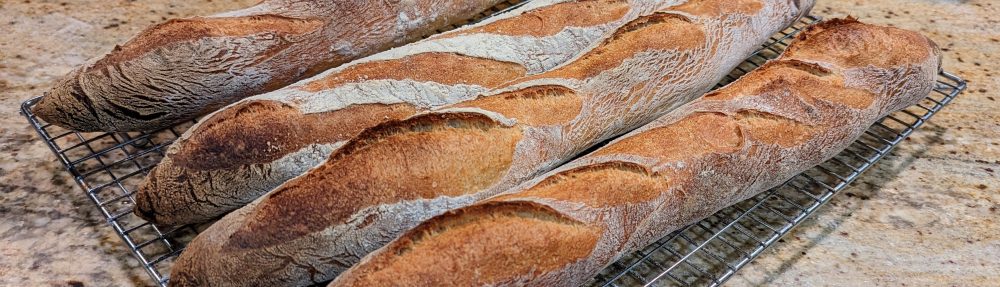
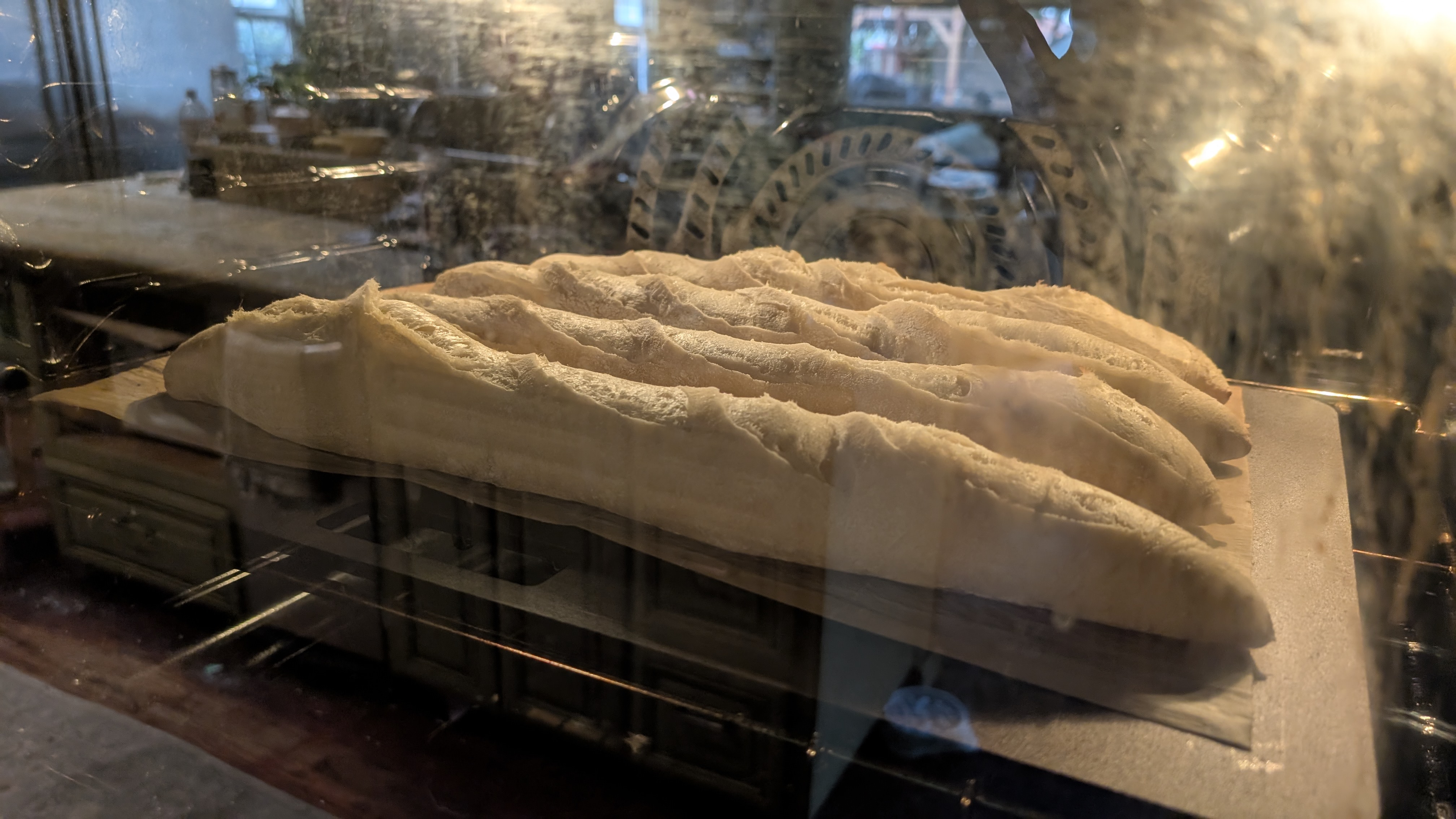
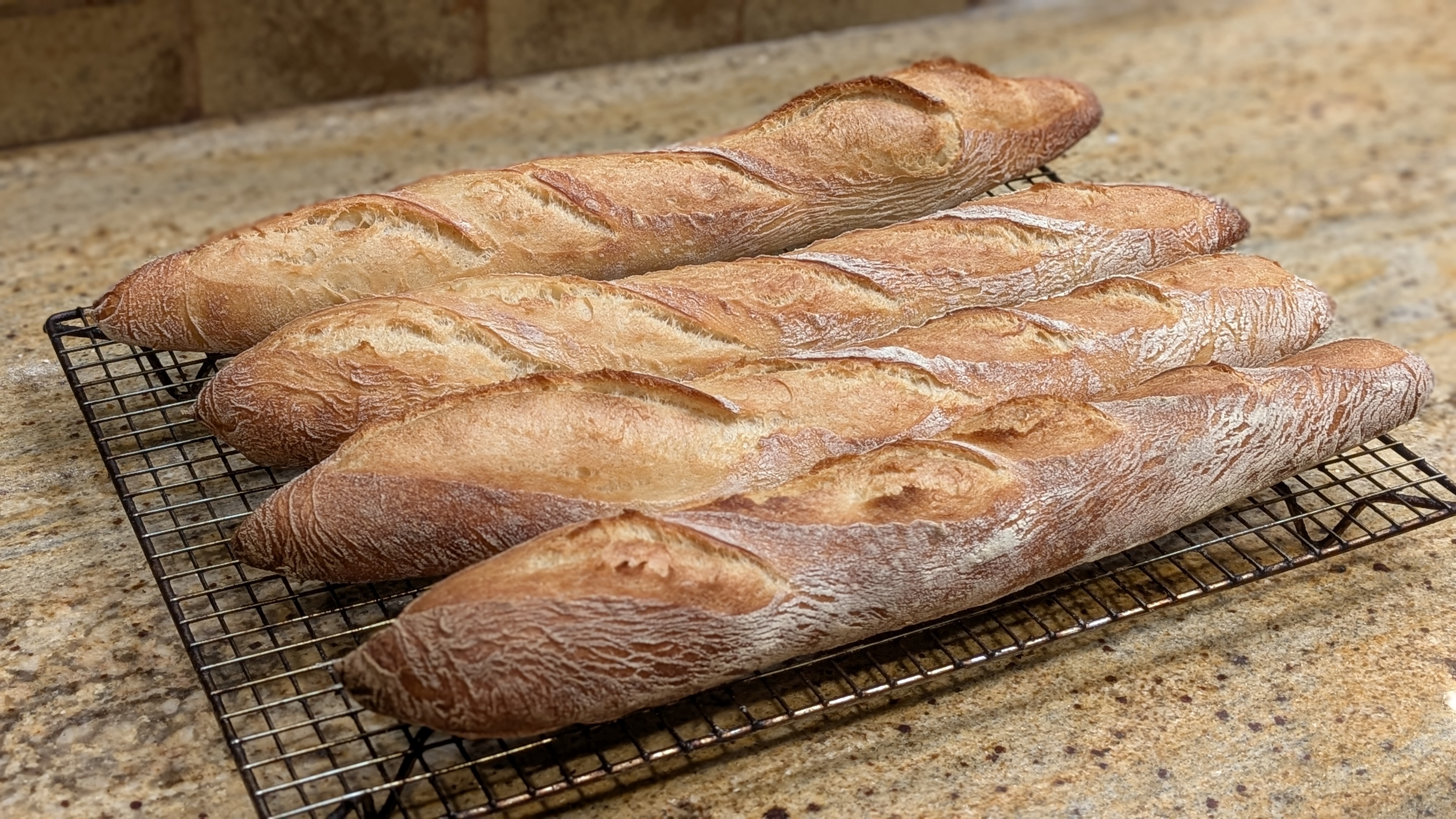
With the loaves pictured above, I went a little too far with the final fermentation. They puffed up nicely and the tasted damn good. But I could tell just by looking at them, that I need to make an adjustment to my final fermentation timing.
But one thing I can tell you is this: I’m never going back to a stone for home baking. That super-efficient heat transfer has produced loaves with a glorious open crumb (what you want with baguettes), and more importantly with large format loaves, great oven spring that I couldn’t rely on with my stone unless I heated it up to a very high temperature because it didn’t retain heat as well.
 The Dawg House!