
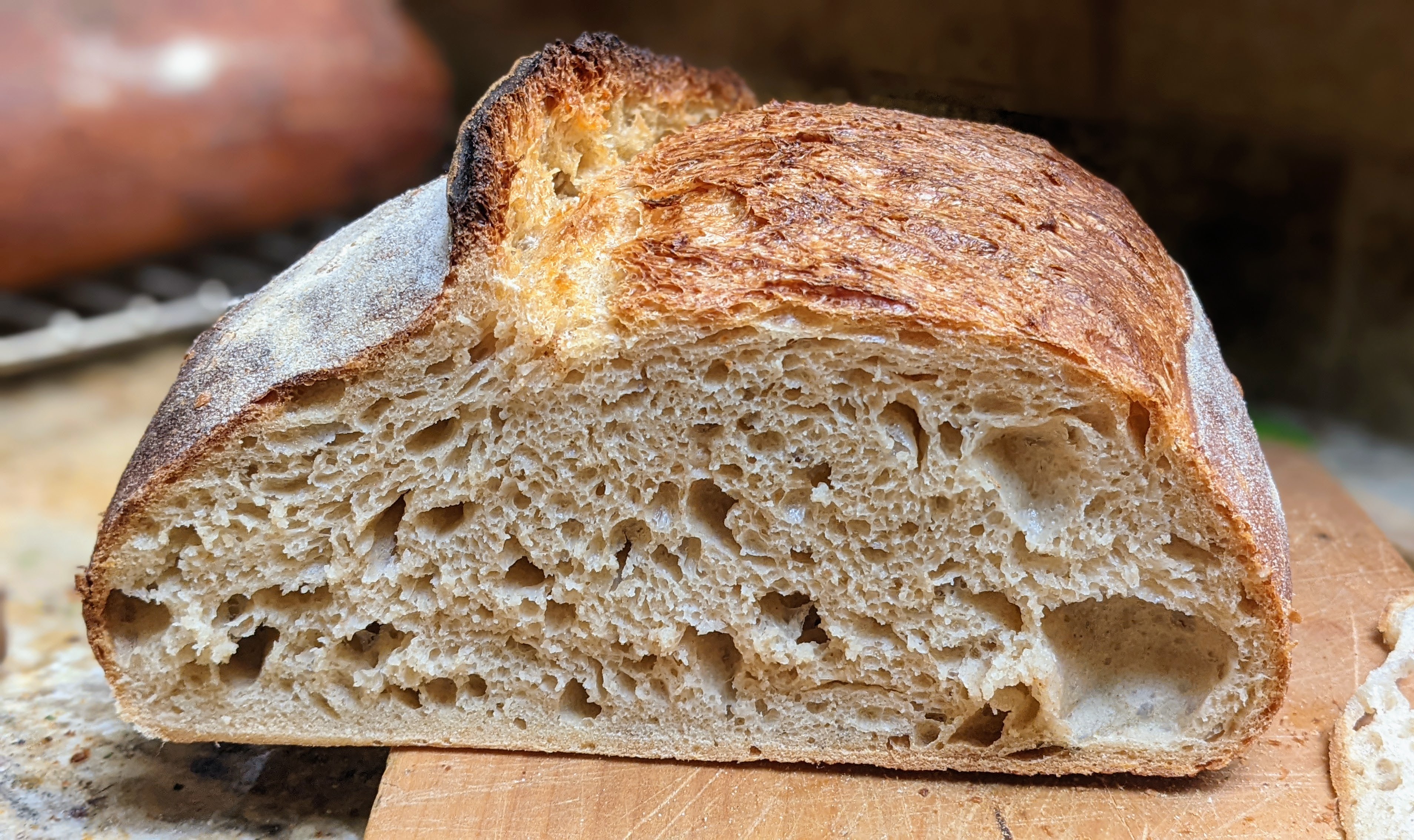
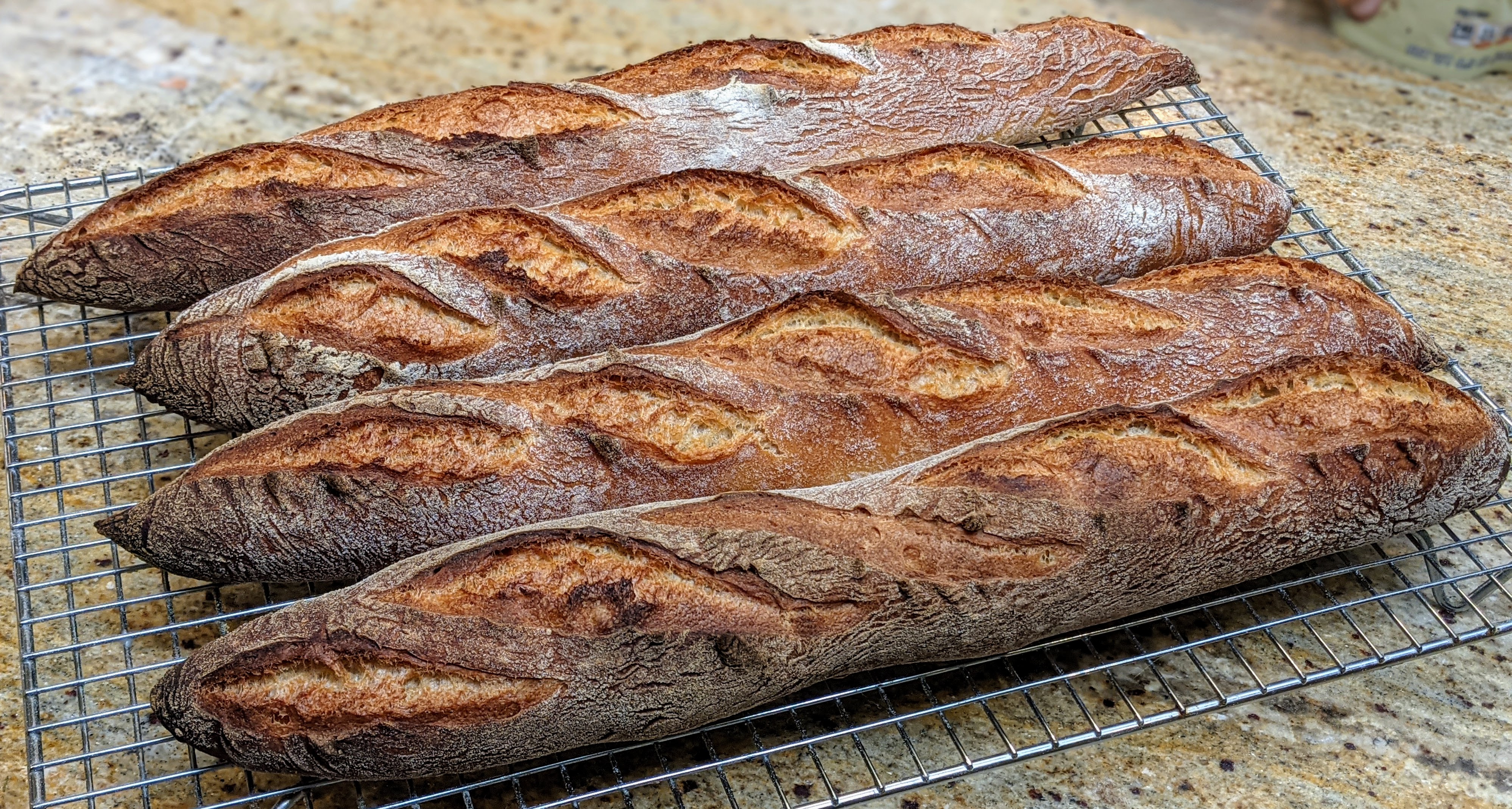
The pictures above depict two types of bread. One is a rustic Batard and the other shows baguettes. Here’s the thing: These were made using the same dough formula!
Here’s the formula that I used:
| Flour | 100% |
| Water | 75% |
| Salt | 2% |
| Yeast | 0.5% |
| Levain/Preferment | 20% |
For the batard, I used 70% White Bread Flour and 30% Kamut flour. On the other hand, the baguettes were made with 100% Azure Standard Bread Flour which is similar to a T85 flour (the “Ultra-Unifine” milling process doesn’t remove all the germ and bran like regular white bread flour).
I’ve also made these loaves using the exact same flour blend. But even with the same type of flour, these loaves taste wildly different from each other. The Batard has a soft, airy, and slightly tart, chewy crumb while the baguettes are crusty with a fluffy crumb. They may come from the same type of dough, but the techniques and processes used to create the loaves are quite different.
The Batard uses an overnight, retarded fermentation in the fridge, which promotes lactic acid bacteria activity, giving the dough a slightly acidic twang. The baguette dough, on the other hand, is made and processed the same day with a dough temperature between 78℉ and 82℉ which promotes yeast activity. Same dough formula, different results. That said, I could’ve made both types of bread from the exact same batch of dough and still achieved different results.
The reason is because oftentimes it’s merely the techniques and processes employed that will differentiate one type of loaf from another. And this is where a master dough formula comes in handy. Most home bakers start out their baking journey experimenting with different recipes they come across. But those different recipes have different ratios of ingredients. That makes it challenging to understand what effects variances in the parameters might cause.
But when you use a master formula, it helps you understand the effects of tweaking ingredients in the formula because you’re always starting from the same place. Furthermore, a master formula helps you master the processing of the dough. As a fairly high-hydration dough, it can be tricky to work with, especially for beginners. But with repetition, it gets easier and easier to work with.
I’ve made all sorts of bread from the formula above from sourdough boules and batards to baguettes and pan loaves. And I believe that using that formula over and over again helped accelerate my learning!
Tweaks
So, you’re probably wondering what kinds of tweaks you can make to the formula. I’ve already mentioned a couple above, but let’s just put them all together here. Now mind you, what we’re not going to do is alter the ingredient amounts. To help put more context, here are ingredients by weight to produce one kilo of dough:
| Flour | 512g |
| Water | 370g |
| Salt | 11g |
| Yeast | 3g |
| Levain/Preferment | 114g |
| Total Yield | 1010g |
So, what can you do with one kilo of dough? Well, lots of things. You can make 10 buns. You can make a nice pan loaf. You can make 4 demi baguettes, or you can make a single rustic boule or batard.
But those really aren’t tweaks. I’ll list a few things you can do:
- One thing to tweak is the flour, blending different kinds of flour to create different flavor profiles. My favorite blend is using an organic T85 type of flour I get from Azure Standard called their Ultra-Unifine Bread Flour and combine that with Kamut, or Whole Wheat, or Rye, or even Durum flour in varying ratios.
- Another thing you can do is play with the fermentation. Do a cold, ovenight bulk fermentation (I do this with baguettes). Do a cold, overnight final fermentation (especially good for rustic loaves). Or even do a delayed fermentation.
- Something not that obvious but will have huge effect on your bread is the dough temperature you maintain. For quick bread such as baguettes, as I mentioned above, a dough temperature between 78℉ and 82℉ promotes yeast activity. Going with a lower temperature will slow things down but favor bacterial activity.
- You can also play with the levain or preferment. Both are technically preferments, but a levain specifically means a preferment made from a sourdough culture. But you can use either a levain or a poolish.
- With either the levain or poolish, you could play with their maturity. Typically, you use mix in a preferment at the peak of its activity. But you could let it go past its peak as well. Don’t worry, the yeast will not be dead, they will just have run out of food. Putting them in contact with a new source of food will wake them up. But in the meantime, more organic acids will form.
That’s just a few things you can do. But even with just these things, you will be amazed at the wildly different bread you can make. And remember, the formula is the same!
 The Dawg House!