
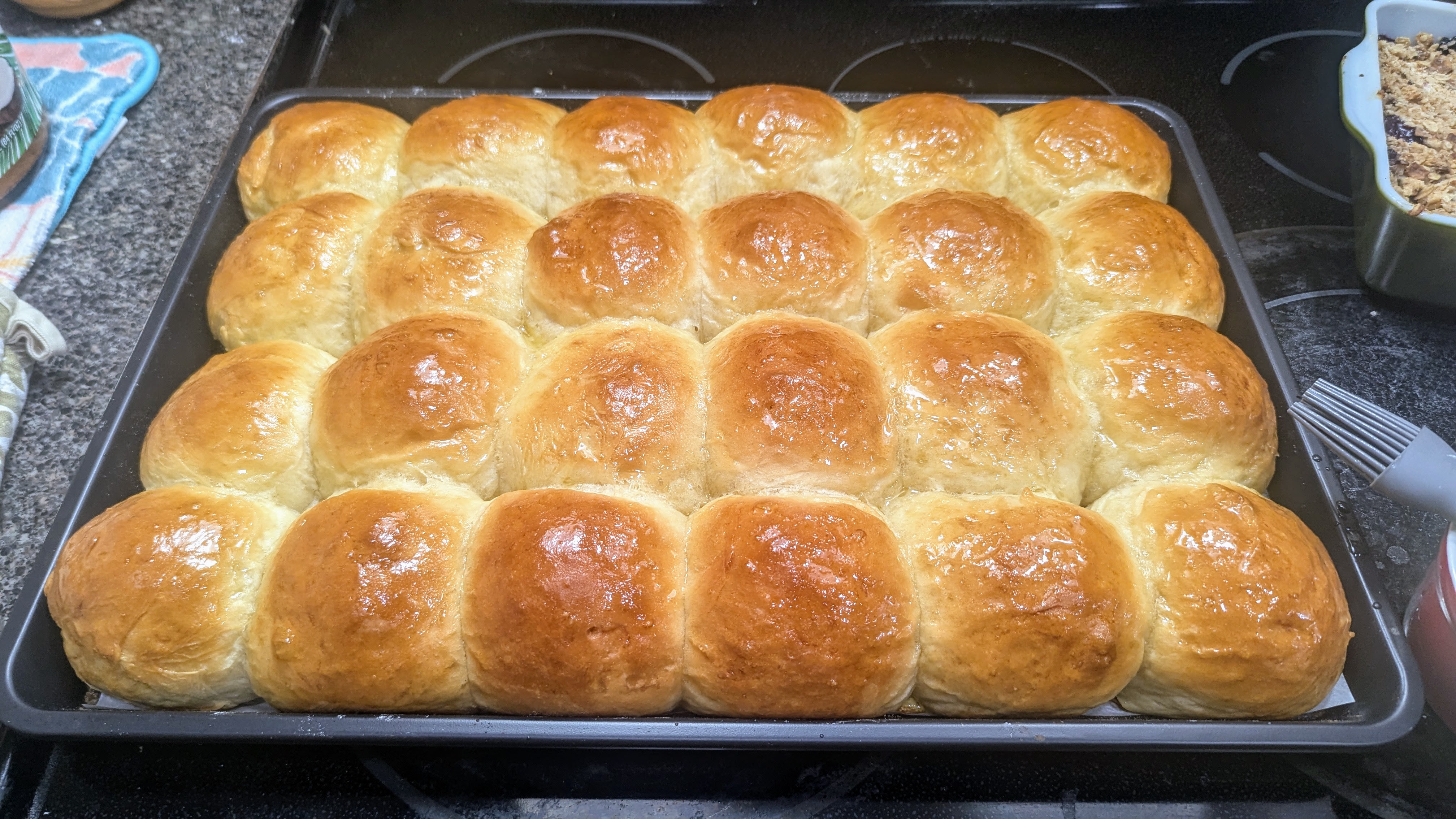
I’ve spent lots of time perfecting this recipe. Though I’ve been making these for several years, I’ve also been tweaking it to get the right results. My main goal with this bread has been to make it much like brioche with the butter and eggs, while retaining the island vibe; hence, the 50% pineapple juice.
Like brioche, this is a very wet dough even though the total liquid represents only 65%. But the eggs and butter up the hydration, and make it feel like an 85%+ hydration dough. It’s a little tricky to work with, but with good gluten development and handling technique, it’s not too difficult. We’ll discuss this more below.
Overall Formula
| Flour | 100.00% |
| Pineapple Juice – (canned, not from concentrate) | 50.00% |
| Milk | 15.00% |
| Egg | 10.00% |
| Butter | 20.00% |
| Yeast | 1.00% |
| Salt | 1.50% |
| Sugar | 7.50% |
| Total Percentage | 205.00% |
Final Dough
| Flour | 709g |
| Pineapple Juice | 355g |
| Milk | 106g |
| Egg (1 large egg + 1 yolk, reserving the egg white) | 71g |
| Softened Butter | 142g |
| Yeast (Instant or Active Dry – 1 pack) | 7g |
| Salt | 11g |
| Sugar | 53g |
| Total Yield | 1454g 24 X 60g rolls |
Preparation. There’s a bit of preparation that has to be done before you get into mixing.
- First, measure out the pineapple juice into a microwave-safe container and nuke it for about 1 minute or heat on the stove to at least 180°F. This will eliminate the enzymes that would break down your gluten. Let it cool to 105°F. It’s ultra-important to use canned pineapple juice and not from concentrate that often has added sugar!
- Warm the milk to around 95°-100°F, then mix the yeast into it to bloom the yeast. I do this with instant yeast as well to get it going as exposure to the high amount of sugar from the juice and granulated sugar will send it into osmotic shock. This won’t kill the yeast, but it will slow it down. So, I want the yeast to wake up first rather than slowing it from the get-go.
- Finally, separate a yolk and from 1 egg, retaining the white to brush the rolls before baking. Beat the egg and extra yolk. You may exceed the required weight, so be mindful of using only the amount called for in the recipe.
Though you can certainly mix this by hand, I recommend using a stand mixer because of how sticky the dough will be.
Mix. Combine the flour, salt, and sugar in the mixing bowl. Mix these on low speed for at least 30 seconds. Add all the wet ingredients to the bowl, then mix with the paddle at low speed until all the ingredients are thoroughly combined. Scrape down the bowl, then continue to mix for at least another minute. Remove the paddle, scrape it down, and scrape down the bowl. Switch to the dough hook and start kneading at medium-low speed for 2 minutes. Increase the speed to medium and knead for 4-5 more minutes or until the dough begins looking smooth. Your dough temperature should be around 78°-85°F from the warm pineapple juice and milk (this is important).
Bulk fermentation – Part 1. Allow the dough to rise for 45 minutes (don’t worry, there won’t be much expansion), then turn it out onto a lightly floured surface. Using your bench knife, fold the dough twice in a North-South-East-West pattern, patting the dough down in between stretches. Finally, turn the dough over then shape into a round ball and return it to the bowl seam side down, covered. Wait another 45 minutes then fold the dough again.
Bulk fermentation – Part 2. Place the dough in your fridge until it has doubled in volume. This can be an hour or even more. But because the dough temperature is high, the yeast activity will keep on going, even though the dough is getting chilled.
Divide and shape. Turn the dough out onto your work surface, then measure out 60g pieces. With well-floured hands, roll the dough pieces into balls. Place the balls onto a full-size baking sheet lined with parchment paper, arranging them into six rows of four balls.
Final Fermentation. Cover the balls with damp paper towels (they won’t stick because of the butter) and let them proof and puff up for about 45 minutes or until they nearly double in size. It’s fine if they touch each other since they will all come together during baking anyway.
Bake. Before you pop the sheet into the oven, make a mixture with water and the reserved egg white, and brush the tops of the rolls. Bake at 350°F for 20-25 minutes or until the internal temperature of the bread is at least 195°F. Mine took 22 minutes.
Once they’re done, remove the sheet from the oven, brush the tops with melted butter, then cool them in the sheet for an hour before transferring them to wire rack. This will allow the butter to soak in and crumb to set up.
 The Dawg House!