
I finally got a pizza oven for my backyard kitchen, so of course I had to make some dough. I have been using a super-simple formula that works as a quick dough and for cold fermenting. It’s more along the veins of a Neopolitan-style dough, but I use King Arthur or Bob’s Red Mill bread flour as opposed to 00 flour since it’s more accessible.
Overall Formula
| Flour | 100.00% |
| Water | 67.00% |
| Salt | 2.00% |
| Yeast | 1.50% |
| Total % | 170.5% |
Final Dough
For the final dough, I make two 450g balls.
| Bread Flour (King Arthur or Bob’s Red Mill) | 533g |
| Water | 357g |
| Salt | 11g |
| Yeast | 8g |
| Total Yield | 909g |
The process for this is simple.
Mix. In a large bowl, combine the flour, salt, and yeast until well-incorporated. Add the water, and mix thoroughly until no dry ingredients are apparent.
Knead. Knead the dough for 10 minutes by hand, or if you’re using a mixer like I do, run the mixer at medium-low (position 2 on a KitchenAid) for 5 minutes.
Alternatively, once you mix the dough, you can just put some plastic wrap over it and let it sit for 8-12 hours. But note that if you take the no-knead approach, if the weather is warm, I’d use half the yeast to keep the dough from over-proofing.
Bulk Fermentation (Quick Dough). Once the dough is kneaded, form it into a nice, tight ball and place it in a well-oiled bowl, seam side down. Cover with plastic wrap and allow the dough to double in volume. On a warm day, this can take less than an hour. Once it has doubled, divide it into two equal balls, and shape each like you would a boule.
Final Fermenation (Quick Dough).Transfer the balls to a parchement-lined sheet pan, cover with a tea cloth and let them rise for at least an hour. They should expand about 75%.
Bulk Fermentation (Cold Ferment). This is my preferred way. Once the dough is kneaded, immediately divide the dough into two equal pieces. Shape each into a tight boule and transfer them to a container that will give them room to expand. I use a couple of plastic ramen bowls. Cover the container(s) with plastic (I put my ramen bowls in a jumbo ziploc), then place them in the fridge for up to 72 hours.
The advantage of a long, cold ferment is that yeast activity is retarded, but bacterial activity isn’t. Organic acids are allowed to develop in the dough that will help with its extensibility but more importantly, add all sorts of flavor. The texture of the final cooked pizza crust also becomes airy and creamy.
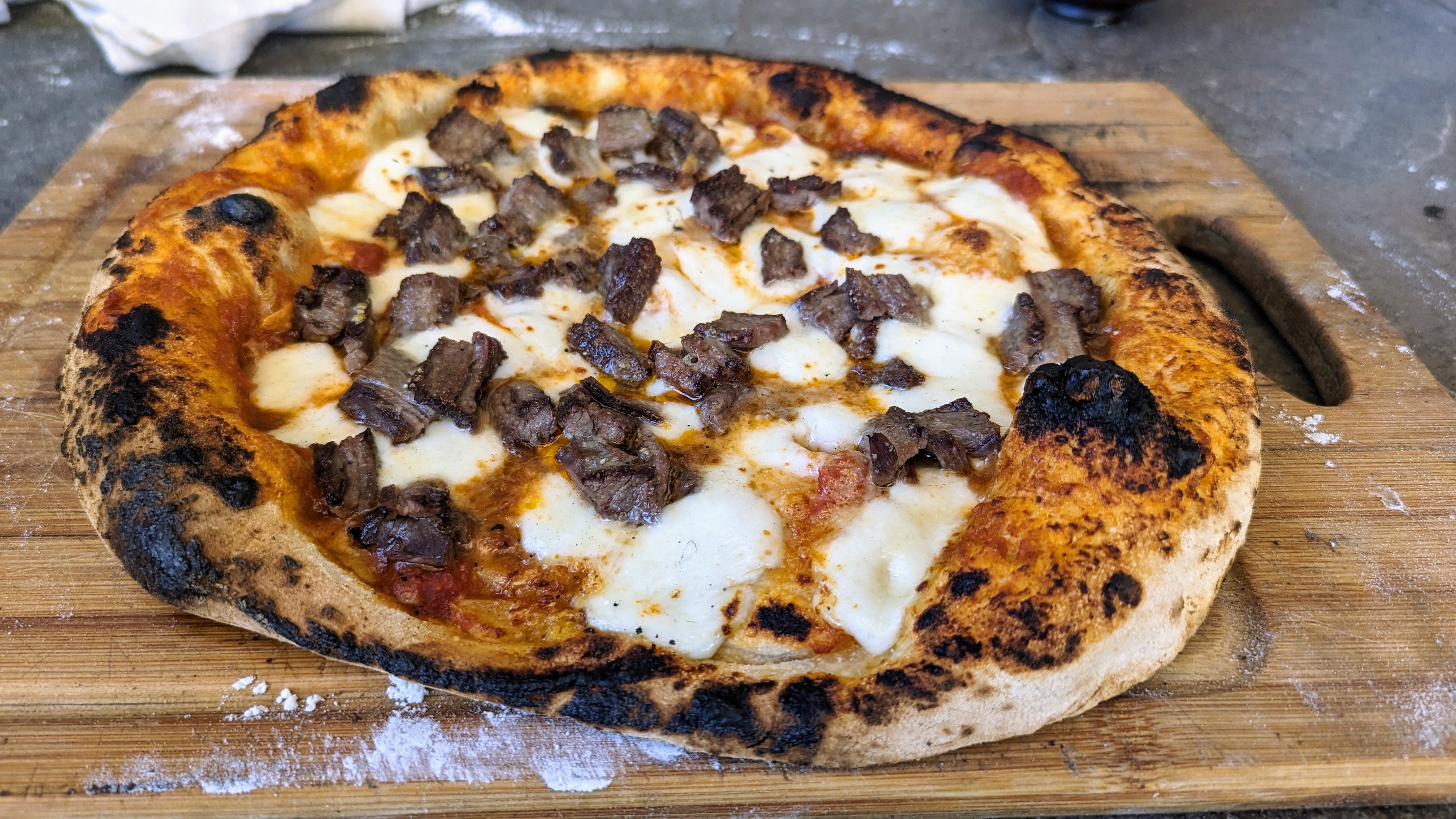
Final Fermentation (Cold Ferment). Remove the balls from the fridge and place on a parchment-lined sheet. Cover with a damp tea cloth and allow them to come to room temperature. This can take a couple of hours. Technically, you can work with the dough right out of the fridge, but cold dough is incredibly difficult to work with and can easily tear.
Shape. Shape into pizza crust. The 450g balls will make 12″-14″ crusts. Here’s a great video on how to shape pizza dough:
 The Dawg House!